REVIEW · ABU DHABI
Abu Dhabi: Fossil Dune, Salt Lake and Camel Race Track Tour
Book on GetYourGuide →Operated by Visitors Destination Tours & Safari · Bookable on GetYourGuide
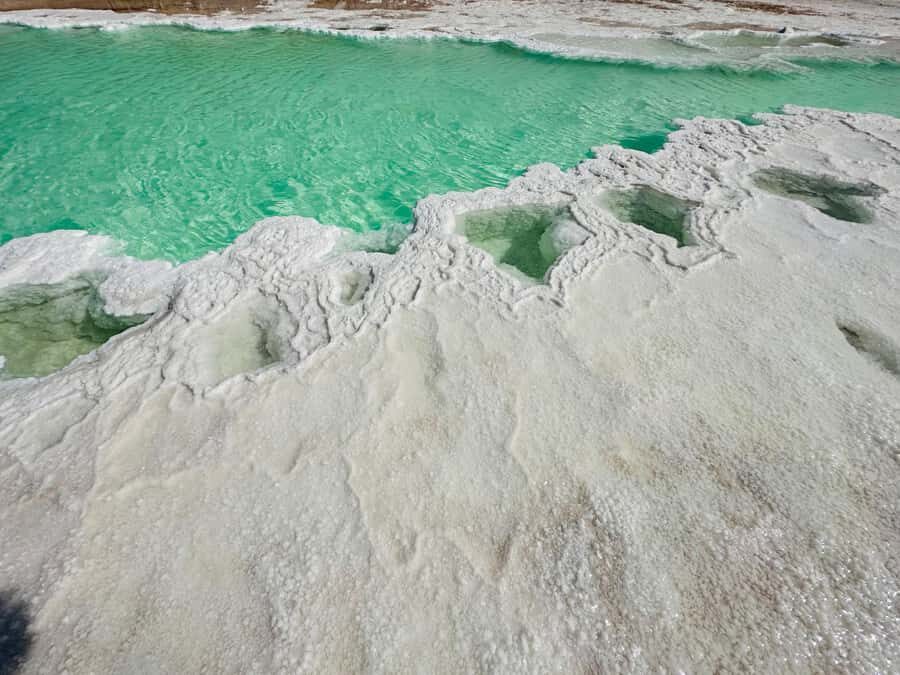
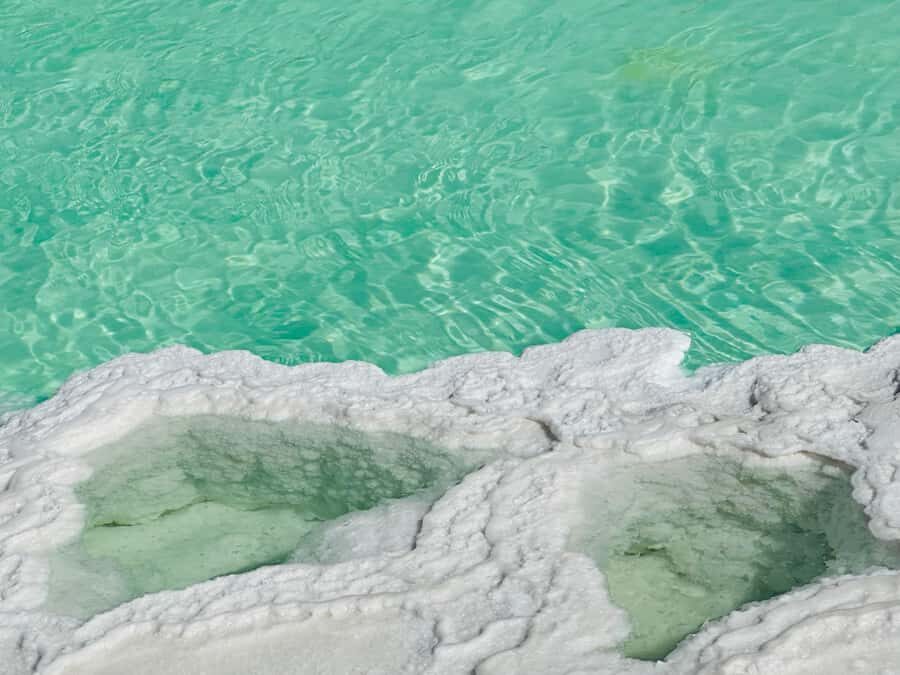
Camels and fossils in one desert day. I love how the Al Wathba Fossil Dunes look like something from another planet, and I also like the photo contrast of white salt against green water at the lake. It is a desert outing with real variety: geology up close, then a dose of local animal sport.
The camel race track stop is another reason this works. Even when races are not running, you can catch training on most days (with Friday as the exception), and the energy is genuinely fun to watch. I also appreciate that hotel pickup and drop-off in Abu Dhabi keeps this day from feeling like a logistics project.
One drawback to plan around: the dunes or salt lake can be affected by closures or construction, so your exact timing and how close you can get may vary.
In This Review
- Key things to know before you go
- Abu Dhabi pickup and the best way to pace your day
- Al Wathba Fossil Dunes: 4-million-year formations and a 2-km shaded route
- The one thing that can change your dune time
- Salt Lake stop: white salt deposits, green water, and what to expect on a changing day
- Camel race track: training most days, weekend races, and a lot of energy
- Timing, heat, and packing: small choices that make the day smoother
- What you get for $89: value, trade-offs, and where the cost fits
- The “worth it” test for your preferences
- Who this tour suits best
- Should you book this tour?
- FAQ
- Is hotel pickup and drop-off included?
- How much walking is involved at the Fossil Dunes?
- What should I bring for the day?
- Are pets or large bags allowed?
- Do camel races happen every day?
- Is the camel race track free to enter?
- What food is included?
Key things to know before you go
- Al Wathba Fossil Dunes (1700 fossil dunes in 7 sq km): a big concentration of petrified formations, shaped over millions of years.
- A 2-kilometer shaded walk: the trail has shade areas and benches, which matters in this heat.
- Salt lake photo contrast: white salt deposits against striking green water, with conditions that can change.
- Camel track timing: races are not daily; training runs most days except Fridays.
- Track access is simple: the camel race track is free to enter.
- Pack for sun: sunglasses, sun hat, and (importantly) biodegradable sunscreen.
Abu Dhabi pickup and the best way to pace your day
This is set up as a straightforward day trip. Pickup and drop-off from Abu Dhabi are included, and you ride out in a comfortable car while the scenery changes from city edge to open desert. That convenience matters because you are visiting outdoors sites in strong daylight, where every extra stop or delay costs energy.
Depending on your exact route, your day may also include a stop at Sheikh Zayed Grand Mosque, and people consistently describe it as a major highlight. If your timing includes it, treat it like a real first act: go with enough time to look slowly, not just to snap a quick photo.
Your biggest pacing challenge is the sun. You’ll be outdoors during the dunes and the salt lake, then you’ll spend more time around the track. This tour gives you bottled water, but it is still a day where you want to stay ahead of heat and glare.
You can also read our reviews of more tours and experiences in Abu Dhabi.



Al Wathba Fossil Dunes: 4-million-year formations and a 2-km shaded route
The star here is the Al Wathba Fossil Dunes area, known for wind-sculpted fossil formations that took more than 4 million years to develop. You are not just looking at one odd hill. The site is described as containing about 1,700 fossil dunes spread across roughly 7 square kilometers, which is why it feels so surreal once you arrive.
A practical detail that makes this stop more enjoyable: you walk a 2-kilometer route that includes shaded areas and benches. That means you can pause without turning the day into a nonstop trek. Still, plan for a dry, bright environment. Bring the sun protection the tour asks for—sunglasses, a sun hat, and sunscreen (and choose biodegradable sunscreen since that is specifically listed).
There’s also a reality check that affects how close you can get. The dunes area is UNESCO protected, and you may find parts cordoned off. In plain terms: you get the experience and the views, but you do not get to roam freely like you would on an open beach.
When the dunes are accessible, this is the kind of stop that rewards curiosity. You start to notice how wind, rock, and time combine into shapes that look almost staged. If you enjoy desert photography or geology as a concept, you’ll probably end up spending longer here than you planned.
The one thing that can change your dune time
During Ramazan (March to April), visiting hours for the fossil dunes are restricted. If the fossil dunes are closed on your day, you may spend more time at the salt lake instead. That backup plan can still work, but it does mean your favorite part might shrink.
If you are traveling in those months, I would set your expectations accordingly: be flexible and don’t count on a long dunes walk every time.
Salt Lake stop: white salt deposits, green water, and what to expect on a changing day
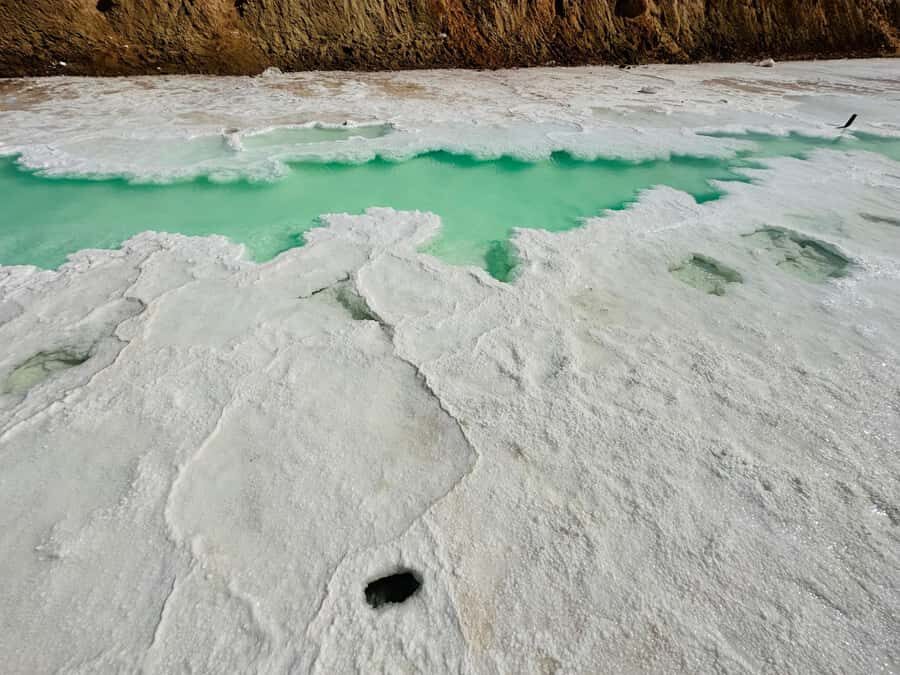
The salt lake is marketed around a visual contrast: white salt deposits against green water. In good conditions, it is exactly the kind of desert photo stop that looks like a color experiment.
But you should know the tour can be affected by on-the-ground reality. The salt lake may be under construction on some days, and that can alter the look of the area. There’s also honest feedback that, at times, it can feel less magical than the photos suggest, with some describing it as more like a puddle and others feeling it did not look tourist-friendly.
So here is how I’d frame it for you: treat the salt lake as a picture stop, not a full-on nature hike. If it is at its best, you’ll get strong color and interesting textures fast. If it is not at its best, you still get the “why is the desert so colorful” moment, but you won’t lose the whole day.
If you care about photos, go in with a quick game plan:
- Protect your eyes from glare with sunglasses.
- Use the contrast—white salt against the water—as your main composition.
- Don’t overthink it. The viewing window is what you make it.
The silver lining: even when something is under construction, you are still moving through a planned desert route with no extra navigation stress.
Camel race track: training most days, weekend races, and a lot of energy
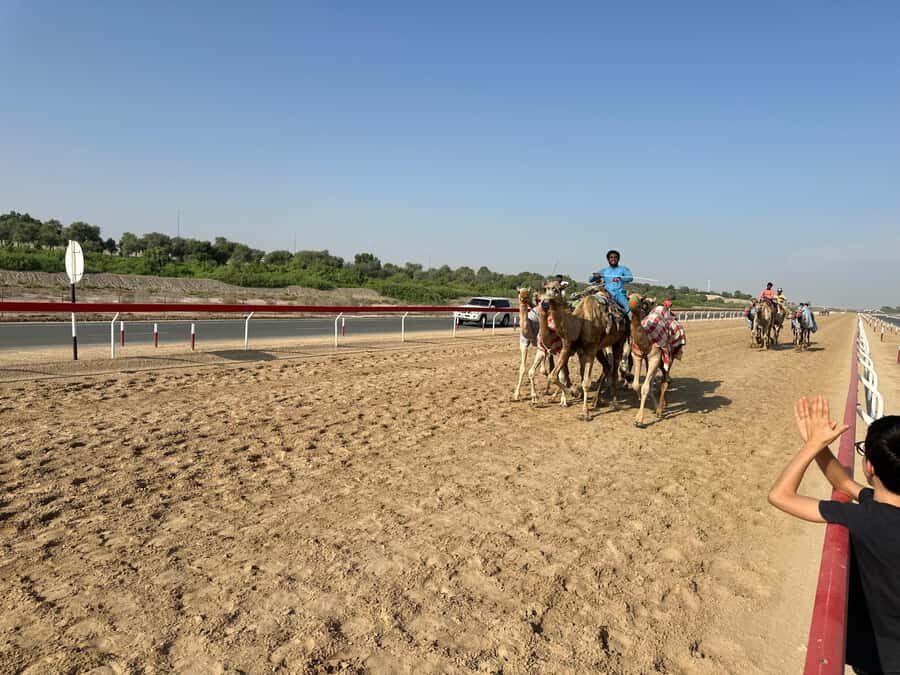
Next up is the Al Wathba Camel Race Track. This is where the tour shifts from geology and color to local sport and tradition. The tour is clear that camel races do not take place every day, so you should think of this as two layers: the track experience and the chance to see races.
Here is what you can realistically count on:
- Races normally take place on weekend mornings, with additional races on public holidays.
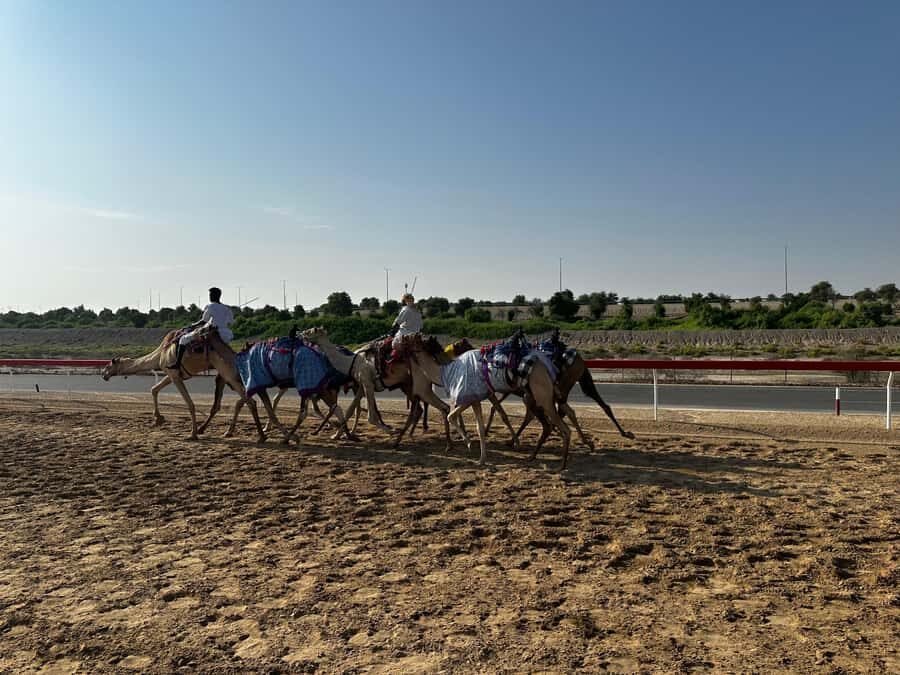
- Training is available every day except Fridays, so even if races are not running, you may still watch camels practice.
The tour is also explicit that the camel track is free to enter. That makes the experience feel less pressured. You can arrive, get oriented, and focus on the animals and the atmosphere without worrying about another ticket hurdle.
Timing matters. The advice is to get to the racetracks as early as possible. That helps because training and atmosphere tend to build, and you’ll have a better chance of seeing the action as it starts.
Watching camels gallop is not what most people imagine before they see it in person. They look awkward at first glance, but once they reach speed on a specially made track, it becomes surprisingly athletic. You’ll probably notice how loud and rhythmic it feels, and how quickly the scene changes from waiting to action.
And one more point that makes this stop feel connected to the culture: you are not only watching the spectacle. You are seeing the preparation process through training, which is where you can pick up the rhythm of how the day works.


Timing, heat, and packing: small choices that make the day smoother
This tour is mostly outdoors, so your comfort choices matter more than usual.
The tour asks you to bring:
- Sunglasses
- Sun hat
- Sunscreen
- Biodegradable sunscreen
Those are not random. The desert glare can get intense fast, and you will be walking during the dunes segment. The shaded sections and benches on the 2-kilometer route help, but you still need sun protection for the full day.
Also note what is not allowed:
- Pets
- Luggage or large bags
That means you should travel light. If you have a day bag, keep it compact so you’re not stuck playing logistics while you’re trying to enjoy the stops.
If you are sensitive to sun or you want easier walking, remember the dunes walk is 2 kilometers. It is not described as steep, but it is long enough to matter. Wear footwear that you trust on dry surfaces and plan to slow down when you need breaks.
What you get for $89: value, trade-offs, and where the cost fits
At $89 per person, this day trip is priced as an affordable Abu Dhabi desert sampler. The value is mostly in three places:
- Transportation included: hotel pickup and drop-off is a real time-saver, especially in a city like Abu Dhabi where getting out to desert areas can mean coordinating rides.
- Multiple distinct stops: you cover fossil dunes, the salt lake photo contrast, and the camel track. That mix is what prevents the day from feeling like one long waiting session.
- Bottled water included: small, but helpful in a long outdoor day.
Now for the trade-offs. Food is not included, and the tour also lists guide as not included. In practice, you may still get some explanation from whoever is with your group (people have described guides as helpful and others as less strong in English). But you should assume you are relying on basic guidance rather than a full museum-style lecturer.
If you enjoy structure, you might want to pack a simple plan for food (even if it is just a snack before or after). The tour itself keeps the focus on the sights, not meals.
The “worth it” test for your preferences
- If you love unusual desert scenery, the fossil dunes are the main reason you’ll likely feel this was worth it.
- If you are mainly chasing color photos, the salt lake can deliver when conditions are good, but it can also disappoint if it is under construction or looks less photogenic.
- If animal sport is your thing, the camel training option makes this stop more reliable than you might think, because training happens most days except Fridays.
Who this tour suits best
This is a good fit if you want a compact day that feels off the beaten track, without needing to rent a car. It especially suits:
- People who like desert photography (dunes textures and salt-water contrast)
- Anyone curious about camel sport and how training fits the schedule
- First-time visitors who want a taste of the Al Wathba area without the hassle
It is less ideal if you want a long, uninterrupted, hands-on exploration. The dunes can be cordoned off due to UNESCO protection, and closures during Ramazan can shift the time balance. It also may not satisfy you if you’re expecting the salt lake to feel like a pristine, curated attraction.
Should you book this tour?
I would book it if your ideal desert day includes fossil formations, strong visual contrast, and a real look at camel racing culture, not just a drive-by scenic stop. The price feels fair for the mix of transportation, walking time, and the track access.
I would think twice if you are traveling during March–April and you strongly want the fossil dunes to be the entire point. In that window, hours can be restricted and you might spend more time at the salt lake.
My practical advice: treat this as a flexible desert route. When the dunes are open, it becomes a top-tier day. When they are not, the camel track and salt lake still keep the experience moving, and you won’t be stuck staring at one disappointing view.
FAQ
Is hotel pickup and drop-off included?
Yes. The tour includes pickup from your accommodation in Abu Dhabi and drop-off afterward.
How much walking is involved at the Fossil Dunes?
You’ll walk about 2 kilometers, with shaded areas and benches along the route.
What should I bring for the day?
Bring sunglasses, a sun hat, sunscreen, and biodegradable sunscreen.
Are pets or large bags allowed?
No. Pets are not allowed, and luggage or large bags are not allowed.
Do camel races happen every day?
No. Camel races normally take place on weekend mornings (with extra races on public holidays). There is also training every day except Fridays.
Is the camel race track free to enter?
Yes. The camel race track is free to enter.
What food is included?
Food is not included. Bottled water is included.