REVIEW · DUBAI
Cultural Iftar ( Ramadan)
Book on Viator →Operated by Sheikh Mohammed Centre for Cultural Understanding · Bookable on Viator
Ramadan Iftar in Dubai explains itself fast. I love how the evening starts with the Athan, then you break your fast right alongside Emirati hosts in Al Fahidi, in the heart of the historic neighborhood. It is a grounded, human way to understand Ramadan, not a lecture in a classroom.
The best part for me is the built-in Diwan Mosque visit after Iftar, because it turns what you ate into something you can see and ask about. You also get an Emirati presenter and time for questions, so the night feels like real conversation.
One thing to consider: this experience needs good weather, and it also does not include private transportation, so you’ll want a plan to get yourself there.
In This Review
- Key things to know before you go
- Entering Al Fahidi: the setting that makes Ramadan feel real
- The Athan-to-Iftar flow: how the evening is paced
- Q&A during Ramadan: what you can ask and why it helps
- Dinner at the wind-tower house: what’s included and how it feels
- Diwan Mosque visit: a rare chance to see worship in context
- Kids area and group energy: making the evening work for families
- Price and value: why this is a standout evening
- Should you book this Cultural Iftar in Dubai?
- FAQ
- How long is the Ramadan Cultural Iftar experience?
- Where does the experience take place?
- What is included in the price?
- Is private transportation included?
- Is there a ticket you receive on your phone?
- When will I get confirmation after booking?
- Do I need good weather to go?
- Is there anything provided for kids?
- What is the cancellation policy?
- Is the experience suitable for most travelers?
Key things to know before you go
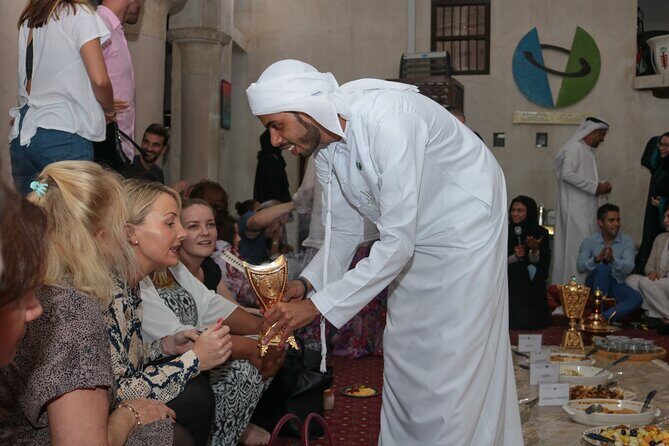
- Al Fahidi wind-tower house setting: the setting matters, because the evening is tied to the historic neighborhood feel
- Athan, dates, and Arabic coffee: you’ll follow the rhythm of how people actually begin Iftar
- Ask Ramadan questions during the meal: an Emirati presenter answers in a direct, friendly way
- Diwan Mosque visit included: a rare, structured look at worship in action
- Kids area with activities: helpful if you’re traveling with children
- Dessert and tea after the mosque visit: the program keeps moving, but it stays organized
Entering Al Fahidi: the setting that makes Ramadan feel real
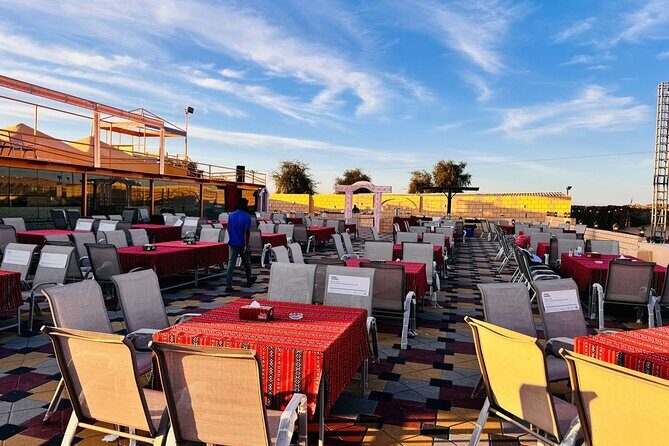
This iftar experience is based around Sheikh Mohammed Bin Rashid Al Maktoum Centre for Cultural and Social Understanding (SMCCU). You begin at the center’s head office, and from there your evening takes place in a wind-tower house in Al Fahidi District. That matters more than it sounds. Wind-tower architecture is a reminder that daily life in the UAE has always been shaped by heat, shade, and community routines. So when Ramadan time arrives, you’re not just watching a ceremony—you’re in the kind of place where it makes sense to gather.
Al Fahidi is also a practical choice for a first-time visitor. It’s not a far-flung day trip. The program runs for about 3 hours, which means you can fit it into an evening without losing your whole day to logistics. And because the experience is near public transportation, you’re not forced into expensive private rides just to attend.
If you want the most comfortable experience, aim to arrive a little early. That gives you time to orient yourself, settle in, and get ready for the key moment: the call to prayer and the fast-breaking that follows.
You can also read our reviews of more tours and experiences in Dubai.



The Athan-to-Iftar flow: how the evening is paced
The schedule is designed like a story with clear beats, and it’s one reason people enjoy it so much. Your evening starts with the Athan, the call to prayer. Then it’s time to break the fast with your Emirati hosts. Before the meal really begins, you’ll be served Arabic coffee and dates—classic, simple first steps that help everyone transition from daytime fasting to evening celebration.
A detail I appreciate here is that the hosts pray, and you’re invited to watch and take it in without feeling rushed. That moment helps you understand Ramadan as something lived, not performed for outsiders. Then the main iftar meal follows: an array of Emirati dishes served during the event.
Another nice touch is the “get ready, then sit down” pacing. This is not a chaotic buffet where you’re trying to guess what you should do next. Instead, the evening keeps you moving through the stages—Athan, first bites, prayer observation, then the full meal—so you know what’s happening at each step.
Q&A during Ramadan: what you can ask and why it helps
You don’t have to arrive with a list of questions, but you will probably leave with more of them. Part of the program includes a program with an Emirati presenter, and you’re invited to ask questions about Ramadan, Islam, and the broader culture of the UAE.
This is where the experience becomes more than dinner. It gives you context for what you just witnessed: why fasting is practiced, what the timing means, and how Ramadan fits into daily life and community. I like that the Q&A is built into the event instead of being tacked on at the end. Ask something during the meal, and it connects to what you’re seeing in real time.
One practical advantage: if you’re non-Muslim, or just new to Ramadan, this kind of direct conversation is often easier than trying to piece things together on your own. The mosque visit later gives you another moment to connect the answers you received with what worship looks like on the ground.
Also, keep your questions respectful and simple. You’ll get the most out of it if you treat it like a dialogue rather than a quiz.
Dinner at the wind-tower house: what’s included and how it feels
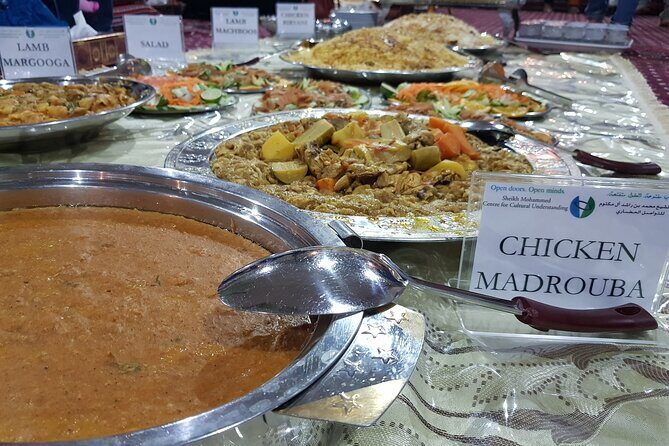
The heart of the evening is the iftar meal, and the included food isn’t just a token snack. You’ll have a full dinner experience with the iftar dishes served after dates and Arabic coffee. After the mosque visit, the program returns for dessert and tea, so you’re not left scrambling for something sweet after the main meal.
There’s also a humane detail in how the meal experience is handled: you may be offered to take away remaining food. That’s a small thing, but it shows a practical approach—planning for waste, sharing, and making sure nobody leaves hungry or disappointed.
Because it’s served during a structured program, you’re less likely to feel awkward about what to do. You’re guided through when the meal happens, when prayer observation fits in, and when to shift to dessert and tea. For me, that lowers the stress level. I can focus on understanding the evening rather than figuring out the logistics of the dinner itself.
Food-wise, you’ll be sampling Emirati dishes, and that’s a key value of the night. Ramadan iftar in the UAE has its own flavor, and this is one of the safer ways to try it without worrying about whether you’ll be eating something unfamiliar to your palate.
Diwan Mosque visit: a rare chance to see worship in context
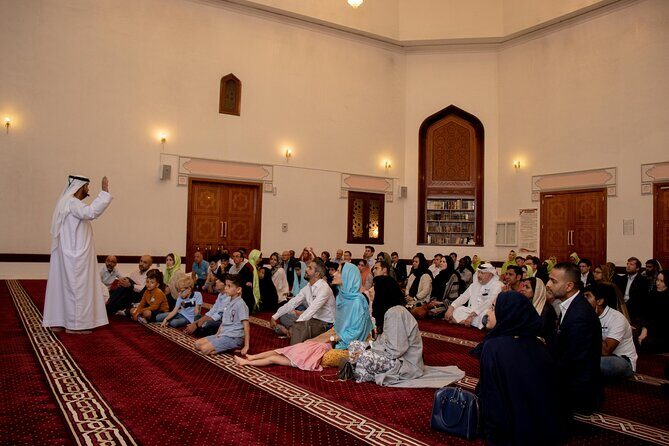
After you finish iftar, the program includes a visit to the Diwan Mosque. This is one of the most meaningful parts of the experience, because it goes beyond food and into worship and space.
What makes it special is the order. You experience the rhythm of Ramadan at the wind-tower house—Athan, fasting ending, prayer observation—then you step into a mosque setting immediately after. That sequence helps the whole night click. You’re not separating spiritual practice from community gathering. You’re seeing how they connect.
For your own comfort, plan to behave the way you would in any place of worship. The experience is a guided, respectful visit, and it’s best if you come with a quiet, observant mindset. If you’re unsure about dress or conduct, choose clothing that covers shoulders and knees, and you’ll be on the safe side for a mosque visit in Dubai.
If you’re traveling with curiosity about Islam, this is the part that turns that curiosity into something real. You can ask questions earlier, then use the mosque visit to understand what the prayers and environment look like.



Kids area and group energy: making the evening work for families
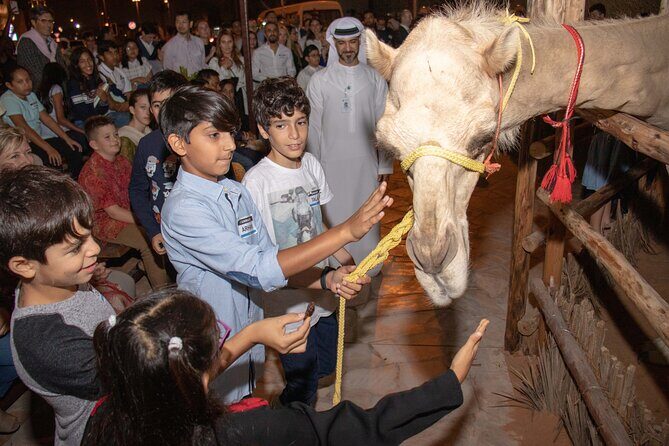
If you’re traveling with children, the program gives you an important convenience: there is a designated kids area with fun activities. That means parents can participate in the meal and Q&A without spending the entire evening juggling every minute of child entertainment.
The main program still keeps everyone together for the core moments—Athan, iftar, presenter time, and the mosque visit. But the kids area reduces stress and makes the experience more family-friendly. That matters because Ramadan evenings can feel long if the kids are restless, and here they’re given a structured place to have fun.
Group size is designed to feel manageable, and it’s the kind of event where you can actually hear what the presenter is saying. You’re not packed into a massive crowd where the experience turns into background noise.
For teenagers, it can also be a strong fit. A cultural meal plus structured Q&A tends to work well when young people want explanations they can take back and discuss later.
Price and value: why this is a standout evening
The price shown for this experience is $0.00. Even if you’re not thinking about it as a budget trip, the value here is practical: you get dinner plus dessert and tea, a program with an Emirati presenter, and an included mosque visit, all wrapped into an evening that runs about 3 hours.
At many destinations, cultural activities like this cost a lot, and you only get one piece—maybe a meal, maybe a guided walk, maybe a talk. Here you get several pieces in one evening: the fast-breaking moment, the explanation through questions, and the mosque visit right after. That combination makes the experience feel efficient for your time in Dubai.
One trade-off is transportation. Private transportation is not included, so your cost is really the cost of getting yourself to the SMCCU area and then managing your return. Because the experience is near public transportation, you should be able to handle it without a private car, but you do need to plan.
Should you book this Cultural Iftar in Dubai?
Book it if you want a Ramadan experience that feels explained in real time, not guessed through. The mix of Athan-led pacing, an Emirati presenter with Q&A, and the included Diwan Mosque visit makes it ideal if you’re curious about Islam and UAE culture and you like learning through direct conversation.
Skip or reconsider if you hate weather uncertainty or you don’t want to manage your own transportation. The experience requires good weather, and it doesn’t include private transport. Also, if you’re expecting a short, casual snack with no structure, this isn’t that. It’s a guided program that moves through distinct steps.
If you want one authentic evening in Dubai that turns Ramadan into something you understand, this is a strong choice.
FAQ
How long is the Ramadan Cultural Iftar experience?
It lasts about 3 hours.
Where does the experience take place?
It begins at SMCCU (Sheikh Mohammed Bin Rashid Al Maktoum Centre for Cultural and Social Understanding) and the iftar happens in the wind-tower house in Al Fahidi District. It also includes a mosque visit to Diwan Mosque.
What is included in the price?
The experience includes dinner (with dessert and coffee and tea), a program with an Emirati presenter, and the mosque visit.
Is private transportation included?
No, private transportation is not included.
Is there a ticket you receive on your phone?
Yes, the experience uses a mobile ticket.
When will I get confirmation after booking?
Confirmation is received within 48 hours of booking, subject to availability.
Do I need good weather to go?
Yes. The experience requires good weather. If it is canceled due to poor weather, you’ll be offered a different date or a full refund.
Is there anything provided for kids?
Yes, there is a designated kids area with fun activities.
What is the cancellation policy?
There is free cancellation. You can cancel up to 24 hours in advance for a full refund, and cancellations within 24 hours of the start time are not refunded.
Is the experience suitable for most travelers?
Most travelers can participate.