REVIEW · DUBAI
Dubai City Tour Old Town, Abra Taxi Boat, Gold & Spice Market
Book on Viator →Operated by Adventure Premium Travel · Bookable on Viator
Dubai’s past moves fast on this tour. You’ll stitch together Al Seef waterfront, the wind-tower streets of Al Fahidi, a short Abra boat ride, and the Deira/Bur Dubai souk maze, all with a licensed local guide.
I especially like how the schedule mixes viewpoints and “look closer” places, not just shopping stops. You also get admission tickets included for multiple sites, plus the wooden-boat crossing, all for $29 per person.
One thing to keep in mind: this is a short 2-3 hour circuit. If you want to spend a long time price-checking, comparing, and bargaining in the Gold Souk, you may feel a bit rushed.
In This Review
- Quick highlights
- Start at Al Shindagha Museum and walk into Al Seef
- Bastakiya Quarter and Al Fahidi’s wind-tower lanes
- Dubai Creek on a small wooden boat: the short ride that sells the story
- Bur Dubai Old Souk: textile lanes, wooden beams, and real bargain energy
- Dubai Museum and Al Fahidi Fort: the old-building anchor
- Deira Spice Souk, then the Gold Souk finish
- Why the guide and small-group size matters here
- Price and value: how $29 buys more than one stop
- Who should book this Old Dubai circuit—and who might not
- Before you go: set expectations for a fast, walk-and-market day
- Should you book this Dubai City Tour?
- FAQ
- How long is the tour?
- What is the price per person?
- What places are included in the tour?
- Where does the tour start and end?
- How big are the groups?
- Is free cancellation available?
Quick highlights
- Al Seef: a waterfront walk where old pearl-port vibes meet modern Dubai
- Bastakiya wind towers: narrow lanes, carved wood doors, and 1890s-era architecture
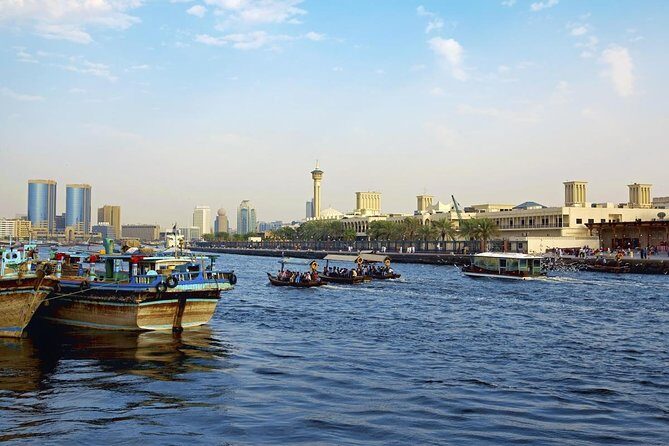
- Abra wooden-boat ride: a classic Creek crossing with cargo boats and birds on your side of the river
- Old Dubai souks: a textile souk experience with real marketplace energy and shopping variety
- Spice and Gold: Deira’s Baniyas Street Spice Souk, then the Gold Souk finish line
Start at Al Shindagha Museum and walk into Al Seef
Your day begins at the entrance area of Al Shindagha Museum in Al Fahidi (listed as 288 – Al Fahidi). From there, you head toward Dubai Creek and straight into Al Seef, the waterfront strip where you can feel the shift from old trading life to today’s hotel-and-mall Dubai.
Al Seef is split into two different moods: an older heritage section and a more modern stretch lined with places to shop and eat. You’ll have around 20 minutes here, which is just enough time to get your bearings, spot the floating-market feel, and notice the mix of styles along the shoreline. You may also get a chance to taste street food, which is one of the easiest ways to make the walk feel real rather than just “another photo stop.”
If you’re the type who likes to understand a place before you shop it, this is a strong start. It frames the rest of the tour: you’re learning how Dubai’s trade mattered, then you go see the evidence.
You can also read our reviews of more boat tours in Dubai



Bastakiya Quarter and Al Fahidi’s wind-tower lanes
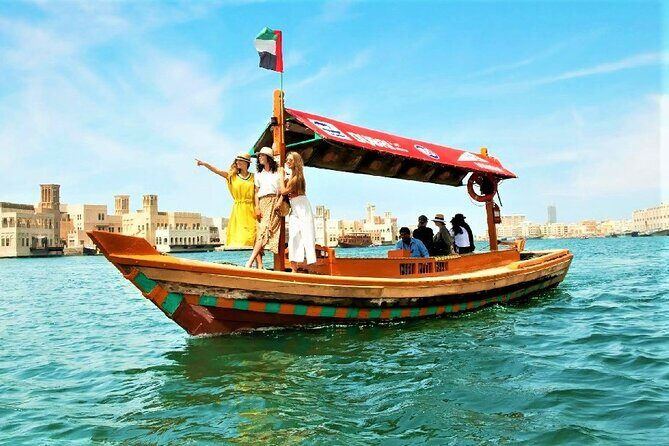
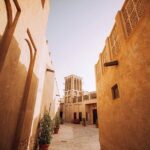
Next comes the Bastakiya Quarter and Al Fahidi Historical Neighbourhood area. This part of Old Dubai is known for the influence of traders who came from Bastak (Iran), and that connection shows up in the buildings. Expect narrow, winding lanes, wind towers on the buildings, and carved wooden doors with wooden lattice details.
You’ll spend about 20 minutes at this stop, then later you revisit the historical neighbourhood again for another short stretch (about 15 minutes). That structure works well. The first visit helps you notice the architecture and street layout. The later stop gives you time to slow down a little and focus on “how people lived here.”
This is also one of the best parts of the tour for photos that don’t look like generic landmarks. The wind towers and woodwork give you texture—real craftsmanship you can spot even if your camera is doing most of the work.
Dubai Creek on a small wooden boat: the short ride that sells the story
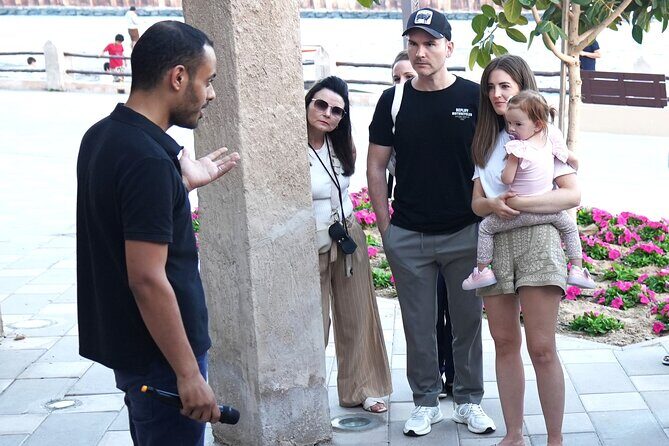
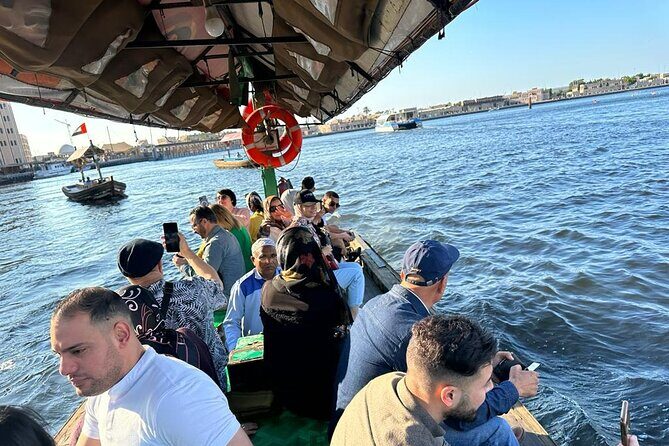
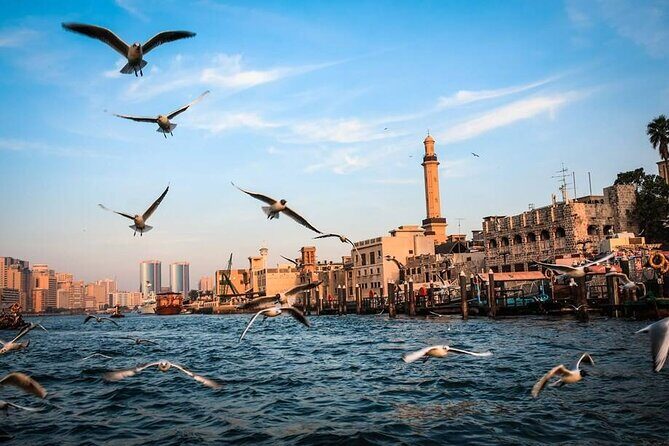
Dubai Creek is the tour’s “prove it” moment. You’ll ride a small wooden boat and look along the banks at birds, cargo ships, restaurants, and everyday water activity. The time here is about 15 minutes, so it’s not a long cruise. That’s actually a plus: you get the classic view without spending half your day on the water.
Abra rides are also included in the plan, with a stop at Bur Dubai Abra Station. This is the traditional water-taxi style transport that’s still used as an old-school way to cross. The name Abra comes from an Arabic verb meaning to cross, which makes the experience feel like more than a sightseeing gimmick.
If you like connecting history to movement, this is the part you’ll remember. You’re literally traveling the way people traveled when Dubai was built around creek commerce.
One practical note: this is short. If you’re hoping for a slow, chatty boat ride with lots of time on the water, you may want a longer boat-focused option later. Here, the boat is the connector.
Bur Dubai Old Souk: textile lanes, wooden beams, and real bargain energy
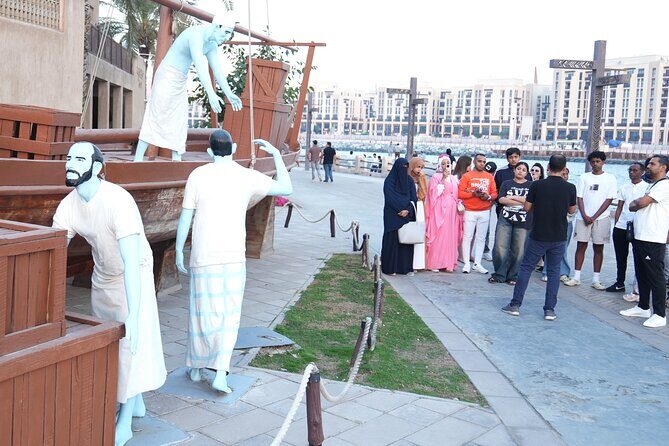
Then you hit Old Souk and the textile souk atmosphere in Bur Dubai. The tour sets you up to see fabrics—hand-woven and machine-made—along with a bigger market mix. Because Dubai’s skyline is all glassy towers, this kind of market layout can feel like a different city.
You’ll spend about 15 minutes in the Old Souk textile area. One of the first things you notice as you enter is a major wooden beam and the sand-coloured building walls. The wooden roof and high wooden door make the place look like it belonged in older films. The layout is also described as labyrinth-like, which helps explain why a local guide matters here. Without one, you can end up wandering but not learning.
You also get another Old Souk session later for about 30 minutes. That longer stretch gives you more time to browse what’s actually sold: stores featuring items like raw silk, wool, cashmere, perfumes, spices, and dry fruits. If you’re shopping for traditional clothing, you might also find abaya options, thawb robes, silk scarves, and even tailored garments.
My advice: treat this as your “try your luck” market stop. Go in with a plan (textiles? perfumes? souvenirs?) so you don’t lose time comparing everything at once. And yes—bartering is part of the fun here, so ask for a better deal if you’re buying.
Dubai Museum and Al Fahidi Fort: the old-building anchor
The tour includes Dubai Museum & Al Fahidi Fort, with the historical neighbourhood context again around this stop. The schedule gives you about 15 minutes, which is short but useful as an anchor. After walking the lanes and seeing wind towers, this is where you connect the visuals to a story about the area.
The fort is described as the oldest building in Dubai since the 1780s (as presented in the tour details). Even if you’re not a museum person, that helps you frame why the architecture looks the way it does. You’re not just sightseeing buildings; you’re seeing one of the reasons the area matters.
Because the museum time is brief, focus on the big picture: how the fort and surrounding neighbourhood fit into Dubai’s earlier trading life. This is a “quick context” stop, not a slow museum day.
You can also read our reviews of more city tours in Dubai

Deira Spice Souk, then the Gold Souk finish
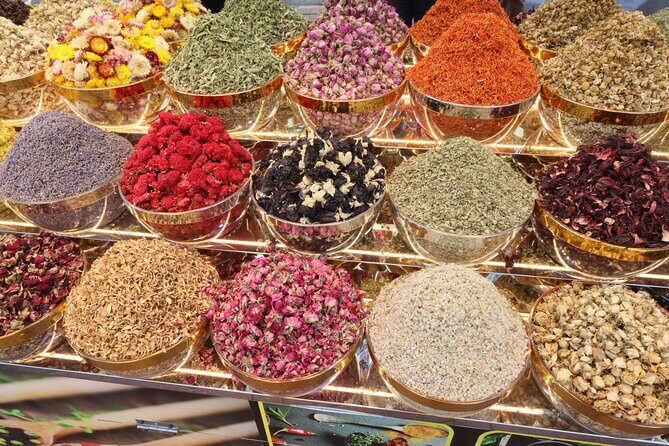
From Bur Dubai you move toward Deira’s market world. You’ll visit Dubai Spice Souk in Al Ras, on Baniyas Street, adjacent to the Dubai Gold Souk. The time here is about 15 minutes.
Spice Souk tends to hit your senses faster than you expect. The market setup makes it easy to spot how spices were part of everyday trade, not just a cooking ingredient. Even with limited time, you’ll get a feel for the scale and the variety.
The plan also includes Deira Old Souk Abra Station as a stop with a photo-friendly chance around the oldest market areas and the water side (including views of old cargo wooden boats). That’s another reminder the Creek isn’t just scenery—it’s part of the supply chain story.
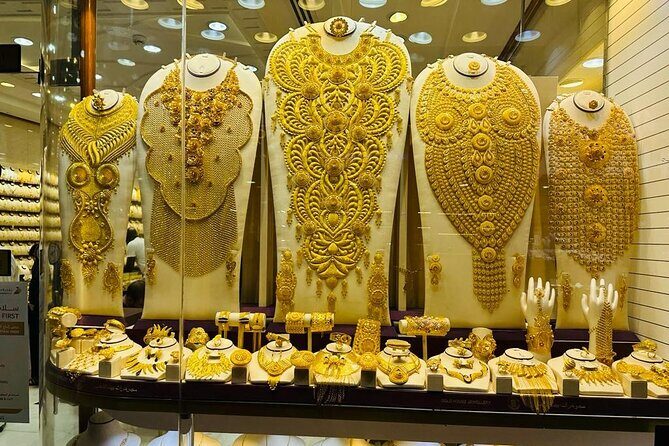
Then the tour ends at the Dubai Gold Souk (Deira / Al Ras area). You’ll spend about 15 minutes inside the Gold Souk and see lots of shops selling gold jewelry and precious stones. It’s a clean finish: shop for a bit, soak in the glittering contrast after the spice aromas, and then you’re done.
Is it enough time to buy a major piece? For many people, no. But it’s enough time to understand the vibe, compare what’s on offer, and avoid the feeling of arriving too late to enjoy the market while it’s lively.
Why the guide and small-group size matters here
This tour runs with a small group size: maximum 15 travelers. That changes the feel in a place like Old Dubai, where streets are narrow and signage can be easy to miss. You’re more likely to hear the guide clearly, ask questions, and keep up without the tour turning into a single-file march.
Guides are described as licensed and able to guide in different languages, and that matters for the souks. Market logic isn’t the same everywhere. A guide helps you move through the textile and spice areas efficiently and explain what you’re looking at—like why the Bastakiya wind towers and woodwork show up where they do.
If you get Francis (one guide name that’s specifically mentioned), you’re in for a history-focused approach. The tone described is friendly and helpful, with extra guidance in the Abra ride and while you’re handling your Gold and Spice Souk browsing. Even when your time is short, that kind of person-to-person coaching makes the difference between wandering and understanding.
Price and value: how $29 buys more than one stop
At $29 per person for an experience that lasts about 2-3 hours, the big value idea is compression. You’re getting multiple different “Old Dubai” categories in one go: waterfront (Al Seef), architectural lanes (Al Fahidi/Bastakiya), a live-water connection (Abra/Creek), museum context (Dubai Museum & Al Fahidi Fort), and two main souk markets (Spice and Gold) plus textile/Old Souk time.
Also, the tour details say admission tickets are included for the listed stops. That matters because it removes the mental math of figuring out what costs extra later. You can focus on enjoying the places instead of tracking tickets mid-walk.
The other value lever is group size. A small group means less waiting and more “do the thing, see the thing, move on.” For short trip days, that can be the difference between feeling efficient and feeling like you missed half the points.
Who should book this Old Dubai circuit—and who might not
I’d book this if you want a first-timer friendly walk through the parts of Dubai that don’t feel like a theme park. It suits you if you like variety—architecture, a museum moment, a boat ride, and market browsing—without needing a full day.
It’s also a solid fit if you enjoy shopping but you’re okay with a short window. You’ll touch textile souk, spice souk, and gold souk. You won’t get hours in each one, so come with priorities.
You might skip it if you want deep museum time or serious shopping time in the Gold Souk. The Gold stop is only about 15 minutes, and several other stops are similarly short. Think of this as a taste-and-photo-and-basics tour, not a long-buying mission.
Before you go: set expectations for a fast, walk-and-market day
This experience is built around walking through narrow lanes and moving through market alleys, then combining that with short time blocks at different points. Wear shoes you’re comfortable standing and walking in because a lot of the value comes from being able to move with your guide and keep up with the flow.
Also, markets move fast and you’ll likely spend time inside stores with lots of visual detail. If you can, set a simple goal for each stop. For example: at Spice Souk, focus on what you can smell and compare; at Old Souk textile, focus on a category (textiles/perfumes) rather than “everything.”
Finally, one reality check: there has been at least one complaint about a representative not showing up at the meeting point on time. That doesn’t mean it happens often, but it’s smart to double-check the meeting instructions and plan to arrive a few minutes early at Al Shindagha Museum.
Should you book this Dubai City Tour?
I’d say yes, with a clear expectation: this is a well-paced Old Dubai sampler in 2-3 hours. You get the Creek by Abra, the wind-tower streets of Al Fahidi/Bastakiya, museum context at Dubai Museum & Al Fahidi Fort, and then market time in the Spice and Gold Souks—plus a textile/Old Souk stop that gives you shopping variety beyond just one category.
If you’re on a tight schedule and want the contrast between old trading Dubai and modern Dubai in one sweep, it’s a good match for your day. And if you’re unsure, you have flexibility because free cancellation is available up to 24 hours in advance for a full refund.
If you want, tell me your travel dates and what you care about most—history, shopping, photos, or the boat ride—and I’ll suggest how to spend the rest of your day around this.
FAQ
How long is the tour?
The tour duration is about 2 to 3 hours.
What is the price per person?
The price is $29.00 per person.
What places are included in the tour?
The tour includes Al Seef, Dubai Creek, Bastakia Quarter/Al Fahidi Historical Neighbourhood, Dubai Museum & Al Fahidi Fort, Old Souk, Dubai Spice Souk, and Dubai Gold Souk, with time at Abra stations for the boat ride.
Where does the tour start and end?
It starts at Al Shindagha Museum (288 – Al Fahidi) and ends at the Dubai Gold Souk area (Dubai – Deira – Al Ras).
How big are the groups?
The group size is limited to a maximum of 15 travelers.
Is free cancellation available?
Yes. You can cancel for a full refund if you cancel up to 24 hours before the experience’s start time.