REVIEW · DUBAI
Dubai Half Day City Tour
Book on Viator →Operated by TourDubaitoday · Bookable on Viator
One fast morning can make Dubai feel less like a blur. This half-day tour strings together old Dubai corners (Al Seef and Al Fahidi) with modern icons (Marina, Dubai Frame) in about 4 hours, and I especially like the short stops that keep you moving without feeling rushed. The other big plus is the tour guide, with Mohammed Sulaiman singled out as trustworthy and excellent at explaining what you’re seeing. The main drawback: it’s a lot of ground for one session, so you’ll want to treat a few sights as photo-and-walk moments, not long stays.
If you want a smart taste of Dubai instead of a single mega-moment, this works well. It also includes bottled water and an air-conditioned vehicle, which matters when you’re hopping between waterfronts, souks, and landmarks. My one caution for your planning: some of the most famous stops have admission not included, so you’ll need to decide on the spot which optional entries are worth your time and budget.
In This Review
- Quick highlights that make this tour worth your time
- A 4-hour route that keeps Dubai organized (and you comfortable)
- Al Seef waterfront and Al Fahidi lanes: where Dubai looks human
- Dubai Creek: the trade route behind the whole city
- Spice Souk: smell-first shopping and the reality of haggling
- Gold Souk time: quick glitter, big pricing choices
- Jumeirah Mosque: a short cultural stop that should be respected
- New Lewan Islamic Art Gallery: ticket included, and it breaks up the heat
- Burj Al Arab, Palm Jumeirah, Atlantis: big icons without a big time sink
- Dubai Marina and Dubai Frame: your skyline payoff
- Price and value: what $50 covers, and where you pay extra
- Who should book this tour, and who should skip it
- Should you book this Dubai Half Day City Tour?
Quick highlights that make this tour worth your time
- Small group size (max 15) for an easier, more personal pace.
- Pickup offered plus an air-conditioned vehicle to cool off between sights.
- Al Seef + Al Fahidi wind-tower lanes for a real sense of older creek life.
- Spice Souk shopping time with both by-weight and packet buying, plus room to haggle.
- New Lewan Islamic Art Gallery included so you get an indoor cultural stop.
- Dubai Frame and Marina for big skyline views without needing a full-day ticket plan.
A 4-hour route that keeps Dubai organized (and you comfortable)
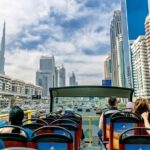
This tour is built like a curated sprint. In roughly 4 hours, you’ll cover Dubai’s old-meets-new story using a mix of short guided walks and quick drive-by sightseeing stops. Travel time is included, so you’re not spending your half day just waiting on roads.
Value-wise, the $50 per person price makes sense if you like variety and you’re not trying to cram everything yourself. You get bottled water, a mobile ticket, and air-conditioned transport, which can easily make a difference in the heat. The group is capped at 15, so you’re not stuck behind a busload of people at every crossing.
What I like most is the balance: you’re not only chasing the tallest buildings. You start with the creek area, move through market culture, stop at a major mosque, then finish with skyline viewpoints and beach-adjacent icons.
You can also read our reviews of more city tours in Dubai

Al Seef waterfront and Al Fahidi lanes: where Dubai looks human
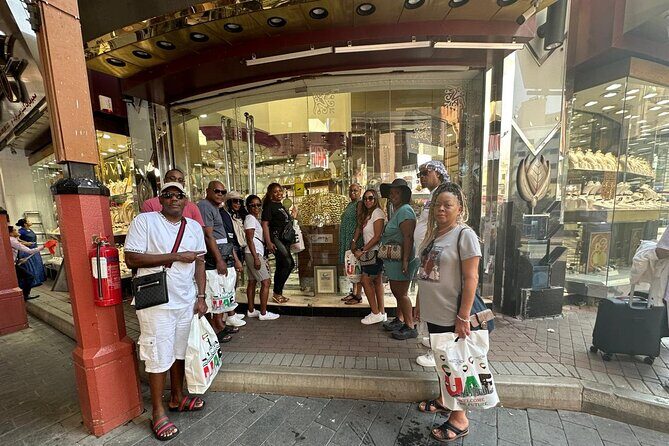
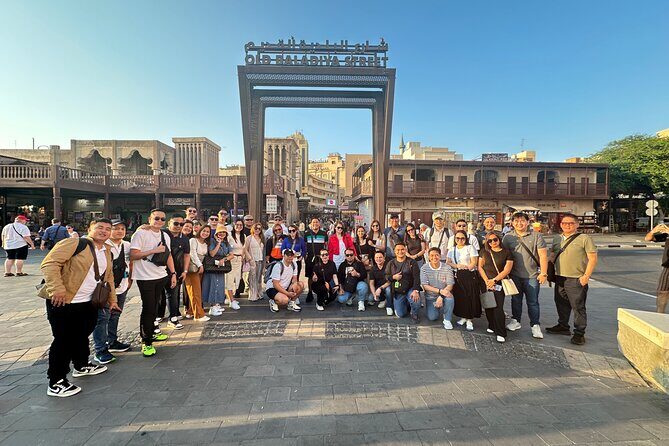
Your first meaningful stop is Al Seef, a 1.8 km waterfront along Dubai Creek, right next to the Al Fahadi neighborhood. This area is one of the best “orientation” zones because it helps you understand how the creek shaped trade, daily life, and the city’s layout.
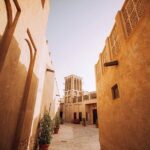
From there, you spend time in the Al Fahidi Historical Neighbourhood, built from the mid-19th century era of old Dubai life. This isn’t just a pretty district. You’ll walk lanes and pathways that still reflect the original infrastructure and the way people designed their homes around heat.
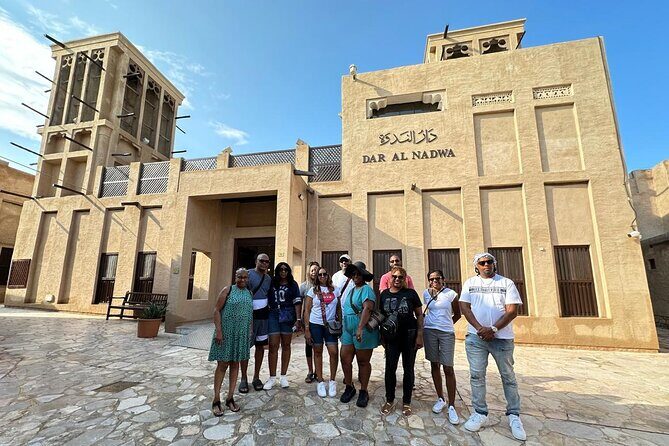
The standout detail here is the wind-tower design. These traditional towers were constructed using materials like sandstone, teak, gypsum, palm wood, and sandalwood. It’s the kind of design that makes you stop and look up, because it’s practical architecture, not decoration.
One more practical note: this part of the route is your best chance for photos that don’t look like the same skyline shot everyone posts. If you care about texture in your travel photos, Al Fahidi is where you’ll get it.
Dubai Creek: the trade route behind the whole city
After Al Seef and the heritage lanes, you head to Dubai Creek itself for a short stop. The tour framing is clear: the creek isn’t a background feature. It’s described as a natural saltwater creek and a key port used historically for trade and transport, extending around 14 km inland.
Even in a brief visit, this is the moment where the tour makes sense. If you’re wondering how Dubai went from creek commerce to global city icons, the creek is your answer.
You’ll get around 15 minutes here, which is enough to look, take a few photos, and understand the geography. Just don’t expect a long river stroll in this half-day format. Think of it as context, not an all-day outing.
Spice Souk: smell-first shopping and the reality of haggling
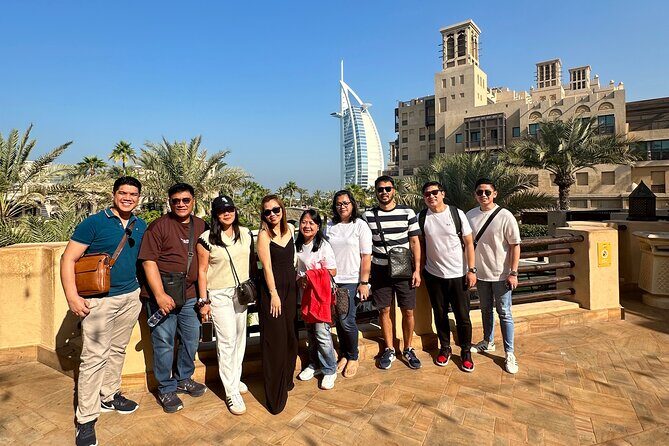
Next up is Dubai Spice Souk. This is a classic sensory stop: mounds of aromatic herbs and spices spill from large baskets. It’s a good place to see how the souk economy works at street level, not in a showroom.
The tour gives you around 30 minutes here, which is a decent window for tasting the atmosphere and buying a small bag without feeling like you’re rushing. The big shopping detail you’ll notice fast: spices are sold both by weight and in packets.
Like other souks, you should expect bargaining. If haggling isn’t your thing, you can still enjoy the stop by browsing and buying a small packet, treating it like a souvenir and a flavor story rather than a major shopping mission.
Also, if you plan to carry purchases with you for the rest of the day, keep bags light. You’ll still have multiple landmark photo stops after the souks.
Gold Souk time: quick glitter, big pricing choices
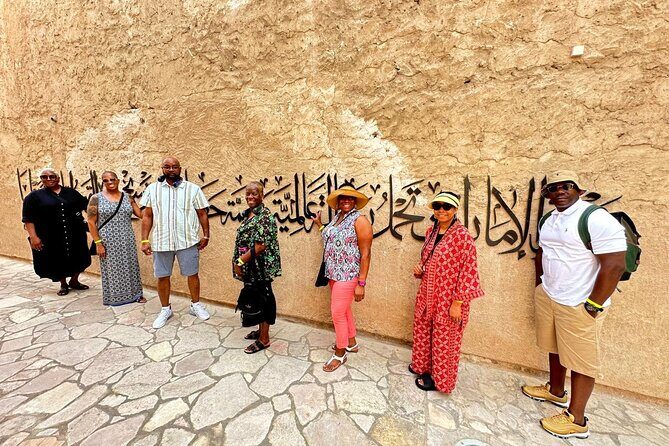
A trip to Dubai doesn’t feel complete without a walk through the Gold Souk. This stop is included as part of the souk experience, and it’s the opposite of the spice market. Instead of smells and herbs, it’s reflections, jewelry displays, and carat options.
In a half-day tour, you don’t get long to compare like a serious buyer would. So I’d treat this as a visual stop unless you already know what you want. If you are shopping for gold, plan to ask questions and compare options, because choices like carat and design can change the price quickly.
Even if you don’t buy, it’s a great contrast stop after the spices. You leave with a sense of how Dubai’s markets serve different shoppers—food, fragrance, and then precious metal.





Jumeirah Mosque: a short cultural stop that should be respected
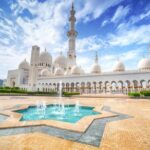
The tour includes Jumeirah Mosque for about 10 minutes. Construction began in 1975 and the mosque opened in 1979, built in a combination of historical Islamic architectural styles, including Fatimid and Mamluk. It was gifted from the late Sheikh Rashid bin Saeed Al Maktoum to his son and heir, Sheikh Mohammed bin Rashid Al Maktoum.
This is a quick stop, so you’re not going to leave with a full museum-style understanding. But the design details matter, and the short time helps you fit it into the rest of the day without turning it into a separate half-tour.
Admission here is not included, so if you’re hoping for an extended visit inside, you’ll need to factor that in. Even if you just appreciate it from outside, it’s a meaningful contrast point after the markets.
New Lewan Islamic Art Gallery: ticket included, and it breaks up the heat
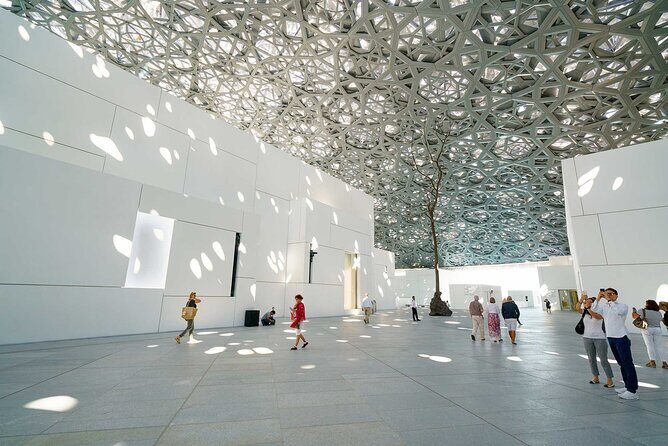
One of the best “value surprises” in the schedule is New Lewan Islamic Art Gallery, where admission is included. You get about 30 minutes here, which is ideal when you want an indoor cultural pause between outdoor sights.
The tour highlights the story of Islam’s message bringing new hope, with an emphasis on how art and craft became part of daily life and worship. You’ll also see how artists combined influences such as Persian, Byzantine, and Sassanian techniques and styles. The framing connects art to thought—work as worship, and art as a celebration of divine beauty.
Even if you’re not an art expert, this stop is useful because it helps you interpret what you’ve been seeing elsewhere. Dubai often tells its story through architecture and craftsmanship, and this is one of the clearer moments on the route to understand that theme.
Burj Al Arab, Palm Jumeirah, Atlantis: big icons without a big time sink
Then you shift into the luxury-icon loop.
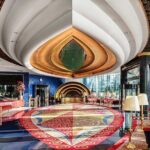
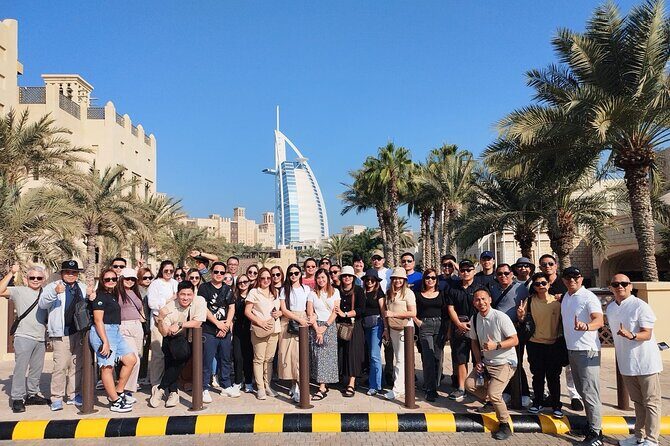
You’ll spend around 15 minutes at Burj Al Arab. This is a luxury hotel on an artificial island connected to the mainland by a private curving bridge. The structure is designed to resemble the sail of a dhow, and the tour notes that 39% of the building’s total height is non-occupiable space. There’s also a helipad near the roof, at 210 m above ground.
Admission isn’t included here, which is typical for exterior-focused skyline tours. This stop is about scale and style. You’ll likely get photos and a feel for the setting, not a deep interior experience.
Next, you pass the Palm Jumeirah, described as an artificial archipelago on the Persian Gulf, part of the broader Palm Islands developments. The tour also notes its population, which helps you remember it’s not only a resort fantasy—it’s a real residential island too.
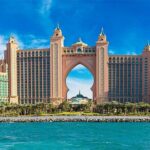
Finally, there’s a stop at Atlantis – The Palm for about 10 minutes. It’s framed as an iconic resort between the turquoise waters of the Arabian Gulf and Dubai’s skyline. Admission is not included, so consider it a photo-and-view moment.
One practical tip: these iconic stops can feel repetitive if you’ve already toured Dubai’s mega-attractions on another day. But as a cluster, they work. You get a quick timeline from heritage waterfront to modern spectacle.
Dubai Marina and Dubai Frame: your skyline payoff
You finish with two modern heavy-hitters: Dubai Marina and Dubai Frame.
Dubai Marina gets about 30 minutes. The tour focuses on the seafront district and the cruise terminal and marina, including the ability to berth up to 700 luxury yachts. It also mentions the area being open for public exploration, with hotels, cafés, retail outlets, and restaurants opening in phases. L’Amo Bistro Del Mare is referenced as a highlight with signature seafood and views, though that’s just a pointer if you want a place to grab food later.
This is a great spot for photos because you’re up against waterfront angles and tall building lines, which makes Dubai look engineered and intentional. It’s also a good place to slow down a bit compared to the souks.
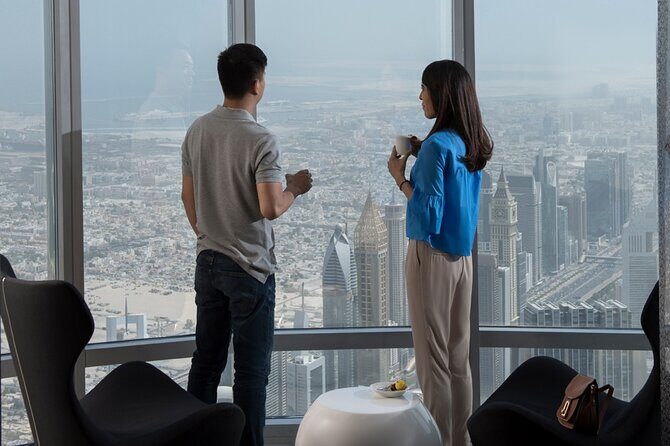
Then you head to Dubai Frame for around 15 minutes. This structure is 150 m tall and 93 m wide, with a bridge connecting two towers. The key concept is that it frames views: Dubai’s historic district to the north and modern cityscape to the south.
Admission isn’t included, so your best decision is simple: if you want inside views and the paid experience, plan that upfront. If you just want the outside landmarks and photos, the time provided is still enough to do that.
Price and value: what $50 covers, and where you pay extra
At $50 per person for about 4 hours, this tour is priced like a well-structured sampler rather than a deep-dive attraction ticket bundle. You get bottled water, air-conditioned transport, and a guided route that covers both heritage and skyline sights.
What’s included that matters:
- Bottled water
- Air-conditioned vehicle
- Mobile ticket
- Admission included at New Lewan Islamic Art Gallery
- Several short stops with free entry, including Al Seef and Dubai Creek, plus Dubai Marina
What isn’t included and may affect your total:
- Tips
- Jumeirah Mosque admission
- Burj Al Arab admission
- Atlantis – The Palm admission
- Dubai Frame admission
So the real cost depends on your appetite for paid entry at the famous spots. If you’re fine with exterior viewing and photo stops, you’ll keep your spending controlled. If you want interiors at mosque and landmark attractions, budget a little extra on top.
Who should book this tour, and who should skip it
This tour fits best if you’re:
- On a first trip to Dubai and want your bearings fast
- Interested in both old creek-side Dubai and modern skyline icons
- Traveling with a friend or partner who likes variety more than one single long attraction
- Comfortable with short stops and quick photo opportunities
It may be less ideal if you’re:
- Trying to see each landmark in full detail with lots of time inside
- A shopper who wants long bargaining time or careful jewelry comparison
- Someone who hates walking through marketplaces in the heat (the route is active, even if short)
Should you book this Dubai Half Day City Tour?
If your goal is to get a clear feel for Dubai in one organized session, I think this is a strong pick. The best parts are the combination of heritage creek areas, the guided souk experiences, and the fact that New Lewan Islamic Art Gallery is included, which adds real cultural value inside.
Book it if you want structure and a guide named Mohammed Sulaiman is a bonus signal of quality for you. Skip or reconsider if you’re planning to prioritize paid entry at multiple major sites, because admission for several big attractions is not included and the time at each one is limited.