REVIEW · DUBAI
Dubai: PADI Basic Scuba Diving Course
Book on GetYourGuide →Operated by nemo diving center · Bookable on GetYourGuide
Learning to scuba in Dubai feels oddly efficient. This PADI Basic Scuba course is designed to get you qualified in a short window, with guided practice at Jumeirah 3 beach and international standards you can use anywhere. You start by working through e-Learning materials, then you put the concepts into action in the water.
Two things I especially like: the course is built around real instruction in the water with all equipment included, and it uses a small-group format capped at 6 participants, so you get attention instead of being shuffled along.
One consideration: the “2 hours” duration shown when booking can be confusing next to the fact the training runs across day one and day two, so it’s smart to confirm your actual start times before you plan the rest of your trip.
In This Review
- Key Highlights You’ll Actually Care About
- PADI Basic Scuba in Dubai: Why This Format Makes Sense
- Where You’ll Learn: Jumeirah 3 Beach and the Palm Jumeirah Start
- Before Day One: e-Learning That Helps You Arrive Ready
- Day One Plan: Four Confined-Water Sessions to Build Confidence
- Day one expectations (what to be mentally ready for)
- Day Two Plan: Two Open-Water Sessions at Jumeirah 3 Beach
- What matters here
- Your Certification: What “Qualified to 12 Meters” Really Means
- Equipment, Classes, and What’s Included in the $345 Price
- Value check: what you’re really buying
- Small Group Learning: Up to 6 People
- What to Bring (and What to Leave Behind)
- Languages and Instructor Support: English and Arabic
- Practical Logistics: How Long It Takes and How to Plan Your Day
- Who This Course Is Best For
- Quick Pros and Cons to Help You Decide
- Should You Book This Course?
- FAQ
- How deep will I be qualified to go after the course?
- Where do the in-water lessons take place?
- What does the training schedule look like across the two days?
- What’s included in the $345 per person price?
- Is the e-book included?
- What languages are the instructors available in?
- How many people are in each group?
- What should I bring to the course?
- What items or activities are not allowed?
Key Highlights You’ll Actually Care About
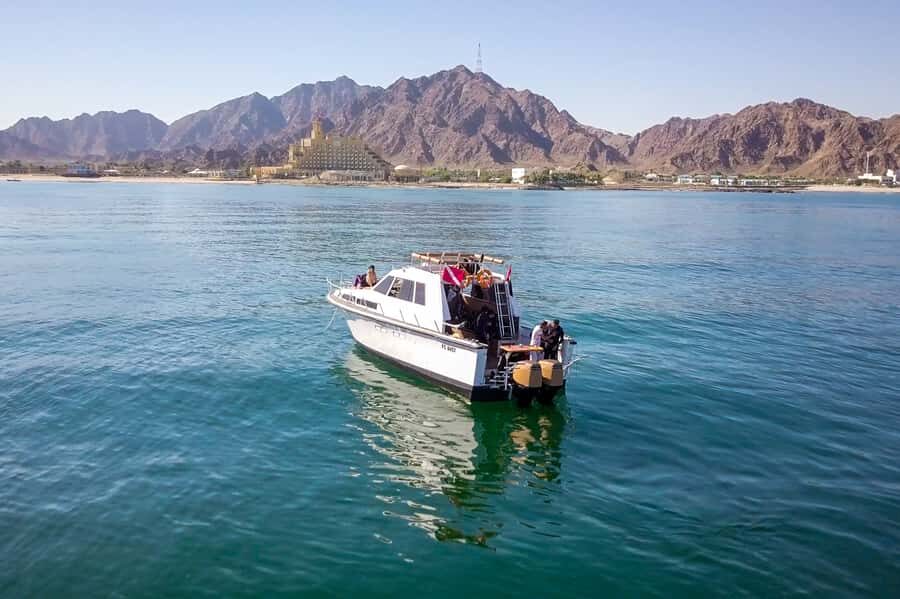
- PADI Basic Scuba certification goal in a short time frame, aimed at getting you qualified to go to 12 meters with a partner
- 4 confined-water sessions on day one plus 2 open-water sessions on day two for a gradual progression
- All equipment included in the package, which lowers the hassle (and cost) compared to piecing it together yourself
- Training takes place at Jumeirah 3 beach, where you apply what you studied in the e-Learning materials
- A small group (up to 6 people) plus English/Arabic instruction helps you move at a comfortable pace
PADI Basic Scuba in Dubai: Why This Format Makes Sense
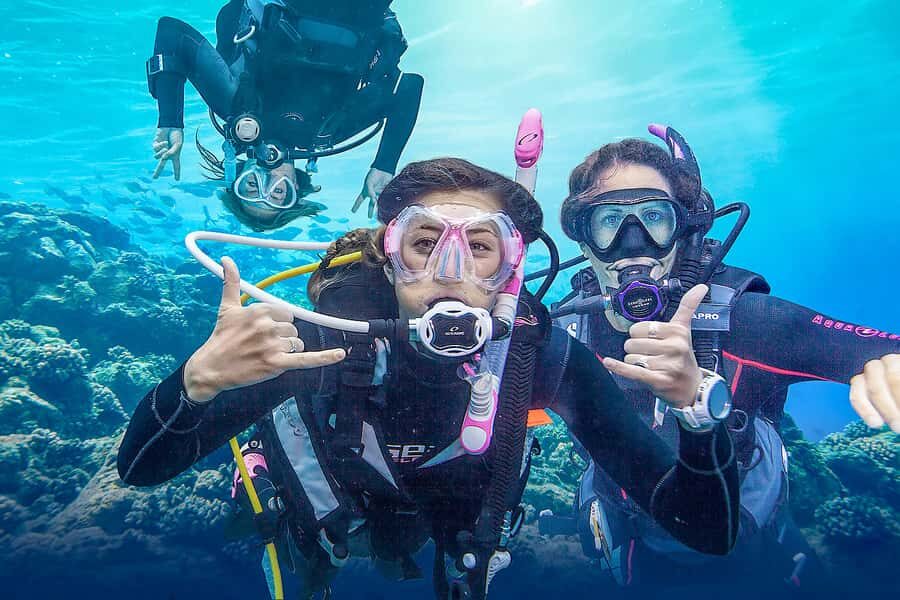
If you want a real scuba credential but don’t have time for a longer Open Water program, this course targets that exact gap. The idea is simple: you study the basics through PADI e-Learning, then you practice skills in the water with a certified guide so the training matches what you’ll need later, anywhere in the world.
What makes it feel practical is the progression. You don’t jump straight into open water. You do a first day of confined-water practice—the kind of setting meant for controlled skill-building—then you shift to open-water sessions on day two. That structure matters because it turns “I understand the theory” into “I can do this while staying calm and safe.”
Also, the instructor-led setup is reassuring. The course is guided step-by-step, with a focus on safety and confidence. In one of the best pieces of feedback, the instructors were described as friendly and patient, and importantly thorough about making sure the learner understood what was being taught. That’s the difference between a course that just checks boxes and one that actually helps you learn.
You can also read our reviews of more scuba diving tours in Dubai
Where You’ll Learn: Jumeirah 3 Beach and the Palm Jumeirah Start
This training happens at Jumeirah 3 beach, where you’ll apply the concepts you learned online. For me, the value here is obvious: your practice isn’t just “near the shore,” it’s organized as the actual lesson site for the course.
You meet at the course operator’s location on The Palm Jumeirah area (Nemo center at the Palm Jumeirah residences). From there, you’ll head to where the instruction takes place at Jumeirah 3 beach.
Two quick practical tips:
- Wear comfortable shoes for the meet-up and any walking to the lesson area.
- Bring a towel and a reusable water bottle so you’re not improvising after the sessions.
Before Day One: e-Learning That Helps You Arrive Ready
The course gives you the option to start with PADI e-Learning materials before you meet in person. That’s a big plus if you like to get oriented first. Instead of trying to absorb everything in one burst, you can read the concepts at home, pause, and come back to sections you didn’t fully get.
Now, an honest reality: doing the e-Learning early helps your time in the water go smoother. The in-water training is short—only 4 confined-water sessions on day one plus 2 open-water sessions on day two—so any confusion you could have ironed out beforehand will cost you focus during the practical work.
Plan to give yourself enough time to complete the e-Learning content before you show up. The course materials exist online, but they still require your effort.
Day One Plan: Four Confined-Water Sessions to Build Confidence
Day one centers on 4 confined-water sessions. Even without listing every specific skill, the purpose is clear: you practice scuba basics in a controlled environment so you can get used to buoyancy, breathing routines, and handling gear without the extra pressure of open-water conditions.
This is where having equipment included becomes more than convenience. When gear is part of the package, you spend less time figuring out fit and setup and more time learning the process with guidance. You’ll also be moving at an instructor-guided pace, which is especially helpful for first-timers.
What I like about this stage is how it’s set up to create confidence. The course guidance is meant to keep you safe and to help you understand what you’re doing, not just perform tasks. In feedback, instructors were described as very thorough about ensuring understanding—exactly what you want when learning in a new environment.
Day one expectations (what to be mentally ready for)
- You’ll be learning in water with close supervision
- You’ll get step-by-step help as you practice
- You’ll need to be able to follow instructions quickly, because the sessions are time-focused






Day Two Plan: Two Open-Water Sessions at Jumeirah 3 Beach
On day two, the course shifts to 2 open-water sessions. This is the stage that turns training into real-world comfort. You’ll take what you practiced in the confined setting and apply it in open water guidance at Jumeirah 3 beach.
This is also the day where you start moving closer to what the certification represents. The course states that you’ll qualify to go to 12 meters (with a partner) after completion.
For you, the payoff is practical: you’re not just learning equipment use. You’re learning how it feels when you’re surrounded by open water, with the instruction staying with you through the key moments.
What matters here
- You’ll get guided support rather than “go figure it out”
- You’ll complete open-water experience as part of the course structure
- The qualification comes after the full course, including these sessions
Your Certification: What “Qualified to 12 Meters” Really Means
After you finish the course, the training qualifies you to go to 12 meters, anywhere in the world, with a partner. That international recognition is the big deal.
This matters for travel planning. If you’re thinking ahead to future destinations—Caribbean, Red Sea, Southeast Asia—having a PADI credential can keep your options open. You’re not just buying a one-off experience; you’re working toward a standard recognized widely by dive operators.
Also, the course is specifically framed as a Basic Scuba track for people who want the entry credential without the full time commitment of a longer course. If you’re the type who likes “learn, then travel,” this format fits your style.
Equipment, Classes, and What’s Included in the $345 Price
The price is listed at $345 per person, and the package includes:
- 3 practical classes
- Scuba equipment
- License fee
That combination is what makes the price feel reasonable for a short certification pathway. Paying separately for equipment rental and certification paperwork is usually where the hidden costs show up in many activities. Here, the equipment and license fee are included, which simplifies budgeting.
One extra cost to note: the e-Learning e-book is not included and costs AED 370. That’s a key “fine print” detail because the online materials cost isn’t baked into the base price.
Value check: what you’re really buying
You’re paying for instructor-led training that results in a recognized credential, using included gear and specific session counts (4 confined-water sessions and 2 open-water sessions). If your goal is a certification in a tight time window, this is more value-oriented than paying for a single fun day in the water.
If your goal is purely scenic sightseeing and you don’t care about certification, you might decide this is more structured than you need. But if you want the credential, the package is set up for that.
Small Group Learning: Up to 6 People
The group size is capped at 6 participants. That’s not just a nice-to-have. In practical training, smaller groups mean you’re more likely to get clear feedback, quick troubleshooting, and real attention when you need it.
It also pairs well with the course’s teaching approach—safety, confidence, and patience. If you’re nervous on day one, a small group helps you settle because you’re not competing for time with the instructor.
What to Bring (and What to Leave Behind)
The course requests:
- Comfortable shoes
- Towel
- Reusable water bottle
And it has clear restrictions:
- No pets
- No alcohol and drugs
That may sound obvious, but it’s worth taking seriously. You’ll be in training gear and in water, so the basics—hydration, dry recovery, and following safety rules—make a real difference to how the day feels.
Languages and Instructor Support: English and Arabic
Instruction is available in English and Arabic. So if you prefer one of those languages, you’ll have a better chance of following instructions smoothly.
The course also promises that you’ll be guided through every step. Based on course feedback, that support is not just polite—it’s detailed, with instructors checking that you understand what you’re being taught before you move on.
Practical Logistics: How Long It Takes and How to Plan Your Day
The course is described as lasting across two days—confined-water practice on day one and open-water sessions on day two. Yet the booking duration is listed as 2 hours, so you should treat that as a time-window indicator and confirm the actual schedule for your selected time.
In real terms, plan your itinerary around two training days. Treat the first day as skill-building and the second as your key open-water experience.
Who This Course Is Best For
This course works best if:
- You want a PADI certification but short on time
- You’re planning future scuba travel and want a widely accepted credential
- You’re a beginner who values patient, thorough instruction
- You’re comfortable following safety guidelines and learning in the water in a structured way
It’s not ideal if:
- You only want a quick recreational experience with no interest in certification
- You’re hoping for a single-session trial (this course is clearly organized across day one and day two)
Quick Pros and Cons to Help You Decide
Pros
- PADI Basic Scuba credential pathway in a tight time frame
- Confined-water sessions on day one followed by open-water sessions on day two
- Equipment included plus license fee included
- Small group size and instructor support focused on understanding
Cons / considerations
- Extra cost for the e-book (AED 370) is not included
- The experience is spread over two days, even though booking duration shows 2 hours, so double-check your exact schedule
- You’ll need to do pre-work with the e-Learning if you choose the home-study start
Should You Book This Course?
Yes—if you’re serious about getting certified fast and you want a structured, instructor-led entry course. The combination of included equipment, license fee, and a guided progression at Jumeirah 3 beach makes it a good value for people who want the credential, not just a one-off activity.
If you’re deciding between doing this versus a longer Open Water track, choose this one when time is your constraint. Choose it confidently when you like learning in stages: confined-water practice first, then open water.
But if you’re unsure about committing, read the e-Learning options ahead of time and confirm your training schedule for day one and day two. That’s the move that keeps the course feeling smooth instead of rushed.
FAQ
How deep will I be qualified to go after the course?
After completing the course, you will be qualified to go to 12 meters with a partner.
Where do the in-water lessons take place?
The practical training is held at Jumeirah 3 beach.
What does the training schedule look like across the two days?
Day one includes 4 confined-water sessions, and day two includes 2 open-water sessions.
What’s included in the $345 per person price?
The package includes 3 practical classes, diving equipment, and the license fee.
Is the e-book included?
No. The e-book is not included and costs AED 370.
What languages are the instructors available in?
Instruction is available in English and Arabic.
How many people are in each group?
The course is a small group limited to 6 participants.
What should I bring to the course?
Bring comfortable shoes, a towel, and a reusable water bottle.
What items or activities are not allowed?
The course does not allow pets and prohibits alcohol and drugs.