REVIEW · DUBAI
Explore Old Dubai Al fahidi District Museums Markets Abra
Book on Viator →Operated by AW Tourism · Bookable on Viator
A two-boat-and-a-footsteps day beats most Dubai sightseeing. This small-group tour strings together Old Dubai landmarks, souks, and museums in a smart route, then adds the classic Abra crossing of Dubai Creek. I like having a guide handle the connections between neighborhoods, so you don’t end up wandering in circles. I also like the extra comfort perks—snacks, bottled water, and even free wifi—while you’re out in the heat. One thing to consider: several stops are quick photo moments, and Dubai Museum / Al Fahidi Fort are viewed from the outside because they were closed at the time of this route.
For about four hours, you get a guided walk through Al Seef and Al Fahidi, then a souk sequence in Deira and around the creek. You’ll also get a feel for how Dubai markets work, from spices to gold, not just what they sell. The small group cap (10 people) keeps it easier to ask questions and get shopping tips that actually match what you like.
If your ideal day in Dubai is slow wandering with zero structure, you might find the pacing a bit tight. But if you want a guided “best-of” route that also teaches you what to look for, this one is a strong pick.
In This Review
- Key things that make this tour work
- Old Dubai in four hours: what this route really teaches you
- Souk Al Seef and Al Seef Heritage Hotel: the “old meets new” start
- Al Fahidi Historical Neighbourhood: the stories behind the buildings
- Dubai Museum and Al Fahidi Fort: the photo-and-context stop
- Old Souk and the Dubai Creek texture: narrow lanes, real trade
- Abra crossing: the practical, classic way to feel the city
- Dubai Spice Souk: use your nose, then your questions
- Dubai Gold Souk: the sparkle stop with a reality check
- Al Shindagha Museum exterior: a small pause that adds context
- Snacks, wifi, and bottled water: small inclusions that matter
- Price and value: why this feels like more than $31
- Logistics you should know before you go
- Who this tour suits best (and who should think twice)
- Should you book this Old Dubai, Abra, and Souks tour?
- FAQ
- How long is the tour?
- How big is the group?
- What’s included in the tour price?
- Where does the tour start and end?
- Is the Dubai Museum and Al Fahidi Fort stop inside the building?
- What souks are visited?
- Are tickets included for any attractions?
- What is the Abra ride?
- Can I cancel for a full refund?
Key things that make this tour work
- Small group size (max 10): easier questions, less waiting, more time moving at human speed.
- Abra crossing included: you get the creek crossing without hunting for the right boat or station.
- Snacks + bottled water: useful when you’re walking through souk areas and sun.
- Souk-to-souk flow: Al Seef to Al Fahidi, then along the creek to Spice and Gold.
- Museum viewpoints, not long museum marathons: good if you want photos and context.
- Guide praise for the souk stops: Uzma is highly recommended for Spice and Gold.
Old Dubai in four hours: what this route really teaches you
Old Dubai can feel like a “pick a spot and hope” kind of trip. This tour fixes that problem by turning a lot of scattered places into one coherent loop. You start on the Bur Dubai side near the creek area, then work your way through heritage neighborhoods, cross the water on an Abra, and finish at the Gold Souk.
The real value isn’t just ticking off sights. It’s how the guide explains what you’re seeing as you move—how the neighborhoods relate to the creek, why certain markets developed where they did, and what clues to notice in architecture and shop layouts. When the pace is right, your brain starts mapping the city instead of collecting random photos.
You’ll also get a practical shopping education along the way. Spices aren’t just jars; gold isn’t just shiny window displays. The guide’s commentary helps you understand what you’re looking at, so you don’t feel lost when you step into narrow lanes and busy stalls.
You can also read our reviews of more museum experiences in Dubai



Souk Al Seef and Al Seef Heritage Hotel: the “old meets new” start
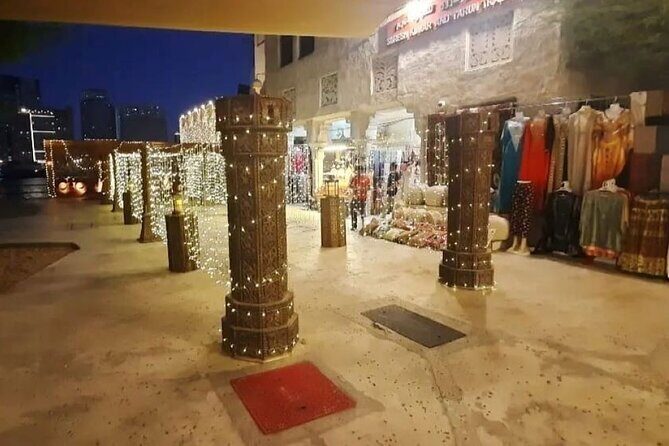
You begin with a walk in Al Seef, starting around the Al Seef Heritage Hotel area and moving through the zone where Dubai’s history and modern convenience sit side by side. This stop is short (about 20 minutes), but it sets the tone: you’ll notice how heritage spaces are preserved and how the neighborhood keeps functioning as a place to eat, browse, and people-watch.
A few specific sights you’ll pass give the stop shape. You’ll see the Smart Police Station, and you’ll also pick up stops for shopping and local food areas lined along the streets. This part is a good warm-up if you’re new to the Dubai Creek area, because it helps you get your bearings before the walk becomes more heritage-focused.
What I like here is the mix of atmosphere and utility. Even if you don’t buy anything in Al Seef, you learn what the area feels like—then you can make smarter choices in the later souks where you’ll actually spend time.
Al Fahidi Historical Neighbourhood: the stories behind the buildings
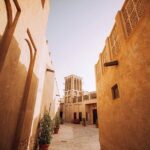
Next comes the Al Fahidi Historical Neighbourhood segment (about 45 minutes). This is one of the most helpful parts of the day because it slows you down just enough to understand what Old Dubai life tried to preserve.
You’ll pass by the Sheikh Mohammed bin Rashid Al Maktoum Centre for Cultural Understanding, and you’ll learn about the kind of institutions that show up in this area. The route includes mentions of the Coins museum, coffee museum, and an Arabian tea house concept—places that connect everyday culture with history.
This is also where you benefit from having someone narrate as you walk. Without guidance, it’s easy to see alleyways, wind towers, or courtyards and move on. With a guide, those details turn into context: what trade meant, why certain buildings exist, and how culture is presented in a modern city.
Potential drawback: this is still a walking segment with multiple quick passes. If you’re the type who wants deep museum time, you’ll likely want to pair this tour with a separate longer museum visit later.
Dubai Museum and Al Fahidi Fort: the photo-and-context stop
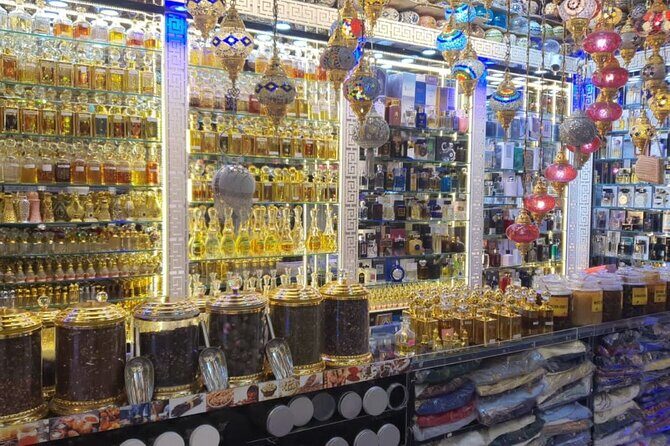
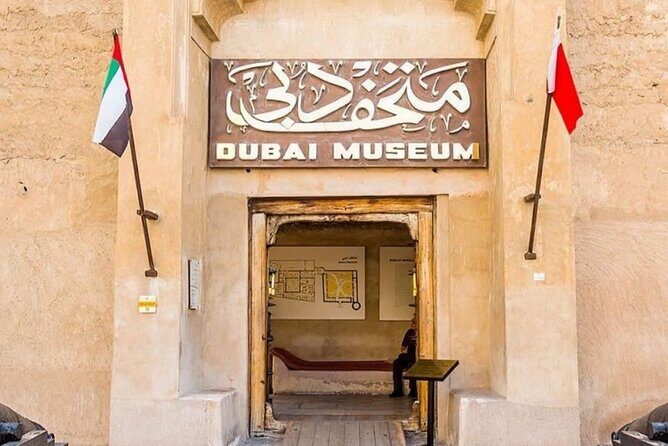
After Al Fahidi, the route includes a short viewing stop tied to Dubai Museum & Al Fahidi Fort (about 15 minutes). The key detail: it’s closed right now, so you’ll be looking from the outside. That means you’ll get a photo moment and some orientation, but you won’t spend time inside exhibits as part of this tour.
For some people, that’s disappointing. For others, it’s exactly the right pace. If your main goal is to connect heritage places and keep moving through souks, you’re not losing the day to museum lines or timed entry rules.
When a stop is outside-only, I suggest using it strategically. Take a couple of photos, then ask your guide what you’re missing inside. You’ll come away with a better sense of the place than if you just snap pictures and move on.
Old Souk and the Dubai Creek texture: narrow lanes, real trade
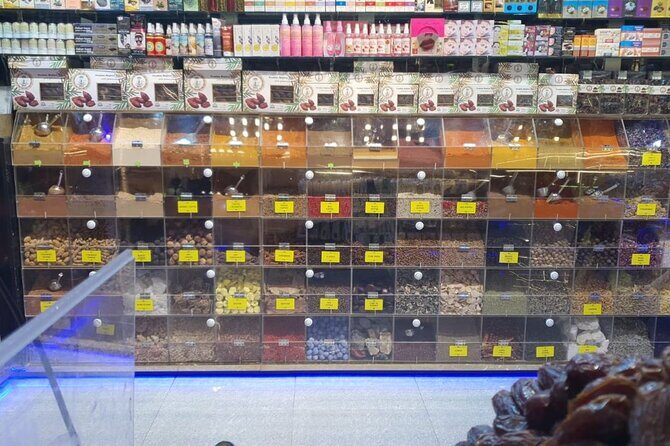
Then you hit the Old Souk area along Dubai Creek (about 30 minutes). This is where the day becomes less about big landmarks and more about how Dubai sells and trades at street level.
You’ll notice the narrow alleys and the market-stall style layout that feels very different from modern malls. The tour frames it as an old market zone near the creek, with a connection toward the Textile Souk area across by boat.
This is one of the best times to slow down and look closely at what’s being offered. You can ask what fabrics or goods are most common, how bargaining usually works in general terms, and what local shoppers typically focus on. You’ll get that kind of guidance from the guide’s storytelling, not just guesses.






Abra crossing: the practical, classic way to feel the city
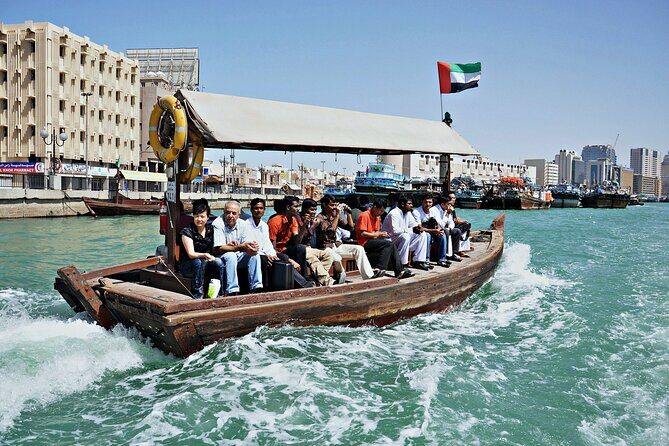
The Abra segment is a core highlight, even though it sounds simple. An Abra is basically a boat that runs frequently along Dubai Creek between four stations. Here, the tour builds it into the schedule so you don’t have to plan which station to use or how long it will take.
Why this matters: the creek is the historic “connector” of the area. Seeing the market side from water level changes how you understand the city. On foot, the souks feel like separate worlds. From the boat, they start to look like one system.
Also, it’s just fun. Even if you don’t care about boats, you’ll enjoy the change of pace. The crowd shifts, the view opens up, and you get a reset before the Spice and Gold stops.
Dubai Spice Souk: use your nose, then your questions
Spice Souk is about flavor and smell—plus the fun factor of seeing how goods are packed, displayed, and sold. This stop is around 20 minutes, which is short enough to keep you focused but long enough to sample what you actually care about.
A great tip here is to ask the guide what to look for. In this tour, Uzma is specifically praised for explaining fun details and culture tied to the spice market. If your guide is Uzma, follow her lead for the best odds of learning something useful instead of just getting swept along by the crowds.
Even without a guide, spice markets can be overwhelming. With guidance, you can get answers fast: what’s common, what’s likely more aromatic, and how to think about blends versus single spices. You can also pick up small gifts if that’s your style, since the market format makes it easy to buy in small quantities.
Dubai Gold Souk: the sparkle stop with a reality check
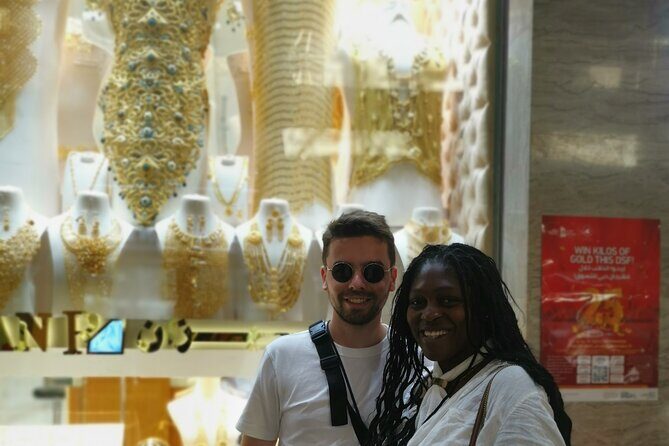
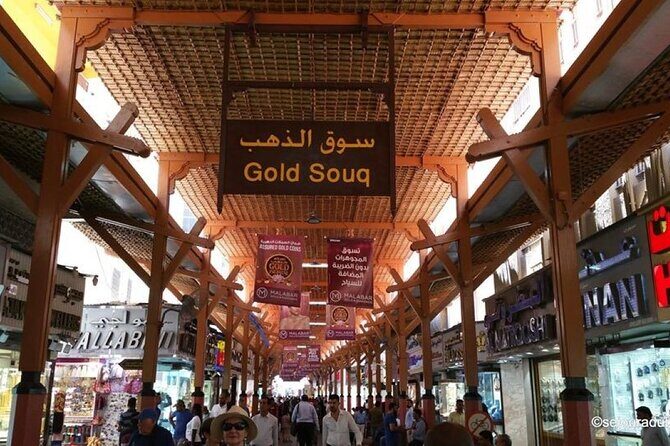
Gold Souk is the portion of the route that many people think they already know—until they see how it’s organized and what’s showcased. The tour walks you through the glittering bazaar area for about 30 minutes and includes a glimpse of the Najmat Taiba (Star of Taiba), estimated at $3 million, which is displayed in the souk.
This is where having a guide helps again. It’s easy to get distracted by the shine and forget to ask questions. A good guide can help you separate three things: the look of the jewelry, the practical question of carats, and the shopping psychology of a market that’s built for comparison.
You won’t spend enough time here to make major decisions unless you’re already prepared. But you will get enough context to shop smarter—especially if you want a ring, a bracelet, or a souvenir that feels meaningful rather than random.
Al Shindagha Museum exterior: a small pause that adds context
The day includes an exterior visit to Al Shindagha Museum (about 15 minutes). This isn’t a long museum session, so don’t expect deep indoor exhibits. Think of it as a “why this area matters” stop that gives you an extra historical anchor before you’re done.
Exterior visits work best when you use the time to ask one or two specific questions. For example: what role did this side of the city play historically, and how does that tie back to the creek and trade routes you just experienced?
It’s a quick moment, but it keeps the tour from feeling like a straight line of shopping stops.
Snacks, wifi, and bottled water: small inclusions that matter
At $31.36 per person, the tour earns its keep by including practical comfort items: snacks, bottled water, and free wifi. In a city where heat and walking add up fast, that matters more than you’d think.
It also helps the pacing feel easier. When you’re moving from Al Seef to Al Fahidi to the souks, you don’t want to spend the first hour deciding where to buy water or a snack. Here, you get it ready-made, so you can focus on what the guide is showing you.
The mobile ticket format also means less paper fuss. That’s small, but it saves time when you’re trying to locate your start point without stress.
Price and value: why this feels like more than $31
Let’s talk value without pretending it’s magic. At $31.36 per person for around four hours, you’re paying for guide time, coordinated movement between heritage areas and souks, and the Abra ride included in the schedule. You’re not paying extra for private transportation here, so the tour leans into walking and local transit proximity.
If you were to DIY this route, you’d still spend time figuring out stations, cross-river timing, and which souk order makes the most sense. Even if you’re a confident planner, the cost of your time is real. With a guide, you get that route-solving done for you, plus storytelling that gives you context while you walk.
Is it worth it if you love museums and want hours inside? Maybe not. But for most people—especially first-timers who want Old Dubai with minimal research—this is a solid value.
Logistics you should know before you go
You start at Al Fahidi Marine Transport Station – Information & Ticket Office in Bur Dubai, near D84 along the Dubai Creek Area. You end at the Dubai Gold Souk area in Deira/Al Ras, where taxis or metro options nearby can get you moving again.
The end point location is helpful because you’re not trapped far from transit. The area mentions Al Ras metro and Gold souk metro, with a short walk (about 5 to 7 minutes). That means you can comfortably extend your day after the tour without needing to backtrack.
One more practical note: the route includes outdoor walking and indoor viewing is limited. So dress for walking, bring water (even though bottled water is included), and plan for quick stops rather than long sits.
Who this tour suits best (and who should think twice)
This tour fits best if you want a guided “Old Dubai loop” with enough structure to save time. It’s also a good match if you enjoy markets but want shopping tips that reduce guesswork.
You’ll likely like it if:
- you’re curious about heritage districts and how Dubai markets relate to the creek
- you want small-group guidance (max 10 people)
- you enjoy the mix of walking plus the Abra crossing
You might want a different option if:
- you need long museum time inside specific venues (since some are outside-only or closed at the time of viewing)
- you prefer slow, solo exploration with no set sequence
The good news: the route ends at the Gold Souk, so if you want to keep shopping, you can just stay in the area and continue at your own pace.
Should you book this Old Dubai, Abra, and Souks tour?
Yes, if your goal is to experience Old Dubai without doing heavy planning. The route is efficient, the inclusions (snacks, bottled water, wifi, Abra ride) make it more comfortable, and the pacing hits a sweet spot for first-timers.
I’d especially recommend it if you care about the souks and want a guide who can explain what you’re seeing. One guide name keeps showing up for a reason: Uzma gets strong praise for the Spice and Gold Souk portion, and Hassan is also noted as a great guide for covering the old area in about 3–4 hours.
If you’re hoping for a deep museum day, you may feel rushed. But for connecting Al Seef, Al Fahidi, the creek, and the markets into one smart half-day, this tour is a practical win.
FAQ
How long is the tour?
It lasts about 4 hours.
How big is the group?
The group is capped at a maximum of 10 travelers.
What’s included in the tour price?
Bottled water, free wifi, snacks, and an Abra boat ride are included.
Where does the tour start and end?
It starts at Al Fahidi Marine Transport Station – Information & Ticket Office (Bur Dubai) and ends at the Dubai Gold Souk area in Deira/Al Ras.
Is the Dubai Museum and Al Fahidi Fort stop inside the building?
No. The route notes that you can take pictures and see it from outside because it is closed right now.
What souks are visited?
You’ll visit the Old Souk area near Dubai Creek, the Dubai Spice Souk, and the Dubai Gold Souk.
Are tickets included for any attractions?
Yes, the stops list admission tickets as free, and your booking includes a mobile ticket.
What is the Abra ride?
An Abra crosses Dubai Creek and runs every few minutes between four stations throughout the day.
Can I cancel for a full refund?
Yes, you can cancel up to 24 hours in advance for a full refund. If you cancel less than 24 hours before the start time, the amount paid is not refunded.