REVIEW · DUBAI
Five Emirates Full Day Tour from Dubai with Hotel Transfers
Book on Viator →Operated by OBERON TOURISM LLC · Bookable on Viator
Five emirates in one day sounds like a lot. And it is—but that’s also why it works so well here. You’ll get out of Dubai and tour Sharjah, Ajman, Umm Al Quwain, and Ras Al Khaimah in the morning, then cross the Hajar mountains toward the east coast for Fujairah views, beaches, and forts, all from an air-conditioned vehicle.
Two things I really like: the hotel transfers that remove the hassle of planning, and the feeling that you’re seeing the UAE as real places—not just Dubai’s skyline. The group stays small (max 9), and the guides I saw highlighted in reviews—like Aashiq and Mr Shaks—seem to focus on practical context and what to notice as you move around.
One consideration before you book: it’s a long, packed day (about 9–10 hours). Some key sights list admission as not included, you won’t have meals included, and comfort can depend on the vehicle and seating—one review mentioned cramped middle seats and another flagged an older, less comfortable van.
In This Review
- Key highlights worth writing down
- Why this five-emirate run works when you do not want to rent a car
- What $150 buys: hotel transfers, water, and where the costs can pop up
- Sharjah morning: King Faisal Mosque, Al Ittihad Square Park, and the souq circuit
- Blue Souk and Bait Al Naboodah: crafts, tiles, and pearling-era design
- Sharjah Fort (Al Hisn) and the Sharjah Museum of Islamic Civilization
- Ajman Museum and Umm Al Quwain: small emirate energy without the big-city rush
- North toward Ras Al Khaimah, then the east coast Fujairah shift
- Fujairah on the Gulf of Oman: Al Bidya Mosque, Khor Fakkan, and Fujairah Fort
- The pacing reality check: lots of driving, short stops, and flexibility
- Vehicle comfort and day-trip sanity: what to expect in the van
- Who should book this tour, and who should consider another option
- Should you book this Five Emirates Full Day Tour with Hotel Transfers?
- FAQ
- What time does the tour start?
- How long is the tour?
- Is pickup from hotels included?
- Are meals included in the price?
- Is the group size large?
- Are museum entry fees included?
Key highlights worth writing down

- Five emirates, one itinerary: a fast route across very different regions of the UAE
- Guides who shape the day: reviews call out strong guiding like Aashiq and Mr Shaks
- Souq + mosque variety: Gulf architecture, marketplaces, forts, and seaside stops
- Air-conditioned transport plus water: bottled water and A/C help on a hot day
- Small group size: max 9 travelers means you’re not lost in a crowd
Why this five-emirate run works when you do not want to rent a car
Dubai is easy, but the rest of the UAE takes more effort. Without a car, you’d be juggling taxis, timing, and long distances. This tour solves that by chaining multiple emirates into one continuous day, with air-conditioned driving and scheduled stops.
What makes this itinerary interesting is the contrast. You start in Sharjah’s older, more cultural side, then you jump toward quieter coastal towns and the east coast of Fujairah. That’s a real change of pace from malls and skyscraper views.
The route is also a smart use of time. If you’re only in Dubai for a few days, you still get the feeling of what makes the UAE different as you move north and then east.
A few more Dubai tours and experiences worth a look


What $150 buys: hotel transfers, water, and where the costs can pop up
At $150 per person for a 9–10 hour day, the value mainly comes from logistics. You’re getting hotel pickup and drop-off plus an air-conditioned vehicle—two things that would cost more than you expect if you tried to stitch the day together on your own.
The tour also includes bottled water and museum entrance fees that are listed in the inclusions. But this is not a fully “everything paid for” day. Several stops explicitly say admission ticket not included, so you should expect to cover some entry fees on-site for certain attractions.
Also, there are no meals included. That doesn’t mean you’ll starve—some guides may build in time to eat—but it’s on you to plan lunch snacks or budgeting for a meal break.
Bottom line: it’s a good deal if you want the UAE outside Dubai and you value someone else handling the route.
Sharjah morning: King Faisal Mosque, Al Ittihad Square Park, and the souq circuit
Sharjah is where the day finds its footing. Your first major stop is King Faisal Mosque, established in January 1987 and named after King Faisal bin Abdul Aziz Al Saud. The prayer halls can accommodate almost 17,000 people, which gives you a scale jump when you stand inside.
Time is tight here—plan for about 15 minutes. If you’re the type who wants to read every panel and take slow photos, you might wish the stop were longer. Still, it’s one of the best ways to start the day with architecture and a sense of place.
Next comes Al Ittihad Square Park, a large square area of over 60,000 square meters. The union monument is built around seven oysters, each holding a pearl, representing the seven emirates. It’s a photo-friendly stop even if you only have 10 minutes, because the design is built for viewpoints and angles.
From there, the itinerary turns into market mode with Souq al Jubail. This souq is designed in a traditional Islamic style with arches and domes, and it reportedly draws more than half a million shoppers each month. The fish market is part of it, and there’s mention of more than 100 species of colourful creatures—perfect if you like food markets and the energy of “watch what people buy.”
The practical upside: this whole Sharjah block is walkable and visually varied. The drawback: if you’re sensitive to heat or crowds, keep your pace smooth and start water-drinking early.
Blue Souk and Bait Al Naboodah: crafts, tiles, and pearling-era design
Sharjah’s Blue Souk is famous for a reason: those blue tiles are eye-catching, and the building is distinctive. It’s two-storey, with two long parallel sections connected by indoor bridges, and it’s even noted for appearing on the UAE five-dirham bank note.
On the ground floor you’ll see more modern-style goods—jewellery, watches, and clothing. Upstairs shifts toward arts, crafts, and regional curios, including handmade Persian carpets and colourful kilims. If you like watching skilled work up close, this is the kind of souq where browsing can turn into a learning stop.
A detail I find especially useful: the gold and diamond shops are described mainly on the lagoon-side of the souk, and craftsmen can recreate designs based on a photo or sketch. Even if you don’t plan to buy, it helps you understand how these businesses operate—design, craft, and custom order.
Then you go to Bait Al Naboodah, built in 1845. This two-storey house is set around a sunlit courtyard, with walls made of coral and wind catchers that allowed the family home to breathe before modern air conditioning. The house also connects to the pearling family’s daily routines, so you’re not just seeing pretty architecture—you’re getting a glimpse into Gulf life.
Time here is less clearly stated in your schedule, but it’s the kind of stop where 20–30 minutes can feel more meaningful than another quick photo stop. It’s a calm break from market noise.
Sharjah Fort (Al Hisn) and the Sharjah Museum of Islamic Civilization
If you want “history you can walk around,” Sharjah Fort – Al Hisn is the stop. Built in 1823 and fortified with three towers, it has served as government seat, royal residence, prison, and now a museum. You’ll see cannons right at the start, then move into 12 galleries.
The fort includes hands-on-style or at least immersive exhibits, like a round prison cell and items that relate to traditional power and etiquette—like how one might present a sword to a sheikh. There are also historic photographs and material tied to Sharjah’s Qawasim tribe and naval strength.
Right after that, your route includes the Sharjah Museum of Islamic Civilization. It’s housed in what used to be a traditional market, and the museum is described as having more than 5,000 Islamic artifacts across seven galleries. This is the cultural anchor of the day if you want more than photos—this is where you step into themes and collections.
One practical note: if your museum time runs short because of traffic or heat, you might feel the day is more “see everything briefly” than “learn slowly.” That’s the trade-off of stacking five emirates into a single day. But even a shorter museum visit can still give you useful context.






Ajman Museum and Umm Al Quwain: small emirate energy without the big-city rush
Ajman is quick but memorable for what it represents: a smaller emirate with its own story. The Ajman Museum is in an 18th-century fort, which served as a ruler’s residence until 1970, then became a museum about a decade later.
What helps this stop for practical travelers: the exhibits are annotated in Arabic and English. You’ll see manuscripts, weaponry, models of wooden dhows, and irrigation systems—evidence of how people adapted to desert living and coastal trade. There’s also mention of an excavated cemetery discovery, though details are cut off in the schedule you have.
Then you head to Umm Al Quwain, described as having a peninsula old-town area with a UAQ National Museum in a centuries-old fort. You’re also near Al Sinniyah Island, a protected lagoon noted as a seabird haven. The schedule also lists Dreamland Aqua Park and a camel racetrack outside Falaj Al Moalla, but you’re likely here mainly for a brief snapshot of the emirate’s rhythm.
The value of this stop is simple: it breaks the day up. After mosques, souqs, and forts, a coastal emirate stop gives your brain a reset.
North toward Ras Al Khaimah, then the east coast Fujairah shift
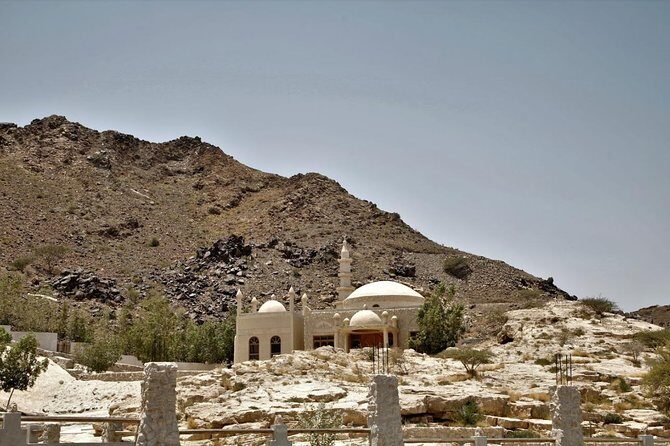
At some point you cross into Ras Al Khaimah, described as the northernmost emirate, known for Arabian Gulf beaches. Your schedule doesn’t give a dedicated Ras Al Khaimah attraction stop, so treat this segment as part of the driving-to-the-coast story—scenery, positioning, and a change in terrain rather than a single long visit.
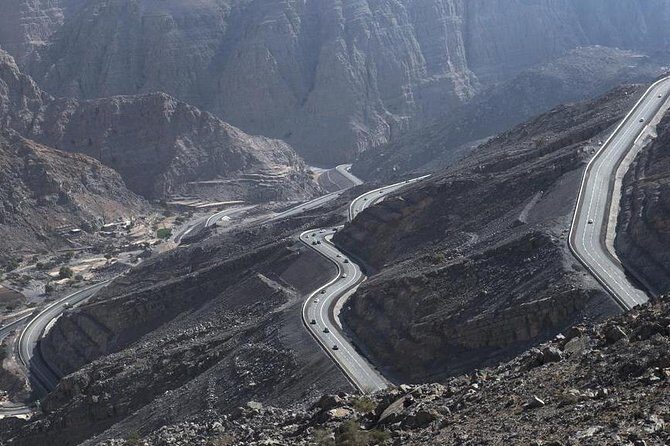
Then comes one of the most scenic parts of this kind of day trip: crossing the Hajar mountains toward Fujairah on the Gulf of Oman. This is where the UAE stops feeling flat and turns more “rocky coast and mountain-backed towns,” especially if you’re catching it in clearer weather.
Fujairah on the Gulf of Oman: Al Bidya Mosque, Khor Fakkan, and Fujairah Fort
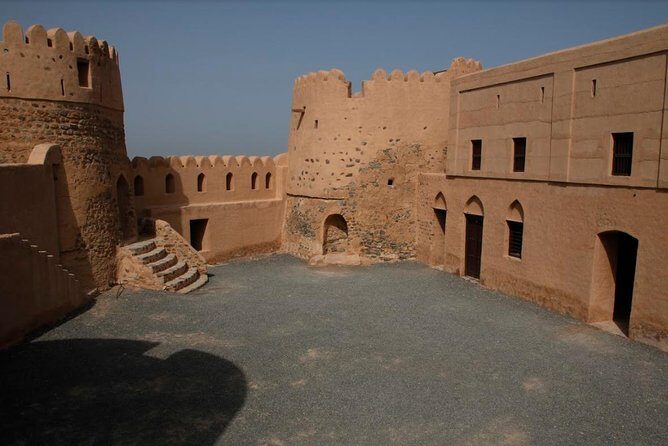
Fujairah is the east coast payoff. First up is Al Bidya Mosque, described as the oldest extant mosque in the UAE (or in Fujairah), located in a small village about 50 km north from the region center. It’s also known as the Ottoman Mosque. This stop is about 15 minutes, and admission is listed as not included.
What makes Al Bidya special in the context of this tour is that it’s older and quieter than the big-day attractions. You’re seeing a layered history of the region’s religious architecture.
Next is Khor Fakkan Beach. This area is on a bay on the east coast, facing the Gulf of Oman, and the schedule notes it means “Creek of Two Jaws.” The stop time is about 10 minutes, and it’s described as a free visit.
A detail I like here because it adds context: Khor Fakkan is tied to the Container Terminal, described as the only natural deep-sea port in the region. Even if you’re mostly there for a quick beach view, it helps you see how these places work economically—not just how they look.
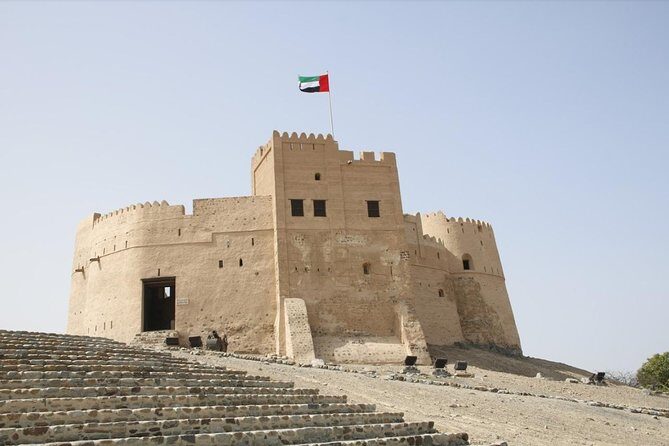
Finally, you finish with Fujairah Fort, a fort dating to the 16th century. The description says it’s among the oldest and largest castles in the country and mentions roles in fighting colonialism. Today, it’s presented as a main tourist attraction. Admission is listed as free in your schedule.
Even if you only get a short look, forts are good “closing chapters” for this kind of day trip. They pull the theme together: power, trade, defense, and how communities adapted across time.
The pacing reality check: lots of driving, short stops, and flexibility
This is a tour built around movement. You’re looking at a 9–10 hour day, and you’ll feel that in your legs and your attention span. The tour includes bottled water and A/C, but you should still pack for heat and plan your expectations for quick site visits.
From reviews connected to this experience, I see a clear pattern: guides can make the difference. People praised Aashiq for sharing lots of information and for being flexible with what the group wanted to see. Mr Shaks is also mentioned as professional, prompt, and friendly, with care on the driving side.
At the same time, it’s worth knowing that itinerary changes can happen. One review described a deviation from what was published, including skipping a fort stop and spending more time at the museum. That can work in your favor if your guide has good instincts and you’re flexible too.
So here’s my practical take: if you want slow, in-depth museum time, this tour might feel like a highlight reel. If you want “see a lot of the UAE with minimal planning,” it’s a strong format.
Vehicle comfort and day-trip sanity: what to expect in the van
Comfort is the one variable you can’t fully control. This tour uses an air-conditioned vehicle and is capped at 9 travelers, which should help. But one review mentioned a minivan layout where middle seats were uncomfortable, and another flagged an older, dirty car with tight fit.
If you book, think like a day-trip realist. Bring a light layer for temperature changes. Give yourself time to adjust posture during driving breaks. And if you’re picky about seating comfort, consider messaging the provider ahead so you can request the best available spot.
Also, remember this is a full day, and you’ll spend a lot of time in transit. The best mental strategy is to treat the photos as a bonus, not the goal. Let the guide’s stop-by-stop explanations guide you.
Who should book this tour, and who should consider another option
This fits best if:
- you want to see more than Dubai without the stress of car rental and navigation
- you enjoy a mix of mosques, souqs, forts, and coastal scenery
- you like having a guide’s context, especially for architecture and local stories
- you’re short on time and want coverage more than deep study
It might not fit if:
- you need a calm pace with long museum time
- you get unhappy in vehicles for long periods
- you strongly prefer days with meals included (meals are not included here)
- you’re sensitive to changes in itinerary length due to weather or timing
If your goal is one specific emirate with in-depth time—like a full Sharjah day—then a dedicated emirate tour could suit you better. But for a “UAE sampler day” from Dubai, this is built for that role.
Should you book this Five Emirates Full Day Tour with Hotel Transfers?
I’d book it if you’re the kind of traveler who hates spending vacation time on logistics. The structure is efficient: hotel pickup, A/C driving, lots of different stops, and a guide-driven day that can add meaning fast—especially when you get a strong guide like Aashiq or Mr Shaks.
I would pause and plan carefully if you expect a relaxed schedule or meals included. Also, read your own comfort needs—because even with a small group, seating can vary, and the day is long.
If you can handle a full-day plan and you want a real taste of Sharjah, the northern emirates, and Fujairah’s east-coast feel, this tour is a practical way to make that happen.
FAQ
What time does the tour start?
The tour start time is 8:30 am.
How long is the tour?
It runs about 9 to 10 hours.
Is pickup from hotels included?
Yes. Hotel pick ups and drop offs are included.
Are meals included in the price?
No. Meals are not included.
Is the group size large?
This tour has a maximum of 9 travelers.
Are museum entry fees included?
Some entrance fees are included, but several sites list admission ticket not included. Expect that you may need to pay entry for certain stops on the day.