REVIEW · DUBAI
Modernism to Traditions from UAE to OMAN with Fully Live Guided Tour- 11D / 10N
Book on Viator →Operated by Gray Line - Kurban Tours · Bookable on Viator
A trip that links glitter to geology. This 11-day UAE to Oman journey strings together big-sky city sights (Dubai, Abu Dhabi, Sharjah) with real outdoor time in Oman (Musandam dhow cruise, Wadi Shab, Wahiba Sands). I especially like the fully live guided format that keeps you moving without the mental load, and the mix of set-piece landmarks with local rituals like souks, forts, and traditional meals. One thing to consider: it is packed and fast-paced, so you’ll want decent stamina for long days and some walking, especially around wadis.
You also get practical help that matters on a border-heavy itinerary: airport arrival and departure transfers, a full-day guide presence, and a clear plan for what happens each day. The biggest drawback is the schedule density—some days feel like you go from one highlight straight into the next, with fewer slow, wandering hours than you might hope for.
Still, if you want a true one-trip sampler of UAE modern glitz and Oman tradition plus nature, this is a strong option.
In This Review
- Key highlights that make this tour work
- Dubai arrival: quick start, then you’re sightseeing
- Dubai half-day: Palm area, old town, and creek-crossing magic
- Desert safari day: 4WD dune bashing and a proper camp night
- Abu Dhabi in one day: mosque scale, heritage stops, and Louvre time
- Al Ain: forts, camel market, and the Zayed-era connections
- Sharjah: heritage museum, sweet-making, and a real market feel
- Musandam dhow cruise: fjord-style views and the passport checkpoint
- Muscat day 1: mosque landmarks, old forts, and the Bait Al Zubair museum
- Wadi Shab, Sinkhole, and the Sur-to-Wahiba Sands shift
- Nizwa: souk time, falaj palms, and forts with serious detail
- Day 11: Jabrin Castle and mountain-town pass-bys before Muscat departure
- What you’re really paying for: value across transport, guiding, and meals
- Who this tour is best for
- Should you book this UAE to Oman escorted tour?
- FAQ
- FAQ
- What countries are covered on this tour?
- How long is the tour?
- What’s the group size?
- Are airport transfers included?
- Is the tour fully guided?
- Does the tour include meals?
- Is the desert safari included, or is it optional?
- Is Musandam cruise included?
- Do I need my passport for Musandam?
- Are visa fees included?
- Is Burj Khalifa included?
Key highlights that make this tour work
- Fully live guided trip with full-time guide assistance and pickup offered
- Dubai plus desert safari with 4WD dune driving and a BBQ dinner camp experience
- Abu Dhabi day mixing Sheikh Zayed Grand Mosque, Al Hosn fort, and Louvre Abu Dhabi
- Musandam dhow cruise with fjord-style coast views, snorkeling options, and lunch on board
- Oman road-trip highlights including Muscat old town, Sur, Wahiba Sands, and Nizwa souk time
- Small group size with a maximum of 25 travelers
Dubai arrival: quick start, then you’re sightseeing
Day 1 is simple and geared to reduce stress. You land at Dubai airport, get a meet-and-greet, then head straight to your hotel by air-conditioned vehicle. Check-in is first, dinner is on your own, and you get the first taste of how this tour is designed: minimize hassle, then maximize guided time.
What I like here is that you don’t waste your first day “figuring it out.” You’ll already be oriented before the tour really kicks in. If you want to hit the ground running, that’s a plus.
You can also read our reviews of more guided tours in Dubai

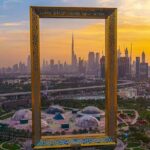
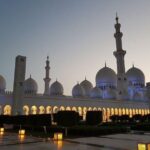
Dubai half-day: Palm area, old town, and creek-crossing magic
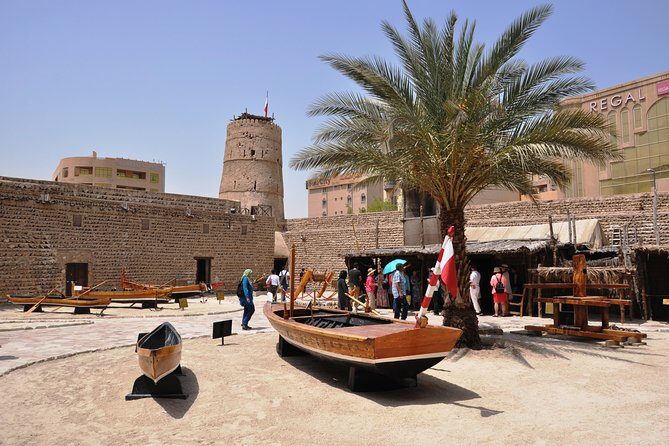
Dubai day is laid out like a best-of sampler, with breaks built in for photos and transitions.
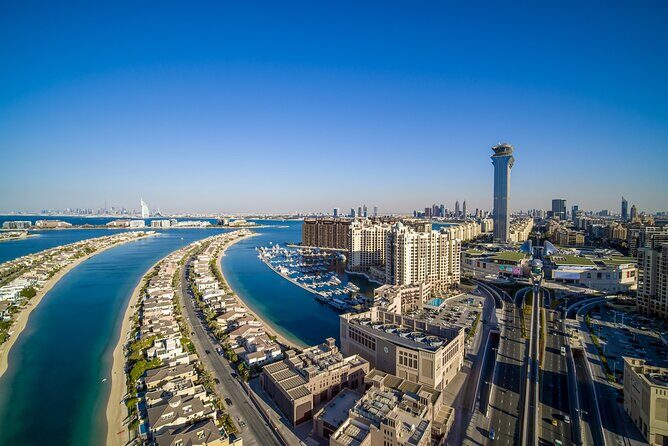
You start with Atlantis at the crescent of Palm Jumeirah, then do photo stops that anchor the city’s recognizable modern landmarks—Burj Al Arab and the Jumeirah area. You also visit the Grand Mosque of Jumeirah, built in the medieval Fatimid tradition. Even if you’re not a architecture nerd, it’s a striking change of pace from glass-and-steel views.
Then you pivot to older Dubai with Bastakyia (the old town district) and the Dubai Museum in Al-Fahidi fortress. This part matters because Dubai can feel like it’s all future. Bastakyia gives you the “small fishing village at the Dubai Creek” context, so the modern skyline isn’t just random spectacle.
The creek crossing by abra (water taxi) is one of those details that makes the whole day feel more lived-in. You’re not just looking at the city; you’re moving through it.
Drawback to plan for: most of this day is guided city touring, not free wandering. If you love drifting on your own, you’ll want to save energy for the later free time.
Desert safari day: 4WD dune bashing and a proper camp night
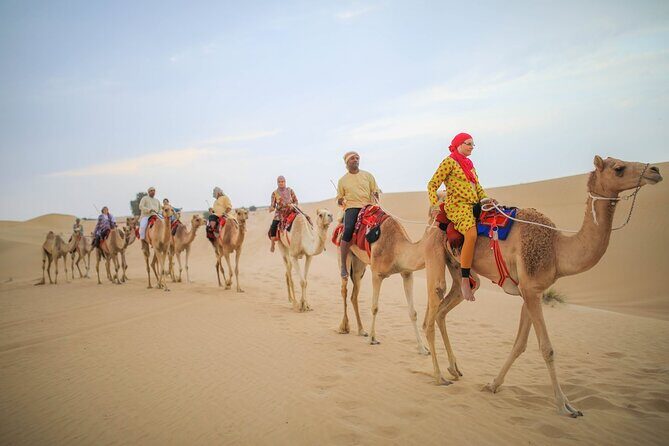
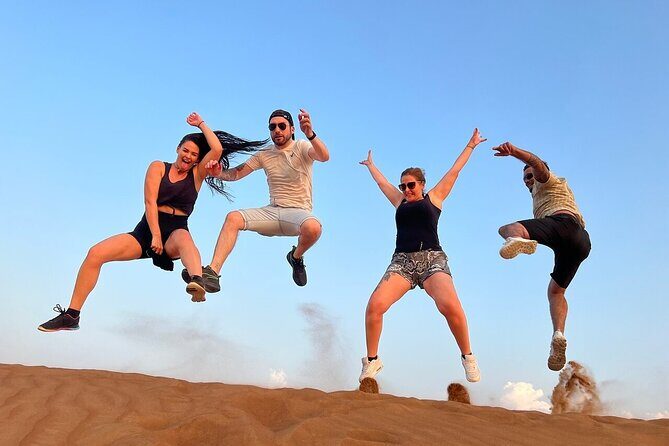
This is one of the most memorable days on the itinerary, and it’s built around three main beats: adrenaline, sunset, and dinner with entertainment.
After settling into 4WD vehicles, the jeeps run through golden sand dunes with dune bashing—up and down, fast turns, and plenty of laughter (and a few squeaky moments). Then you arrive at the main camp site for the real highlight: watching the Arabian sunset from the dunes.
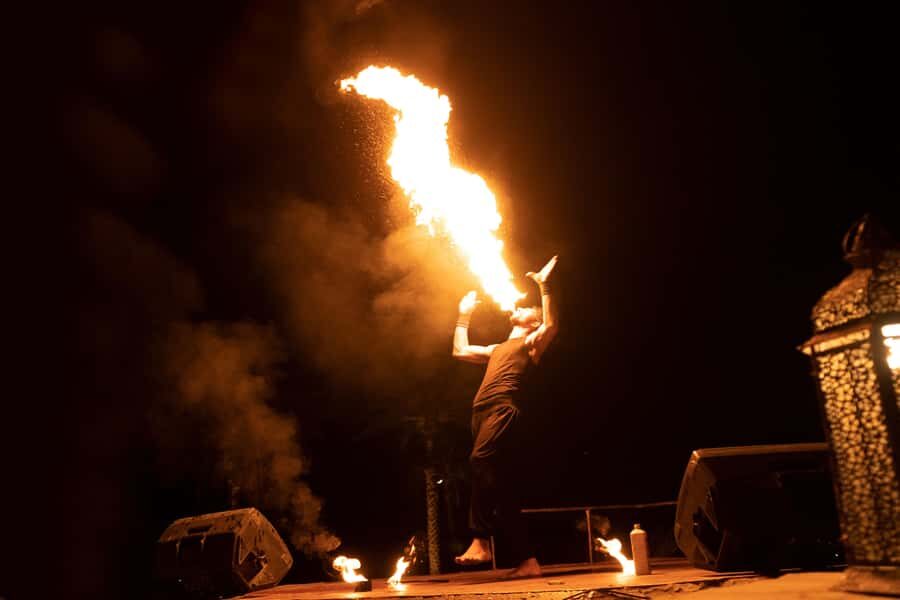
Dinner is a BBQ served on open fires, with beverages available. A belly dancer starts the show as the evening gets going. It’s touristy in the best sense: it’s designed to give you a full night experience in the desert rather than just a quick photo stop.
Practical note: this is a long day with physical motion. If you’re prone to motion sickness, bring what you need.
Abu Dhabi in one day: mosque scale, heritage stops, and Louvre time
On Day 3 you switch from Dubai to Abu Dhabi and you get a “capital city” day that mixes culture and modern attractions.
You begin at Yas Island, known for the FORMULA 1 Yas circuit and the Ferrari attraction park with a large red Ferrari sign. It’s a fun warm-up if you like big brands and bold design, though it’s not the most traditional stop on the list.
Next comes Sheikh Zayed Grand Mosque, built to accommodate more than 30,000 worshipers. Even if you’ve seen photos before, it’s the kind of scale that lands in person. This stop also gives you a respectful grounding before the rest of the day turns more sightseeing-style.
After lunch, you hit the Heritage Village, which depicts traditional daily activities of the Arab community before oil. Then there’s a drive along the Corniche for skyline views, plus a visit to Qasr Al Hosn fort—the palace of traditions. It’s a key stop because it anchors the city’s story.
You also include a drive through Saadiyat Island’s museum area, then visit Louvre Museum in Abu Dhabi. If you’re museum-minded, great. If you’re not, it’s still a useful dose of contemporary culture in a place that could otherwise feel only monumental.
Al Ain: forts, camel market, and the Zayed-era connections
Al Ain day (Day 4) is where you slow down a bit into older UAE rhythms. You leave Abu Dhabi for a city set in the Hajjar Mountains, known as one of the oldest cities in the UAE. The route itself matters—this is not just “transfer day,” it’s part of the experience.
You get photo time at Jebel Hafeet, then lunch in the city. In the afternoon, the camel market is included—described as the largest in the UAE. Even if you’re not buying anything, watching the daily trade tells you more than any brochure.
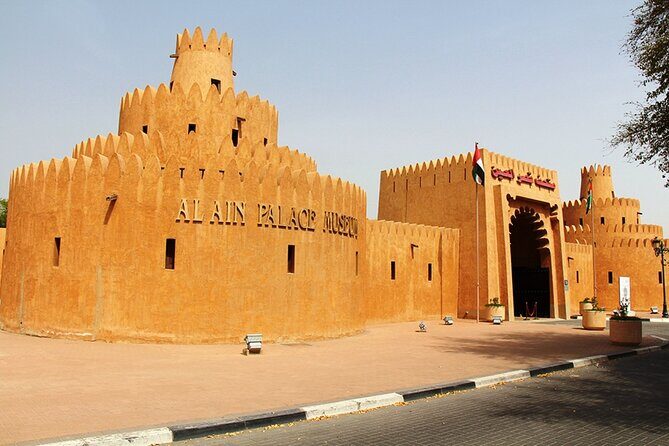
Then you visit Jahili fort, a large castle and a best-in-class example of local Islamic military architecture. After that, Al Ain Palace connects the past to the modern story: it relates to late Sheikh Zayed Bin Sultan Al Nahyan’s period of rule in Al Ain and mentions his son as the Crown Prince of Abu Dhabi.
You also stop at Qasr Al Muwaiji to learn more about the region’s history. The day ends with dinner back at the hotel.
Consideration: this day is full, but it’s full in a different way than Dubai. Expect longer impressions and fewer “photo stop only” moments.






Sharjah: heritage museum, sweet-making, and a real market feel
Sharjah is often the best “contrast” day. It feels less like a theme park and more like a living cultural place, even though it’s still guided and structured.
You start with Hilli Gardens, tied to archaeological excavations from the third millennium B.C. Then the tour shifts into a half-day Sharjah program framed as the Pearl of the Gulf and a cultural capital.
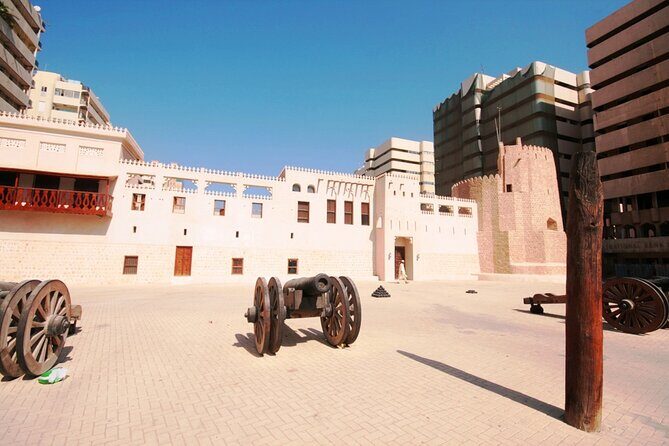
Included stops include King Faisal Mosque and the renovated Fort of Sharjah, former residence of the ruling family. From there you go to the Sharjah Heritage Museum, which covers traditional customs and objects related to fishing and pearling, plus development in education, currency, and early postal system. There’s also focus on handcrafted arts and crafts like jewelry, costumes, herbal medicines, music, and folklore.
Then it’s souk time. You explore Souk Al Arsa, where you even have a chance to see how Omani halwa is made in a shop. After returning, you get a quick stroll at the Blue Souk—carpets, jewelry, and handicrafts.
Lunch is served in a local restaurant, specifically mentioned as Bedouin mandi. That’s an important detail: it’s not just a meal break; it’s a chance to taste regional flavor in a setting that matches the day’s theme.
The day ends with a return to Dubai and optional culture-to-shopping energy: time at Dubai Mall and the Burj Khalifa area. A climb to Burj Khalifa is proposed as optional to prebook.
Musandam dhow cruise: fjord-style views and the passport checkpoint
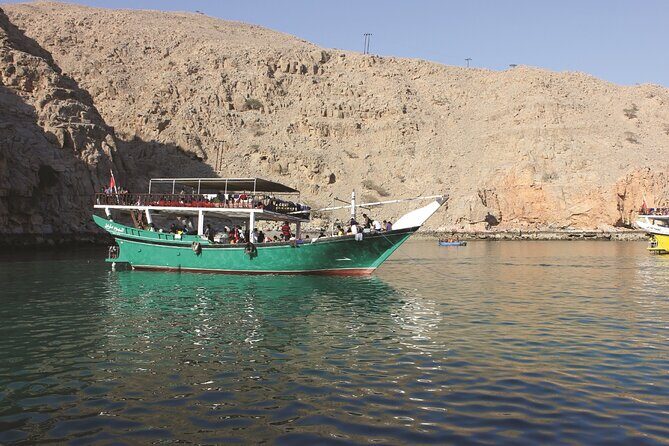
Day 6 is a big nature change. You travel to Musandam Governorate and board a dhow cruise in the Gulf of Oman.
The itinerary highlights what makes Musandam special: rugged coastline, Hajar Mountains rising directly from the sea, fjords-like scenery, caves, bays, and pebble beaches. It’s also one of those rare days where the pace slows because you’re on the water.
Marine life opportunities are part of the plan—fish, corals, turtles, invertebrates—and there is mention of possible dolphins. You can also snorkel and swim if conditions and your comfort level allow. Lunch is on board.
One very practical note is repeated in the tour info: carry your passport. It’s required for a police check. If you only travel with a digital copy, fix that before departure day.
You return to Dubai late, and dinner is at the hotel, so you can reset rather than stacking extra activities.
Muscat day 1: mosque landmarks, old forts, and the Bait Al Zubair museum
You arrive in Muscat after traveling via Hatta and stopping in Sohar. Hatta is a mountain gateway, described as 115 km east of Dubai with a milder climate. You can also visit an authentic Arabic heritage village with military towers, an old Juma mosque, and loame houses.
After that, you get an orientation tour of Sohar including the Sohar Mosque, plus an Omani halwa factory visit to learn about Omani sweet-making. Then you continue onward and reach Muscat for check-in and dinner.
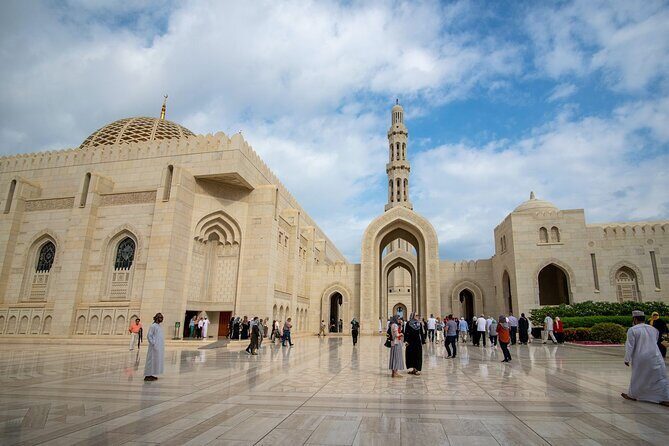
The next Muscat day starts with a briefing at 9:30 am to introduce the group and guide and set expectations. Then you drive through the embassy quarter to Sultan Qaboos Grand Mosque—a contemporary place of worship with architectural balance between aesthetics and Islamic tradition.
Next stop is the Opera house. It’s a clear “modern Oman” counterpoint to the older fort-and-souk days.
After lunch at a typical fish restaurant with locals, you visit Old Muscat. You’ll see the twin 16th-century forts, Jalali and Mirani, and also Al Alam Palace, the Sultan’s residence. Then you continue to Bait Al Zubair Museum, founded in 1914 and opened as a museum in 1998. The museum includes traditional Omani weaponry, jewelry, costumes, domestic utensils, and recreated urban and rural environments.
In the evening, the corniche and Muttrah port area bring you to the colorful historic souk. You’ll see textiles, jewelry, traditional Omani perfumes including bukhoor made of frankincense, and souvenirs or antiques. Dinner is at a traditional Omani restaurant.
What to know: Muscat can be a mix of monumental architecture and wandering alleys. Wear comfortable shoes, and don’t plan on rushing photos.
Wadi Shab, Sinkhole, and the Sur-to-Wahiba Sands shift
Day 9 is your coast-to-desert transition. You leave Muscat for Sur, driving along a thrilling section of Oman’s 1,700 km coastline.
You visit the Sinkhole, described as a collapsed mountain filled with sea water, and then head to Wadi Shab. The plan includes admiring the nature and walking a bit in the wadi, plus lunch in Wadi Shab.
Then you continue to Sur, a sea-faring town and trading port with old-town architecture and shipyards where dhows have been built for centuries. After a quick Sur tour, the road continues through high cliffs and small fishing villages.
Later you reach Wahiba Sands and board 4×4 vehicles for desert time. You get dunes bashing with experienced drivers showing their skill, and you also have time to take in changing dune patterns that are great for photography.
The tour also points out the human side: Wahiba Sands is home to a few thousand Bedouins with an estimated 7,000-year habitation in the region. Dinner is at the camp with a real desert atmosphere, then overnight in Wahiba Sands.
The review-style caution that matters here: wadis can mean stamina. If you’re not used to uneven trails or warm conditions, pace yourself and bring water.
Nizwa: souk time, falaj palms, and forts with serious detail
Day 10 brings you from the desert to lush green valley views. You start with breakfast and then return to normal civilization via 4×4. You head to Wadi Bani Khalid, a lush green valley surrounded by rugged mountains. You get views for photos and a chance to walk in the wadi area.
Then you depart to Nizwa around noon, with a lunch stop on the way. Nizwa is described as an ancient capital and a learning center, plus the birthplace of Islam in Oman. You get an orientation on arrival and time in the 17th-century souq, known for silver jewelry, plus a cattle auction that takes place every Friday.
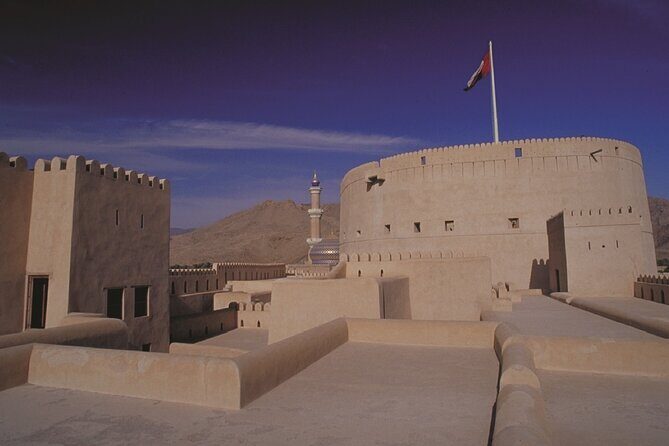
The itinerary also calls out Nizwa’s large tower built on a rock base designed to withstand cannon vibration. Then you check in, have dinner, and overnight in Nizwa.
Day 11: Jabrin Castle and mountain-town pass-bys before Muscat departure
On your final full day, you continue Nizwa sightseeing early. The first stop is Birkat Al Mawz, at the bottom of the Green Mountain, Jebel Akhdar. From there you go to Jabreen Fort.
Jabreen Castle is described as a 17th-century castle with magnificent plasterwork, carved doors, and painted wooden beams. It’s the kind of architectural stop where the details can surprise you if you slow down.
After the fort, the drive heads back toward Nizwa, passing through Jebel Shams part of the Hajar mountains chain. You pass by Bahla with its fort (outside visit) and stop at Al Hamra palm groves to see the falaj system.
Lunch is on the way, then you proceed to Muscat for an evening transfer to Muscat Airport for your departure flight.
What you’re really paying for: value across transport, guiding, and meals
At $1,828 per person, the first reaction is sticker shock—until you break down what’s included. You’re not just buying a few entrance tickets. You’re getting a live guide over multiple days, airport arrival and departure transfers, and a full sequence of city tours plus nature excursions.
Your costs are also lowered by having your transport handled: Dubai to Abu Dhabi, on to Al Ain, back via Sharjah, then a Musandam cruise day, and finally long-distance drives within Oman to Muscat, Sur, Wahiba Sands, and Nizwa.
Food coverage matters too. The tour includes a full board meal plan across breakfast, lunch, and dinners as described. On a long, road-heavy itinerary, that can save you time and money compared with figuring out meals while keeping up with a tight schedule.
One more value driver: group size capped at 25. That usually means fewer bottlenecks on buses and more chance to ask questions without feeling like you’re swallowed by a crowd.
Who this tour is best for
This itinerary fits you if you want a single organized trip that covers the UAE-to-Oman arc from modern city icons to traditional forts, souks, and wadi/desert time. It’s ideal for:
- First-timers who want structure and minimal logistics work
- People who like guided city walking plus one or two nature days instead of only museums
- Travelers who value meals included and don’t want to hunt for food every day
It’s less ideal if you want lots of independent time, slow museum wandering, or lots of off-script flexibility. The pace is a feature, not a bug, but it will test stamina if you’re not used to active days.
Should you book this UAE to Oman escorted tour?
If you’re the kind of traveler who enjoys a plan you can trust, you’ll probably be happy here. You get real variety: Dubai’s skyline and old-town textures, Abu Dhabi’s mega-mosque and heritage fort, Sharjah’s museums and souks, Musandam’s water day, and Oman’s coast-to-desert-to-fort sequence.
But if you hate fast pacing, plan-heavy days, and some walking in wadis, you might feel rushed. Also, if border rules and visa needs are a big unknown for your situation, confirm your Oman eligibility early since visa fees and rules aren’t included.
My take: book it when you want one trip that does the heavy lifting for you—then show up ready for an active 11 days.
FAQ
FAQ
What countries are covered on this tour?
It covers Dubai and Abu Dhabi plus Sharjah in the UAE, then continues into Oman with stops including Muscat, Sur, Wahiba Sands, and Nizwa.
How long is the tour?
It’s listed as 11 days (approx.), with overnight stays in Dubai, Al Ain, Muscat, Wahiba Sands, and Nizwa.
What’s the group size?
The tour has a maximum of 25 travelers.
Are airport transfers included?
Yes. Airport arrival and departure transfers are included.
Is the tour fully guided?
Yes. It includes full-time guide assistance and a live guided city touring format throughout the itinerary.
Does the tour include meals?
Yes. A full board meal plan is included as described in the included meals (breakfast, lunch, and dinners).
Is the desert safari included, or is it optional?
It is included and includes 4WD dune driving, a BBQ dinner at the camp, and entertainment.
Is Musandam cruise included?
Yes. A full day Musandam cruise with on-board lunch is included, plus the opportunity for snorkeling and swimming options.
Do I need my passport for Musandam?
Yes. The tour notes that you should carry your passport because it is required for a police check.
Are visa fees included?
No. UAE and Oman visa fees if applicable are not included.
Is Burj Khalifa included?
A climb to Burj Khalifa is mentioned as optional to prebook in advance.