REVIEW · DUBAI
Tandem Skydive experience in Dubai
Book on Viator →Operated by ORIENT TOURS LLC SOLE PROPRIETORSHIP · Bookable on Viator
Dubai lets you drop from the clouds, tethered to an instructor for a Palm Jumeirah or desert view jump with pro photos and edited video. You get a tight safety flow, plus a camera flyer who captures your reaction when you land.
What I like most is how clearly the process is laid out: you’re briefed, harnessed, taught the body position for freefall, then you’re out the door. The other standout is the two drop-zone options—Palm for iconic views, or the desert option if you want more open space beneath you.
The catch is weather. Operations are weather-dependent, so plan for a possible weather standby and longer time on site than the headline duration.
In This Review
- Key things to know before you go
- Picking Palm Jumeirah or the desert: what you’re really choosing
- From check-in to harness: how the safety routine works
- The ride up to 13,000 feet: what those 20 minutes feel like
- The exit and nearly 60 seconds of freefall at 120 mph
- Parachute deployment around 6,000 feet and the 4–5 minute canopy ride
- Landing, reaction interview, and getting your footage
- Price and value: is $745 really buying more than the thrill?
- Practical rules that can affect whether you can go
- Weather and timing: why your schedule should breathe
- Who should book this—and who might want a different thrill
- Should you book a tandem skyjump in Dubai?
- FAQ
- How long should I plan to spend at the drop zone?
- Where does the jump happen in Dubai?
- What are the weight and BMI requirements?
- Is pickup from my hotel included?
- What’s included in the price?
- Are food and drinks provided?
- What happens if bad weather cancels the operation?
Key things to know before you go
- Palm vs Desert drop zones: choose the view that matches your mood
- Strict weight and BMI checks: done at check-in for safety and landing security
- A clear time breakdown: about 20 minutes in the aircraft, nearly 60 seconds freefall, then 4–5 minutes under canopy
- Photos and professionally edited video: you’re not left with shaky phone footage
- Goggles and harness checks are built in: fewer surprises, more focus on the moment
- Plan 3–4 hours on site: delays can happen even on a smooth day
Picking Palm Jumeirah or the desert: what you’re really choosing
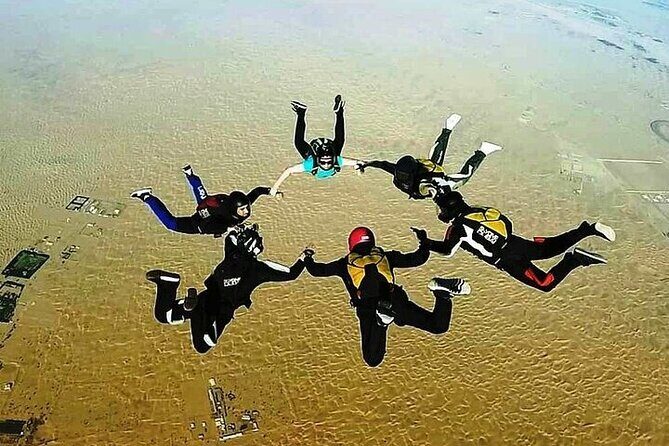
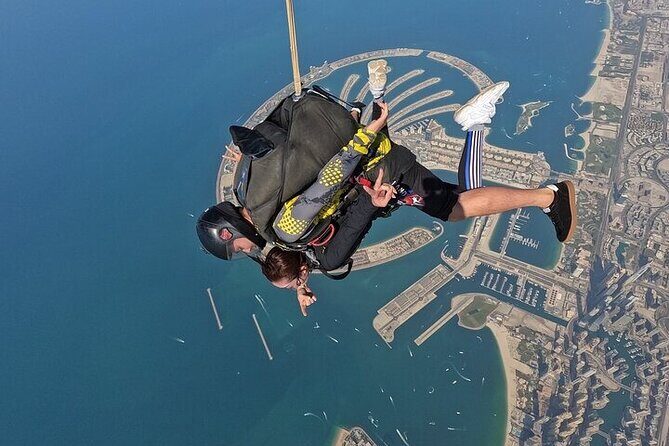
In Dubai, the sky route changes the whole vibe. Your operator offers a choice of either the Palm drop zone or the Desert drop zone, based on the option you select. If you want that postcard feeling—coastline shapes and the Palm’s geometry below—Palm is the obvious call.
If you want a more open, dramatic view, the desert drop zone often feels less like a sightseeing flight and more like wide-open sky with sand stretching out below. Either way, you’re getting a controlled tandem setup, so the real decision is visual: do you prefer landmarks or sheer emptiness?
You can also read our reviews of more tours and experiences in Dubai.

From check-in to harness: how the safety routine works
Your day starts at the registration desk at the meeting point on Al Seyahi St, Dubai Marina. You’ll be greeted, given registration and waiver forms, and asked to fill them out before anything else. For safety, you’re weighed and your BMI is calculated on site.
This part matters more than people think. The weight and BMI limits are not “suggestions”—they’re manufacturer requirements for safe equipment fit and safe landing together with your instructor. Men must be 100.0 kg / 220 lbs or less with BMI 30.0 or less; women must be 90.0 kg / 198.0 lbs or less with BMI 27.5 or less.
Right before boarding, roughly 20–30 minutes before you step onto the plane, you’re introduced to your instructor. You’ll get a safety briefing, the best body position for freefall, and a harness put-on and check. You’ll also be able to see how the team handles you as a unit—because in tandem, it’s not just your jump, it’s a partnership.
The ride up to 13,000 feet: what those 20 minutes feel like
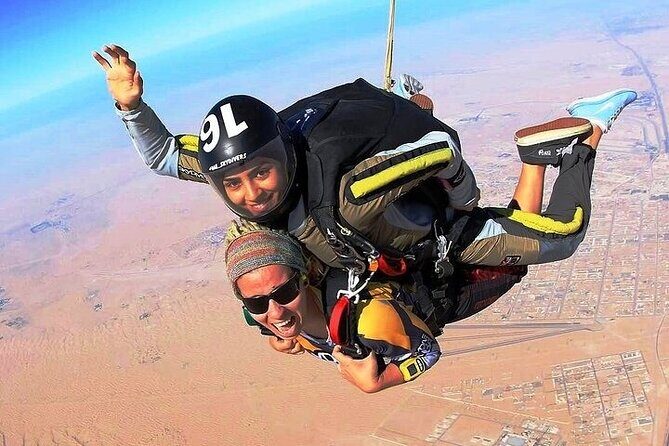
Once you board, you’re looking at about 20 minutes in the aircraft, climbing to around 13,000 feet (about 4,000 meters). It’s not just “time passing.” This is when your instructor finalizes the plan: posture, grip points, and how you’ll move once you exit.
You’ll also be getting your protective goggles. If you wear prescription glasses or lenses, you’ll want to do that so you don’t miss the view when everything speeds up. (Goggles are provided, but your eye setup is on you.)
There’s also a practical lesson here: because this is weather-dependent, the schedule can shift. The operator recommends you plan around three to four hours on site from check-in to the end of your jump, and that’s wise if you don’t want your whole day squeezed.
The exit and nearly 60 seconds of freefall at 120 mph
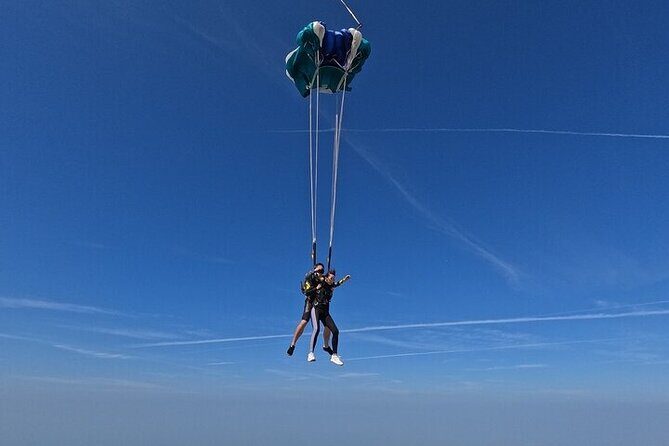
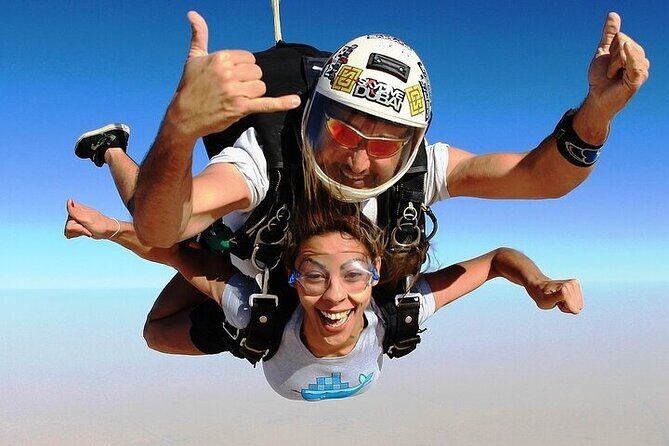
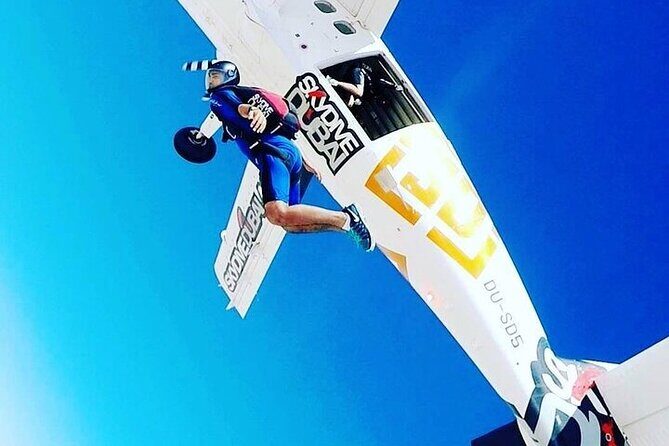
At exit altitude, you’ll jump out of the plane with your instructor and your camera flyer. Then comes nearly 60 seconds of freefall—around 120 miles per hour—where everything gets loud, fast, and very real.
Before the exit, you’re shown the best body position for freefall. That matters because at these speeds, tiny posture changes can help you stay stable instead of trying to figure it out mid-air. In a tandem setup, your instructor drives the experience and you’re there to follow the cues.
Think of freefall as the moment your brain stops making plans. You don’t need to be “brave” in a cinematic way; you just need to listen, do what you’re told, and hold your position. The feeling is short, but it’s intense—and that’s exactly why this is such a popular bucket-list activity.
Parachute deployment around 6,000 feet and the 4–5 minute canopy ride
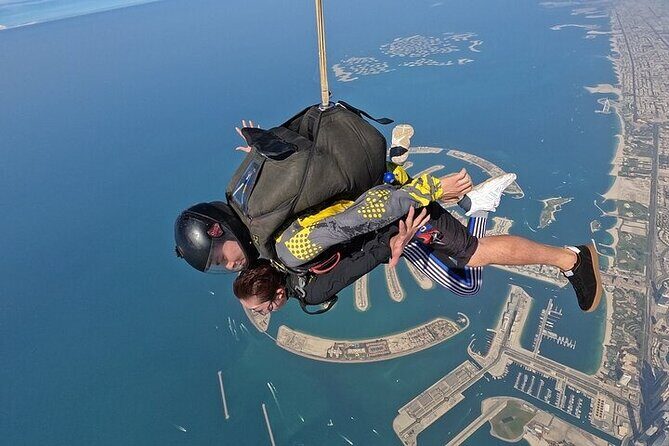
After freefall, the parachute deploys at around 6,000 feet. That transition is a big part of the experience: the speed drops and your mind gets a little quieter, so you can actually take in where you are.
Then you’ll have a 4–5 minute parachute ride. This is when the view becomes usable. You can look down and see the desert or the Palm more clearly, instead of only feeling the rush. It’s also when the air starts to feel less like chaos and more like calm.
Also, you’re not alone in this part. Your camera flyer stays involved through the sequence, and your team captures your experience from the right angles so you can relive it later without guessing what you did.

Landing, reaction interview, and getting your footage
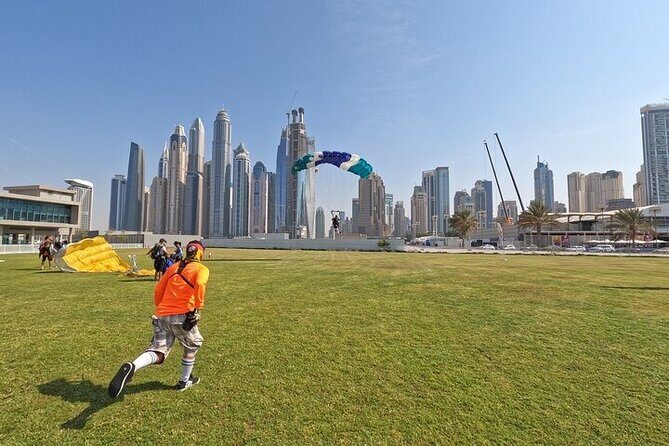
When you land softly, your camera flyer interviews you again to record your reaction. This is smart. Most people are a little stunned after the canopy ride, and the interview is basically a snapshot of your real first words.
After that, you’ll be escorted off the landing area back to the main building. That’s where the day transitions from adrenaline to “ok, now I want to watch the footage and feel it all again.”
If you care about quality, this is one of the best points in the package. Photos and a professionally edited video are included, and that’s a big deal because the real-time moments are hard to capture yourself—especially when everyone’s wearing goggles and moving fast.
Price and value: is $745 really buying more than the thrill?
At $745 per person, this isn’t a budget activity. The value comes from what you’re actually getting: a complete tandem jump with instructor time, a plane ride to 13,000 feet, nearly 60 seconds of freefall, a 4–5 minute canopy ride, and the media package (photos plus a professionally edited video).
You’re also getting medical insurance included, which adds practical peace of mind. And if you choose the option with transfers, you get private pickup from your hotel—useful in Dubai if you don’t want to coordinate transport right before a high-focus safety activity.
What’s not included is food and drinks. So plan for a snack and water situation before you arrive, especially since you may be on site about three to four hours.
Also note the two location-style options: you’re paying for the experience either way, but which drop zone you choose changes what you’re paying for visually—Palm landmarks versus desert views.
Practical rules that can affect whether you can go
This activity has real safety constraints, and the rules are detailed for a reason. You must be above 18. You’ll sign a liability waiver, and the team may require medical review if you have any of the listed conditions (including epilepsy, fits, severe head injury, recurrent blackouts, high blood pressure, heart or lung disease, dislocated shoulder or other limb issues, diabetes, mental illness, and more). Pregnancy is listed as a no-go.
You also need to respect the alcohol/drugs policy: there’s zero tolerance, and you must have no alcohol or drugs in your system 24 hours beforehand. That one’s non-negotiable.
On the fitness side, it’s not about being “athletic.” It’s about meeting the weight/BMI limits and feeling able to follow instructions under stress. The day is physical in the sense that you’re harnessed and moving through gear checks, but it’s not a workout class.
One more smart tip: remove precious jewelry and accessories before your jump. There are free personal lockers at the locations, so you can leave valuables safely and focus on the sky.
Weather and timing: why your schedule should breathe
Sky activities run on weather. High winds, poor visibility, rain, and low clouds can cause delays or cancellations. The operator uses a “standby” when conditions are not safe enough yet, meaning operations pause while you wait.
If weather doesn’t improve and operations are cancelled, you’ll be offered a different date if rescheduling is possible. If you can’t reschedule to the next available date, you’re eligible for a full refund.
Because delays can happen, the best planning move is simple: don’t book a tight dinner reservation for right after check-in time. Build in padding. The operator’s guidance to expect around three to four hours on site is realistic, especially if you hate waiting.
Who should book this—and who might want a different thrill
This is for you if you want the fastest, easiest way to experience freefall without doing training or tandem prep yourself. You’ll like it if you enjoy clear structure: briefing, harness check, a taught body position, and a timed sequence from exit to parachute to landing.
You might consider passing if your body measurements don’t meet the weight/BMI requirements. It’s not about “trying harder”—the equipment manufacturer requirements can’t be waived. Also skip it if any of the medical conditions listed apply, or if you’re pregnant.
If you want a group experience, this is set up as a private activity for your group only. That can be great for photos, pacing, and keeping everyone together through check-in and the media capture.
Should you book a tandem skyjump in Dubai?
Book it if you’re ready for a short burst of freefall, you want real pro photos and edited video, and you’re choosing the view that fits your taste—Palm landmarks or desert open sky. I’d also book it if you can handle waiting a bit, since weather can shift the timeline.
Don’t book it if you’re likely to stress about schedule changes, you don’t fit the weight/BMI limits, or you have any medical situations listed as disqualifying. And if you’re the type who shows up without reading safety rules, you’ll probably have a rougher day than you need.
If you want one high-impact Dubai memory that feels genuinely different from the usual malls and skyline viewpoints, this is one of the clearest plays—because the thrill is built into the timing: nearly 60 seconds freefall, then minutes to see what you just did.
FAQ
How long should I plan to spend at the drop zone?
Plan for about three to four hours total from check-in until you complete the jump. Even though the experience duration is listed as about 3 hours 30 minutes, delays can happen due to air traffic control and weather.
Where does the jump happen in Dubai?
The jump can take place at either the Palm drop zone or the Desert drop zone, depending on the option you select. Your meeting point is at Al Seyahi St in Dubai Marina, and the activity ends back there.
What are the weight and BMI requirements?
Men must be 100.0 kg / 220 lbs or less with BMI 30.0 or less. Women must be 90.0 kg / 198.0 lbs or less with BMI 27.5 or less. Staff weigh you at check-in with your shoes and clothes on.
Is pickup from my hotel included?
Hotel pickup is included only if you select the option that includes transfers. The listed options include Palm only, or Palm plus two-way transfers.
What’s included in the price?
Included are the safety briefing, about 20 minutes in the aircraft up to 13,000 feet, nearly 60 seconds of freefall, a 4–5 minute parachute ride, photos and a professionally edited video, and medical insurance. Pickup is included only if the transfer option is selected.
Are food and drinks provided?
No. Food and drinks are not included, so plan to eat and hydrate before you arrive.
What happens if bad weather cancels the operation?
The team may place operations on standby while waiting for conditions to improve. If the jump is cancelled due to poor weather and you cannot reschedule to the next available date, you’ll receive a full refund.