REVIEW · DUBAI
Dubai Walking Tour “Fahidi Area, Dubai Museum, Souks”
Book on Viator →Operated by Mido Tour Guide · Bookable on Viator
Old Dubai feels like a different city. This walking tour strings together the places that explain how Dubai traded, lived, and adapted. I love the small-group pace and the way you get hands-on stops, not just street photos.
Two highlights for me: the chance to step into the Al Fahidi Historical Neighbourhood and peek at interior architecture, and the combo of Dubai Creek Abra ride plus time in the Spice Souk and Gold Souk. One consideration: you’ll do a fair amount of walking, so wear shoes you don’t mind.
In This Review
- Key things to know before you go
- Al Fahidi (Bastakia) houses: where Old Dubai still shows its bones
- Coffee Museum: a quick break that tastes like the Arabian Gulf
- Dubai Museum and Al Fahidi Fort: the trade-story that explains the skyline
- Dubai Creek and the Abra crossing: the moment the trade lanes appear
- Spice Souk: smell the past, then shop with your eyes open
- Gold Souk: window-shopping with the Dubai effect
- Day two: a short follow-up in Dubai
- Price and value: what $25 gets you in old Dubai
- Meeting point, route ending, and how to keep your day efficient
- How the guide makes or breaks the experience
- What to wear, what to bring, and walking-smart comfort
- Weather matters in Dubai
- Should you book this Old Dubai walking tour?
- FAQ
- How much does the Dubai Walking Tour cost?
- How long is the tour?
- What time does the tour start?
- Where does the tour start and end?
- Is the tour limited to a small group size?
- What’s included in the price?
- Are any admission tickets included for other stops?
- What’s the most unique part of the route?
- What happens after the tour ends?
- What’s the cancellation policy?
Key things to know before you go
- Bastakia inside-access feel: you don’t just look at exteriors; you visit houses and spaces turned into galleries or museums
- Coffee Museum tasting: an Arabian coffee stop with tasting time built in, not a quick photo break
- Abra ride for the “Souks reveal”: you cross Dubai Creek by boat to reach the souk lanes on the other side
- Smart stops order: the route moves from old neighborhoods to forts to trade streets, so the story makes sense
- Small maximum group size: up to 8 people, which helps questions and photo moments
- Water included: a bottle of water is part of the tour, handy in the sun
Al Fahidi (Bastakia) houses: where Old Dubai still shows its bones
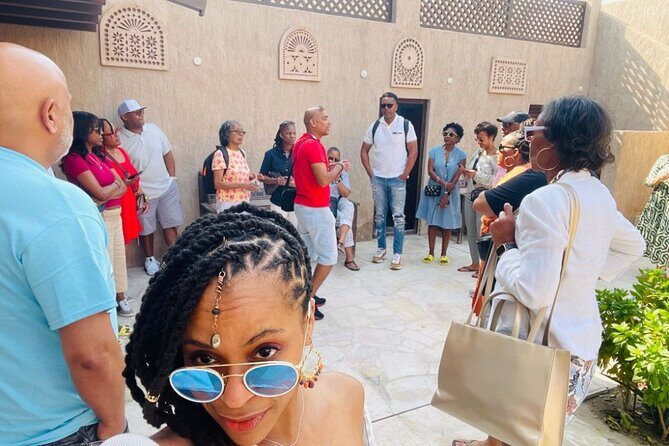
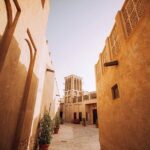
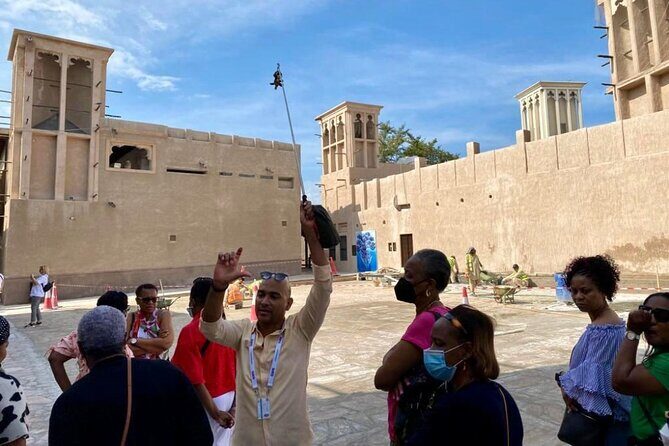
The day starts in Al Fahidi, also tied to Bastakia. This is one of the best ways to understand Dubai before the skyline: you’ll be walking through lanes where the scale feels human and the buildings tell you how people built for the heat, the trade routes, and community life.
What I like here is the focus on more than a single photo spot. You’ll go into sections of houses to get a sense of interior architecture, and you’ll also visit houses that have been repurposed as galleries or museums. That interior look matters because Dubai’s history is often described as a story of merchants and pearl divers, but the physical space is what makes those stories real.
If you’re the type who enjoys “reading” a neighborhood—doorways, courtyards, wind flow—this stop clicks. The guide also brings it to life with explanations about how Emiratis lived before and what the area felt like in earlier times.
Time check: this part is listed at about 30 minutes, with an admission ticket included for the experience. It’s enough time to get oriented without feeling rushed.
You can also read our reviews of more walking tours in Dubai


Coffee Museum: a quick break that tastes like the Arabian Gulf
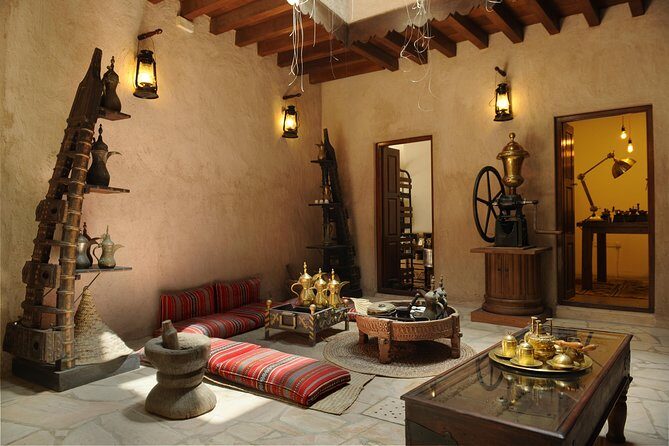
Next you move to the Coffee Museum, still in the Fahidi area. This is a short stop (around 10 minutes) but it’s the kind of pause that breaks up the walking and gives you something sensory to remember.
The key detail is the tasting: the guide invites you to try Arabian coffee. That’s small by schedule, but it’s big for atmosphere. Coffee tasting is one of those travel moments that makes the culture feel present, especially when the rest of the walk is about trade and daily life.
There’s no admission ticket listed for this stop, so it feels like a free bonus rather than a paid add-on. If you’re sensitive to caffeine, you might want to pace yourself, but the experience is clearly built for sampling, not rushing.
Value note: the tour keeps you moving, but it doesn’t ignore the food-and-drink side of local culture.
Dubai Museum and Al Fahidi Fort: the trade-story that explains the skyline
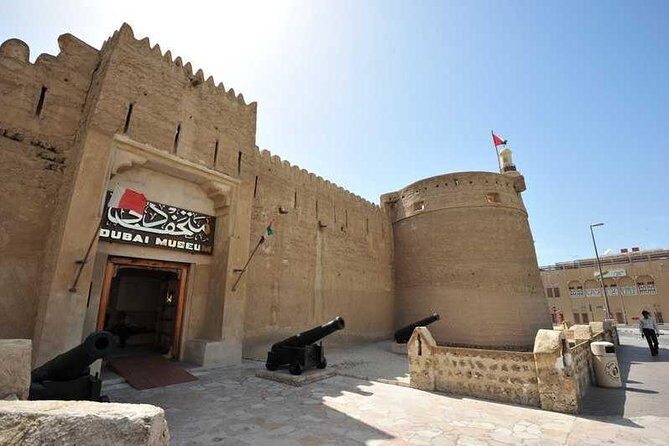
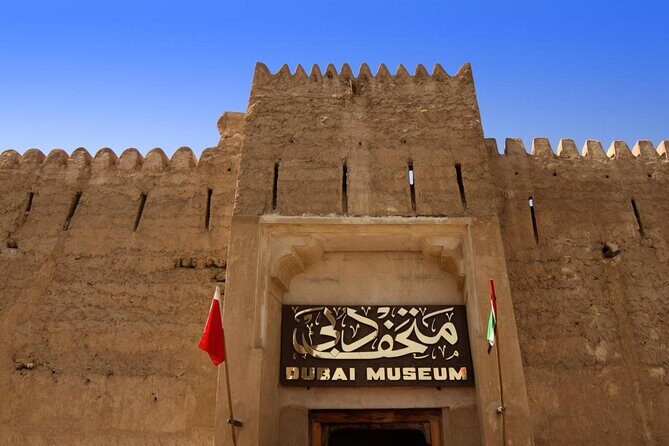
Then the route heads to Dubai Museum and Al Fahidi Fort. This is another roughly 30-minute block, and the stop is listed with no admission ticket cost as part of the tour.
What you’re getting here is context. Dubai didn’t start as a luxury brand or a mega-development; it grew through commerce and coastal networks. The museum portion is designed to give you a picture of old Emirati business and how the fort-and-building style worked in that era.
The fort connection matters. Forts aren’t just old walls; they’re a signal of what people needed to protect—people, goods, and strategic positions. Even if you’re not a formal museum fan, the guide’s explanations help you connect the buildings to the broader “how Dubai became Dubai” story.
Practical tip: if you like taking photos, aim for a quick sweep before the crowd thickens. Once you’re in the museum space, you’ll probably spend more time listening than shooting, which is exactly the point.
Dubai Creek and the Abra crossing: the moment the trade lanes appear
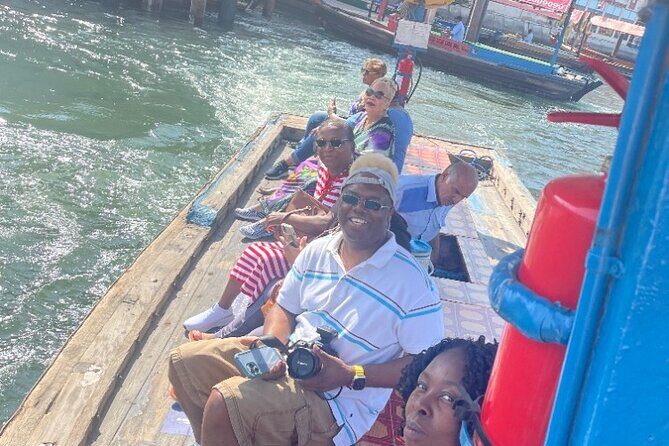
Walking from the museum area brings you toward the Creek. You’ll pass by the Textile Market along the way, where you’ll see items associated with supply coming through regional routes (the tour frames it as goods arriving from India, Pakistan, and other places).
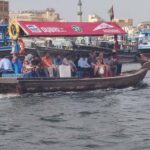
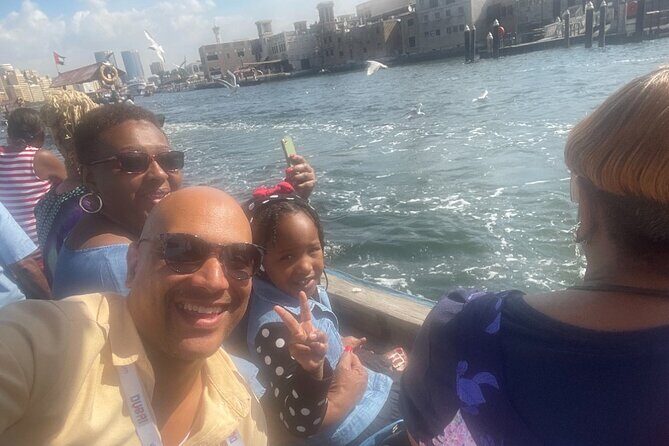
Then comes the Abra ride across the Dubai Creek. This is listed as a 10-minute stop, with no extra admission ticket cost for the experience. Getting across by boat is one of those Dubai details that feels practical in the moment and iconic in hindsight.
Here’s what I think it does well: it turns the geography into part of the story. You’re not just reading about old trade networks—you’re physically crossing the water that shaped them.
When you land on the other side, you’re set up for the souk experience. It feels like the route keeps paying off: history becomes movement, movement becomes shopping streets.
Spice Souk: smell the past, then shop with your eyes open
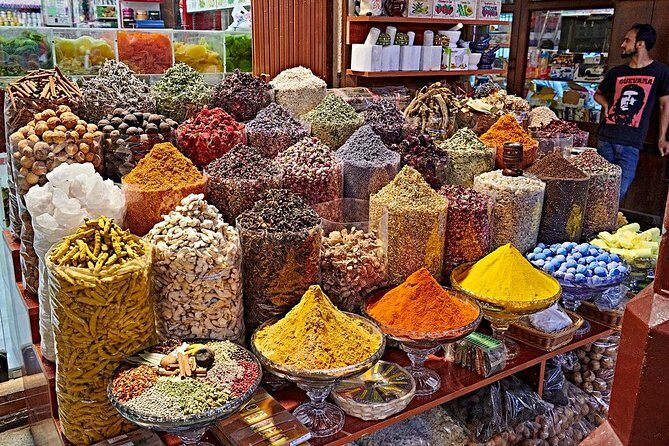
Once you reach the souk side, the tour focuses on the Dubai Spice Souk. You’ll walk the small alleys while the air fills with spices—cardamom, cinnamon-style scents, and all the heady smells you only get when you’re close enough to the source.
This stop is about 30 minutes and is listed as no admission ticket cost. The guide explains the benefits of the spices, and you also get a tasting: dates are included for you to try.
That date tasting is worth paying attention to, because it turns a shopping street into a cultural snack moment. It also helps break the pattern of looking and buying. You get to taste, listen, and only then decide what you want to explore more.
Shopping reality check: souks are fun, but prices and deals can vary by stall. Go in with curiosity, not pressure. If you want to do serious shopping, leave yourself extra time after the tour ends, because this segment is timed.
You can also read our reviews of more museum experiences in Dubai


Gold Souk: window-shopping with the Dubai effect
A short walk from spices brings you to the Dubai Gold Souk. This is another 30-minute block, also listed with no admission ticket cost.
The Gold Souk is visually loud in the best way. Even if you don’t plan to buy, it’s a striking reminder that Dubai became globally connected—and that trade still runs through the city’s veins.
The tour doesn’t make this feel like a hard-sell sales pitch. The guide points out how the souk works and gives you the sense of what’s happening there: busy shoppers, deal-making energy, and the sheer variety of gold displays.
If you do want to buy, set expectations. This is where you’ll see lots of options and pricing styles, and you’ll want to take your time comparing. If you’re only sightseeing, you’ll still get enough time for photos and people-watching.
Day two: a short follow-up in Dubai
The second day is listed with a brief Dubai stop lasting about 10 minutes, but it doesn’t spell out what that means in detail. Practically speaking, treat day two as a light add-on rather than the main event.
I’d plan day one as your heavy-hitter day: Bastakia, museum/fort context, the Abra ride, and the souk sequence. Then use day two to add flexibility—whether that’s relaxing, returning to a favorite souk lane, or pairing the tour with another nearby sight you’re already aiming to see.
Price and value: what $25 gets you in old Dubai
At $25 per person, this tour is priced like an efficient afternoon-to-evening “story walk,” not a luxury day. The value comes from the structure.
You’re paying for a professional guide plus a planned route that links:
- Old neighborhood architecture (with admission ticket included for that first stop)
- A guided coffee tasting
- Museum-and-fort context
- A Creek crossing by Abra
- Souk time across Spice and Gold
A big part of the value is that many segments are listed as no additional ticket cost (coffee museum, Dubai Museum, Abra crossing, and both souks). Even if you don’t buy anything, you still get the guided explanations that make the places feel connected instead of random.
The tour is also capped at a maximum of 8 travelers. That matters in Dubai, where you can easily end up in a group that shuffles. Here, you’re more likely to get time for questions and stop-and-go moments for photos.
Meeting point, route ending, and how to keep your day efficient
You start at Arabian Tea House Restaurant & Cafe in Al Fahidi. The end point is at the Dubai Gold Souk (Deira / Al Ras area). After the tour, you can keep exploring in either the Spice or Gold Souks, or your guide can show you the closest metro option, listed as Ras Metro Station on the green line.
That end setup is practical. Many people like to continue shopping or sightseeing right after a souk walk, and ending at Gold Souk keeps you in the same neighborhood energy.
The start time is 9:00 am, which is smart if you want to get through the walking while it’s still calmer. Dubai mornings are often easier than mid-day heat, especially if you’re not used to warm-weather city walking.
Also, you’ll have a mobile ticket, which is simple to handle on your phone.
How the guide makes or breaks the experience
This tour’s main ingredient is the guide. The operator uses professional English-speaking guides, and names like Mahmood and Alex are highlighted in past groups, with other English-speaking guides also mentioned such as Pri and Mohammad.
What you should look for in a good guide for this route is exactly what these names are associated with: enthusiastic cultural explanations, clear organization, and real hospitality. It shows in the details like inviting you to pick your coffee, steering you through the souk alleys, and explaining what you’re seeing rather than reading off a script.
If you want maximum value, bring a couple questions that help you tailor the story—like how old neighborhoods were built, how trade shaped daily life, or what to watch for when you’re in the spice and gold stalls.
What to wear, what to bring, and walking-smart comfort
Because you’re walking between neighborhoods, museum/fort areas, and souks, comfort matters more than style. Wear closed-toe shoes you can handle on uneven pavement. Bring a hat or sunglasses, and use sunscreen if you’re planning to take lots of photos before or after the tour.
The tour includes a bottle of water, which helps. Still, I’d keep your own plan for staying hydrated since Dubai can be warm even when the morning feels pleasant.
You might also want a small bag you can manage easily in narrow alleys. Souks can get tight, and you’ll appreciate not having to juggle large items while you browse.
Weather matters in Dubai
The experience requires good weather. If it’s canceled due to poor weather, you’ll be offered a different date or a full refund. This is one of those reminders to check the forecast the day before, since this route depends on comfortable walking outdoors.
If the forecast looks questionable, you’ll still likely be fine—just don’t count on a perfect day for long, unbroken outdoor stretches.
Should you book this Old Dubai walking tour?
I think it’s a strong booking if you want Old Dubai without the typical checklist feel. The Bastakia-style architecture, the Abra crossing, and the pairing of Spice and Gold Souks create a simple story arc: life, fort protection and trade, then the markets that grew out of it.
You should book this tour if:
- you like guided context, not just sightseeing stops
- you want a compact route with both museums and souks
- you prefer a small group where it’s easier to ask questions
You might pass if:
- you hate walking or you want a mostly indoor itinerary
- you’re only interested in modern Dubai icons, since this route focuses on the older side of the city
If you do book, go in with a mindset of learning and browsing, not buying. The best moments here are the ones you can’t package into a single photo: the interior house feel in Al Fahidi, the first sniff of spices as you step into the lanes, and the way the Creek crossing sets up everything that comes after.
FAQ
How much does the Dubai Walking Tour cost?
It costs $25.00 per person.
How long is the tour?
It runs for about 2 days (approximately).
What time does the tour start?
The start time is 9:00 am.
Where does the tour start and end?
It starts at Arabian Tea House Restaurant & Cafe – Al Fahidi, Dubai (Bastakiya, opposite Musalla Post Office). It ends at Dubai Gold Souk in Dubai (Deira / Al Ras).
Is the tour limited to a small group size?
Yes. The maximum group size is 8 travelers.
What’s included in the price?
A bottle of water is included. The Al Fahidi Historical Neighbourhood stop includes an admission ticket.
Are any admission tickets included for other stops?
Dubai Museum & Al Fahidi Fort, Coffee Museum, the Abra crossing to the souks, Dubai Spice Souk, and Dubai Gold Souk are listed as admission ticket free in the tour details.
What’s the most unique part of the route?
Crossing Dubai Creek by Abra, then reaching the Souks side for the Spice and Gold Souk sections.
What happens after the tour ends?
You can stay to explore in either the Spice Souk or the Gold Souk, or your guide can show you how to reach the closest metro station listed as Ras Metro Station on the green line.
What’s the cancellation policy?
You can cancel for free up to 24 hours in advance for a full refund. If weather forces a cancellation, you’ll be offered a different date or a full refund.