REVIEW · DUBAI
Old Dubai Heritage Walking Tour – 3-Hour Cultural Experience
Book on Viator →Operated by Travtur Tourism L.L.C · Bookable on Viator
Old Dubai has a way of slowing you down. This 3-hour heritage walk takes you from the creek markets into the older neighborhoods—wind-tower streets, forts, and the smells of the Spice Souk—with a guide doing the talking. I especially like how it pairs classic old-city scenes with practical moments like the abra crossing and a clear end point at the Gold Souk. One heads-up: it’s a lot of walking through busy market lanes, so go in with comfy shoes and a calm mindset when crowds swell.
Two things that made this feel like good value: you get a licensed local guide and time-saving structure through the “right” places, rather than wandering in circles. And the mix is smart—heritage streets plus souk time, where you can shop with a plan instead of guessing what’s fair. The only drawback is that the name of the tour says 4 hours in some descriptions, but the actual duration is listed at about 3 hours, so don’t expect a long sit-down museum day.
In This Review
- Key points to know before you go
- Old Dubai on Foot and on the Water: What This 3-Hour Tour Feels Like
- Where You Start at Souk Al Seef and How to Set Your Morning Up
- Al Fahidi Historical Neighborhood: Wind-Tower Streets and Courtyards That Still Breathe
- Al Fahidi Fort and the Dubai Museum Area: Outside Photos Still Mean Something
- Souk Time: Spice Market Rules and Gold Souk Reality Checks
- Bur Dubai to Deira by Abra: A Short Ride With Big Old-Dubai Meaning
- Old Baladiya, Viewpoints, and City Perspective From the Grand Souq Area
- Sheikh Saeed Al Maktoum House and the Heritage Museums: Why This Part Matters
- Price and Value: Is $47.20 Worth It for Old Dubai?
- Logistics That Matter: Start at 9:00, End at Gold Souk, and Plan Your Shoes
- Should You Book This Old Dubai Heritage Walking Tour?
- FAQ
- How long is the Old Dubai Heritage Walking Tour?
- Where does the tour start and end?
- What’s included in the tour price?
- Is hotel pickup or drop-off included?
- Are entrance fees included for the stops?
- What language is available in July and August?
- When does the Old Baladiya stop run, and is it ever closed?
Key points to know before you go
- Old Dubai by real neighborhoods: Al Fahidi lanes and wind towers, not just photo stops
- Dubai Creek shortcut: a traditional abra boat ride between Bur Dubai and Deira
- Souk time with guidance: spice and gold shopping with help on how to handle bargaining
- Iconic sights, light on formal entry: Al Fahidi Fort is primarily for outside views and photos
- Weather-and-language realities: July and August are English-only, and it’s July-proof by pace, not by shade
- Small group cap: up to 15 travelers, which helps keep things moving
Old Dubai on Foot and on the Water: What This 3-Hour Tour Feels Like
If you picture Old Dubai as a handful of buildings and a couple of souks, this tour nudges that idea into something bigger. The day plan stitches together three different Dubai moods: older Emirati architecture, trading-era creek life, and the shopping energy of the markets.
The “on the move” structure matters. You’re not stuck doing one long museum visit. Instead, you get short stops where you can walk, look, take photos, and then move on while the guide ties the scenes together. The group size is capped at 15, which keeps your experience from turning into a slow shuffle.
You’ll likely spend most of your time walking through older streets and market lanes, with a little vehicle travel in between. Think of this as a guided route to “get your bearings fast,” plus a couple of signature experiences you’ll remember later—especially the abra ride across Dubai Creek.
You can also read our reviews of more walking tours in Dubai


Where You Start at Souk Al Seef and How to Set Your Morning Up
The tour starts at Al Seef Heritage Hotel Dubai (Curio Collection by Hilton), and the walking part begins at Souk Al Seef by Dubai Retail. The advice is simple: arrive 10 minutes early to meet your guide at the main entrance.
Why this matters: Souk Al Seef is by Dubai Creek, and early timing helps you get the calmer version of the area before it fills up. If you’re the type who likes taking photos without dodging legs and bags, arriving on time helps a lot.
Also, because the tour ends at the Dubai Gold Souk, it helps to go into the souks section with a clear idea of what you want to buy (or not buy). A guide can’t read your mind, but they can help you shop smarter once you’re in the market flow.
Al Fahidi Historical Neighborhood: Wind-Tower Streets and Courtyards That Still Breathe
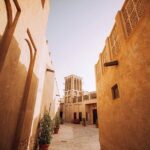
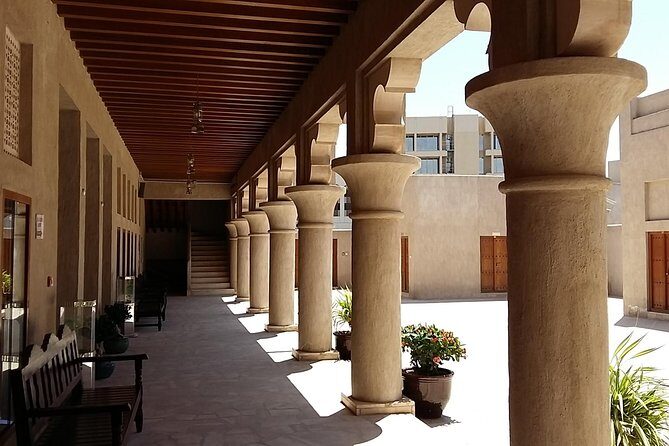
This is one of the best parts of Old Dubai for walking, and you get real time here. In Al Fahidi Historical Neighborhood, you’ll see traditional buildings with wind towers, narrow lanes, and courtyards that make the area feel cool even when the sun is working overtime.
What I like about this neighborhood is how it doesn’t try to force history into a theme-park box. The streets are quirky in a good way—small art spaces, simple cafés, and the kind of architecture that feels made for shade, not spectacle.
A practical detail: this is a “move at a city pace” type of stop. There’s no huge single attraction you’re waiting for. You’ll get the most out of it by slowing down on purpose—look up at the wind tower shapes, notice the lane width, and take in how the courtyard spaces change the sound of the street.
Al Fahidi Fort and the Dubai Museum Area: Outside Photos Still Mean Something
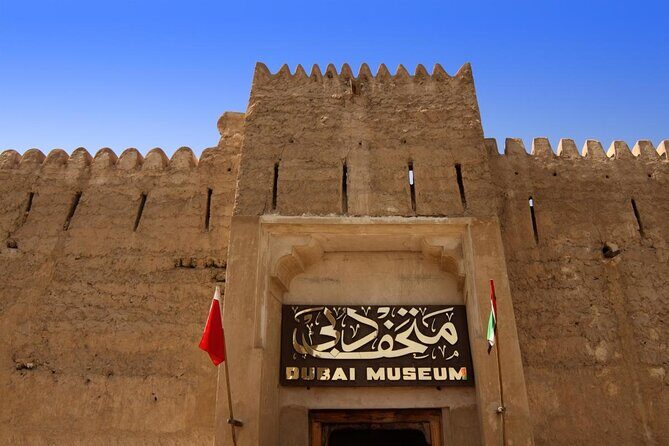
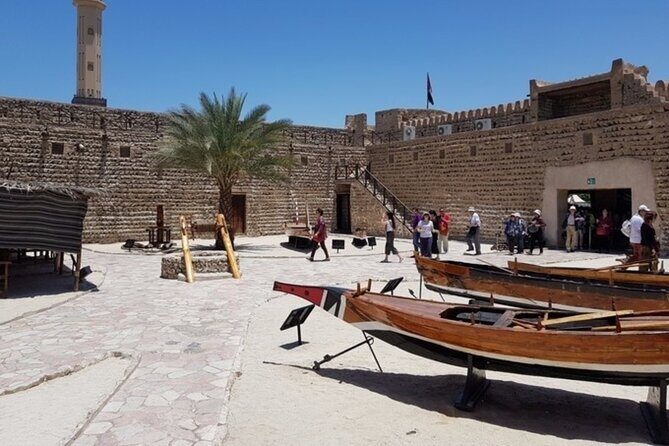
The tour includes Al Fahidi Fort, described as Dubai’s oldest standing building, now associated with the Dubai Museum. In the plan you’re mainly looking from the outside and taking photos of this iconic fortress.
If you’re hoping for a full museum-style interior visit, the details here are a little more “look and learn” than “open the ticket and spend hours.” That said, the fort’s exterior view is one of those anchor images that helps you understand how the older city thought about defense and protection.
If you love architecture, this stop gives you a clear “before” reference point. You see the fort form, then later you’ll connect it back to the idea of the city as a trading hub—creek, markets, and movement.
Souk Time: Spice Market Rules and Gold Souk Reality Checks
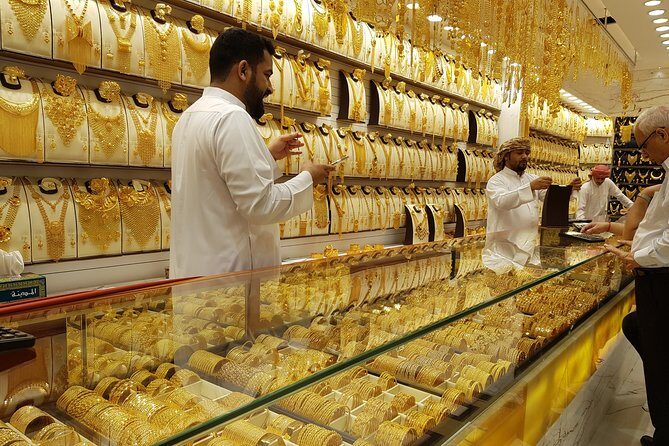
Two separate souk visits make this tour feel balanced rather than repetitive: Dubai Spice Souk and Dubai Gold Souk.
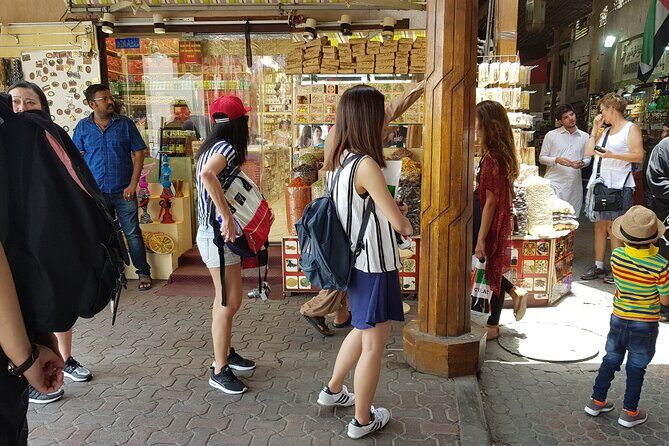
At the Spice Souk, the whole point is senses. You’ll walk lanes with stalls offering spices, herbs, traditional remedies, teas, and incense. Expect strong smells and lots of little samples. It’s a place where your guide’s job goes beyond pointing at shops—they can explain what you’re seeing and help you decide what’s worth taking home.
Then comes the Gold Souk, and the tone changes fast. Here you’re looking at gold jewelry, precious stones, and different styles of craftsmanship. It’s easy to get dazzled. The smartest move is to set a budget first, then use the time to learn what designs cost and why.
One practical tip that stands out from the kind of feedback this tour earns: a strong guide can help you with bargaining basics—what to ask, how to compare, and how to keep the conversation comfortable. If you tend to hate negotiating, this is one of the best reasons to take a guided route instead of tackling the souks alone.
At the end of the Gold Souk stop, your guide also provides directions and tips for getting back to your hotel or continuing on your own.
You can also read our reviews of more historical tours in Dubai





Bur Dubai to Deira by Abra: A Short Ride With Big Old-Dubai Meaning
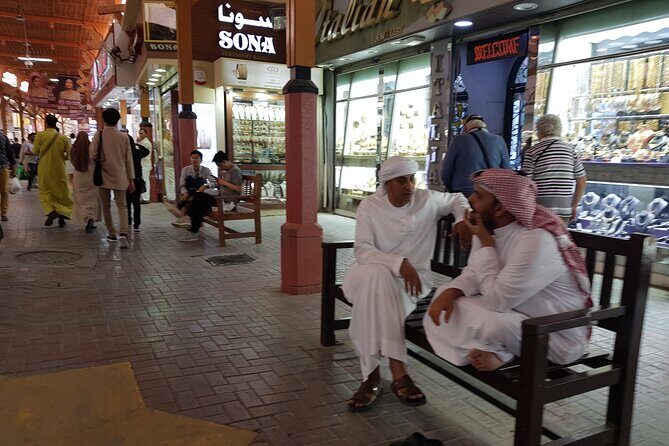
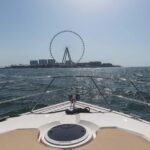
The abra crossing is one of those moments that turns “history talk” into something you can actually feel. You’ll go from the Bur Dubai Abra Station across Dubai Creek toward Deira.
It’s not a long ride, but it’s long enough to notice the skyline and understand how central the creek is to Old Dubai’s layout and identity. Even if you’ve seen waterfronts in other cities, this one has a very specific energy: trading, movement, and a working-world vibe.
If you like photos, stand where you have a decent view without crowding the boat. The best shots often come when you’re watching the line of buildings shift as the boat turns.
Old Baladiya, Viewpoints, and City Perspective From the Grand Souq Area
This tour also includes a couple of perspective stops that help you understand Old Dubai as more than a flat collection of sights.
You may visit the Old Baladiya, described as Dubai’s first municipality. The plan mentions sitting at the table where plans were discussed, plus a short video showing how the city evolved. A key detail to know: Old Baladiya is closed on Fridays and public holidays, so your experience on those days may shift.
There’s also a viewpoint moment at the Grand Souq Parking rooftop area. The plan indicates a look from the 7th floor, where you can take in panoramic views of Dubai Creek and the Old Town. This isn’t just a scenic break—it’s a useful reset after walking through tight lanes. You can finally see how all those roads and souks connect.
Sheikh Saeed Al Maktoum House and the Heritage Museums: Why This Part Matters
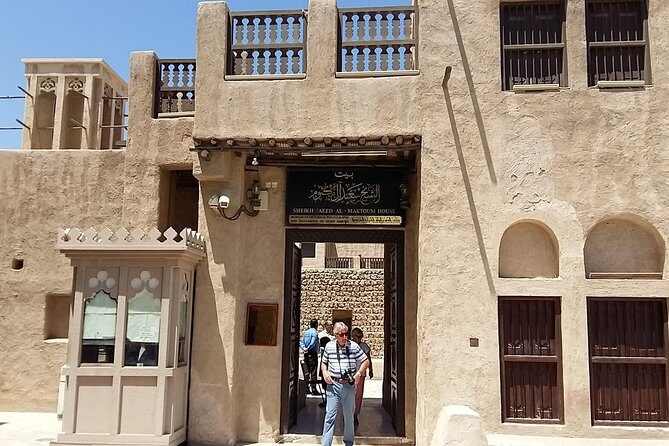
The tour’s cultural concept includes more than street scenery. It’s designed to include time at the Sheikh Saeed Al Maktoum House and an older district stop connected with the Bastakiya Quarter. It also points you toward museums such as the Camel Museum, Horse Museum, and a Heritage Village element.
Why this matters for you: Old Dubai isn’t only about architecture. It’s also about daily life and local traditions—how people moved, worked, and kept animals and routines connected to a desert environment. These stops give context to the souks and forts you see later.
A note on pacing: because the overall tour time is about 3 hours, these culture stops are likely shorter “taste and orientation” moments, not deep multi-hour museum sessions. If you want to spend longer with objects and indoor stories, treat this tour as the starter course and plan follow-up time on your own.
Price and Value: Is $47.20 Worth It for Old Dubai?
At $47.20 per person, this tour is positioned as a practical, guided shortcut through a dense part of the city.
Here’s the value equation I see:
- You get a licensed local guide doing the interpretation, which saves you from guessing what you’re looking at.
- You get structured time in multiple high-demand places: Al Fahidi area, Spice Souk, Gold Souk, plus the abra crossing.
- The tour includes a mobile ticket, and the plan notes that many listed stops have admission as free for the included segments.
The main thing you’re buying is reduced effort. If you’re trying to cover Old Dubai on your own, the biggest time sink isn’t walking—it’s figuring out what to prioritize, how to move between areas, and how to handle the souks without getting overwhelmed.
One complication: the details say round-trip hotel transport is included in the overview, but the “not included” line mentions pick up and drop off. Since both appear in the tour information you have, the safest move is to confirm exactly what your day includes when you book.
Logistics That Matter: Start at 9:00, End at Gold Souk, and Plan Your Shoes
Timing is clear: the tour starts at 9:00 am and runs about 3 hours. Most of your time will be spent on the feet, with short walking bursts between points and some vehicle travel between longer connections.
The start point is at Al Seef Heritage Hotel Dubai area, and the tour ends at the Dubai Gold Souk. That end matters because you’re finishing in a place where you can keep shopping or grab food nearby without needing to “restart” your day.
Because you’re in busy markets, bring:
- Comfortable shoes for uneven pavement and market lanes
- A small bag you can manage while shopping
- Water, especially if you’re going during hot months
Finally, language: during July and August, the tour is available in English only (and last-minute bookings are also English only). If you’re traveling in another language, this is worth checking before you lock it in.
Should You Book This Old Dubai Heritage Walking Tour?
Book it if you want Old Dubai in a guided, organized route—especially if you:
- Like souks but don’t want to feel lost inside them
- Want the abra experience without researching it first
- Prefer someone else to stitch together what you’re seeing in Al Fahidi and the forts
Consider skipping (or adding your own follow-up time) if you:
- Want a longer, deeper museum day with lots of paid entry and slow indoor pacing
- Hate market crowds and shopping pressure enough that you want quieter neighborhoods instead
- Need hotel pickup/drop-off guaranteed on your schedule (double-check the transport details before you book)
If you’re planning a first visit, this tour is a strong way to understand how Dubai’s old trading world connects to today’s city maze. You’ll leave with better context, better photos, and a shopping plan that doesn’t depend on luck.
FAQ
How long is the Old Dubai Heritage Walking Tour?
The experience is listed at about 3 hours.
Where does the tour start and end?
It starts at Al Seef Heritage Hotel Dubai (Al Seef / Dubai Creek area) and ends at the Dubai Gold Souk area in Deira / Al Ras. Your guide helps with directions afterward.
What’s included in the tour price?
It includes a local professional licensed tour guide, Al Fahidi Historical Neighborhood, walking through Meena Bazaar, an Abra water taxi ride, and time at the Spice Souk and Gold Souk.
Is hotel pickup or drop-off included?
The information you have includes round-trip hotel transport in the overview, but it also lists pick up and drop off as not included. Confirm what applies to your booking when you reserve.
Are entrance fees included for the stops?
Many of the listed stops show admission as free (and the tour notes admission ticket free for the segments). If you have a specific attraction in mind, it’s smart to ask your guide on the day.
What language is available in July and August?
During July and August, the tour is available in English only. Last-minute bookings are also in English only.
When does the Old Baladiya stop run, and is it ever closed?
Old Baladiya is closed on Fridays and public holidays, so you may not be able to do that specific stop on those days.