REVIEW · DUBAI
Old Dubai tour: Local Market, Tasting, Dubai creek with Abra ride
Book on Viator →Operated by Mahmoud Elsayed Tourism L.L.C Walking , Safari and City Tour · Bookable on Viator
Old Dubai feels close in just a few hours. This small-group walk starts in the Al Fahidi area and shows you how the city looked from the mid-1800s through the 1970s, not the glossy skyline. I love how the guide grounds you in Al Fahidi heritage streets and wind-tower architecture, and I love finishing with an Abra ride across Dubai Creek, the kind of local transport that still feels like the city’s bloodstream.
The middle stops are where the tour earns its keep. You’ll get the Dubai Museum inside Al Fahidi Fort, plus a look at the Coins Museum and the Grand Bur Dubai Masjid with its 70-meter minaret, geometric patterns, and stained-glass windows. When the guide is on their game (names like Hichem, Mahmoud Ahmed, Abdullah, and Azzem show up in strong feedback), the history comes out clear and human, not like a script.
One thing to keep in mind: you’re moving quickly through several places, and openings can change. The Coins Museum is listed as free admission but also notes it will open soon, and a few past experiences reported ending up with less museum time than expected. Add in time in outdoor markets and you’ll want to plan for heat and sales-energy at the souks.
In This Review
- Key Things to Know Before You Go
- Starting at Al Fahidi Marine Transport Station: Your Old-Dubai Baseline
- Al Seef Stop: A Creekside Transition From Past to Present
- Al Fahidi Historical Neighbourhood: Wind Towers, Alleys, and Real Context
- Dubai Museum Inside Al Fahidi Fort: The Pre-Oil Story You Can Actually See
- Coins Museum and Bur Dubai Grand Mosque: Trade, Money, and Faith in One Stretch
- Coins Museum (Al Fahidi area)
- Grand Bur Dubai Masjid (Bur Dubai)
- Old Souk to Abra Station: Where Shopping Feels Like Daily Life
- Dubai Spice Souk: Sensory Shopping With a Plan
- Dubai Gold Souk: Tax-Free Jewelry and the Importance of Cash
- Price and Value: Is $22.33 a Good Deal?
- Who This Old Dubai Tour Suits Best (And Who It Doesn’t)
- Should You Book This Old Dubai Tour?
- FAQ
- How long is the Old Dubai tour?
- What does the tour cost?
- Where does the tour start and end?
- Is the abra ride included?
- What’s included in the price?
- What is not included?
- Do I need cash for the Gold Souk?
- Is free cancellation available?
Key Things to Know Before You Go
- Small group (max 10) means more time for questions and less waiting around.
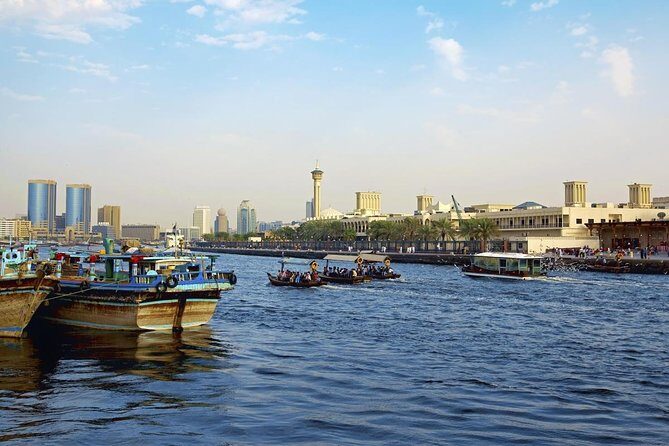
- Abra ride on Dubai Creek is included and it’s the simplest way to feel the old-city rhythm.
- Al Fahidi wind-tower lanes + Dubai Museum connect street scenes to real objects and stories.
- Coins Museum and Bur Dubai Grand Mosque add unusual angles on trade and faith.
- Spice Souk and Gold Souk are shopping-heavy—go with a plan if you don’t like pressure.
- Tour ends in the Gold Souk area (taxi and metro nearby), since drop-off isn’t included.
Starting at Al Fahidi Marine Transport Station: Your Old-Dubai Baseline
The tour begins at Al Fahidi Marine Transport Station – Information & Ticket Office, in the Bur Dubai Creek area (near D84). That start point matters. You’re close to the creek right away, so the route isn’t just a long walk through indoor sites. It’s also a good “orientation moment” for your photos: you can see how the city’s old trading geography lines up with where people still move today.
Expect about 2 to 4 hours total, with several short stops (most are 10–25 minutes). That fast rhythm can be great if you want to cover ground without losing the day to transit. It can be less great if you’re the type who likes to linger in one place for an hour and lose track of time.
Also: this is a mobile-ticket tour, and the route is near public transportation. That’s useful because the end point lands you in Dubai Gold Souk (Deira/Al Ras), where you can catch a taxi or metro easily if you’d like to keep exploring on your own.
You can also read our reviews of more food & drink experiences in Dubai


Al Seef Stop: A Creekside Transition From Past to Present
Your first stop is Souk Al Seef by Dubai Retail, a waterfront spot along the historic Dubai Creek. It’s a short visit (about 15 minutes), but it works as a warm-up: you get views of the creek energy and a quick feel for how old commerce sits next to modern dining and shopping.
What I like about starting here is that it tells you what the rest of the tour is about: markets, boats, and neighborhoods shaped by water access. If you only have time for one old-Dubai experience, you want that meaning early. If you’re already familiar with Dubai Creek, this stop still helps because it frames what you’re about to see in Al Fahidi and Bur Dubai.
The only drawback is the time. You won’t get a deep walk through Al Seef. Think of it more like a checkpoint than a full neighborhood experience.
Al Fahidi Historical Neighbourhood: Wind Towers, Alleys, and Real Context
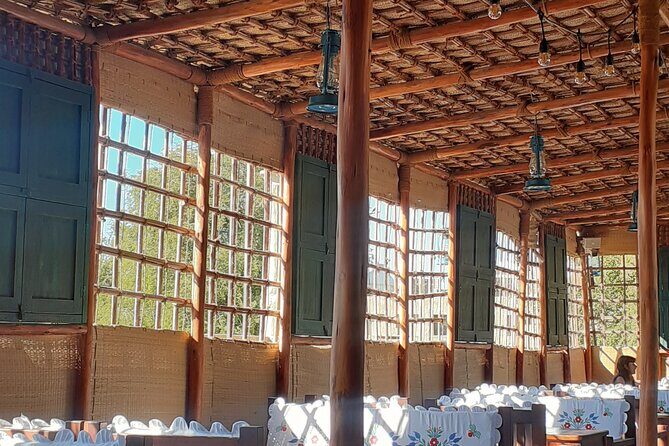
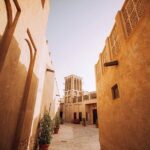
Next comes Al Fahidi Historical Neighbourhood (Al Bastakiya), one of Dubai’s older heritage areas. You’ll spend about 35 minutes here, and it’s the part of the tour that feels most like you’re stepping into older street geometry rather than just looking at landmarks.
This neighborhood is known for traditional wind-tower architecture and narrow, maze-like alleyways. That layout wasn’t only about beauty. It’s tied to cooling and daily life before modern infrastructure took over. Even if you’re not an architecture nerd, you’ll start noticing how the buildings shape movement—how you turn corners, where light falls, and how the streets guide you.
You may also see or reference cultural and museum spaces connected to the area, including the Dubai Museum housed in Al Fahidi Fort. And based on tour feedback, some explanations get delivered in ways that help with heat, like pausing inside air-conditioned spaces when needed. That makes a difference on a warm day.
Practical tip: wear comfortable shoes. This is still a walking tour, even though the stops are timed.
Dubai Museum Inside Al Fahidi Fort: The Pre-Oil Story You Can Actually See
One of the strongest parts of the tour is the Dubai Museum, located in Al Fahidi Fort. The museum opened in 1971, and its focus is specifically on daily life before oil—which is exactly what many first-time visitors miss when they only chase modern icons.
You’ll see life-size dioramas and recreated settings like traditional houses, mosques, souks, and date farms. The museum also includes artifacts going back thousands of years, including items tied to pearl diving and long-distance trade. There’s even a mention of a spice souk with real smells and spices, which is a clever bridge between history and your senses.
What you gain from the museum stop is perspective. After this, the souks stop feeling like just shopping streets. They become part of a longer trade story—water routes, currency, goods moving in and out, and neighborhoods built around the flow.
Main consideration: the tour timeframe is tight, so you won’t read every label. If museums are your priority, treat this as a high-impact overview that makes the market stops more meaningful, not a full, slow-day museum experience.
Coins Museum and Bur Dubai Grand Mosque: Trade, Money, and Faith in One Stretch
After Al Fahidi, you’ll connect to two very different, very specific stops.
You can also read our reviews of more shopping tours in Dubai




Coins Museum (Al Fahidi area)
The Coins Museum is listed as free admission and described as housing over 470 rare coins from significant Middle Eastern eras. It’s housed in a traditional Arabian building and highlights monetary history, including connections involving the British Empire and India before independence.
One small catch: the inclusion note says it will open soon. In plain terms, that means you should expect the possibility of less-than-perfect conditions if you’re counting on this as the single must-see stop. Still, even a short visit here can change how you think about markets. Money is the backstage engine of trade.
Grand Bur Dubai Masjid (Bur Dubai)
Then you’ll head to the Grand Bur Dubai Masjid, also called the Bur Dubai Grand Mosque. You get about 15 minutes here, focused on architecture and meaning. It features a 70-meter tall minaret, intricate geometric patterns, Quranic inscriptions, and stained-glass windows.
The mosque has a history of its own: it was originally built in 1900 as a school for Quranic studies, then rebuilt in 1960 and again in 1998 to preserve the traditional architecture. That timeline is useful because it shows Dubai’s historic continuity rather than just a one-time transformation.
Practical thought: this is a brief stop. You won’t have time for deep sightseeing, but it’s enough to understand why the area matters and what kind of structure anchored community life beyond commerce.
Old Souk to Abra Station: Where Shopping Feels Like Daily Life
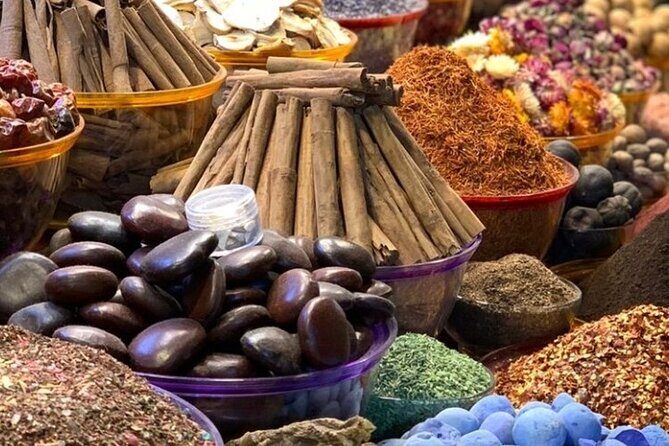
Your market run starts with the Old Souk (Bur Dubai Souq), about 25 minutes. This is the type of place where you’ll see goods linked to trade and craft: raw silk, wool, cashmere, perfumes, spices, and dry fruits. Souvenir items are also common—abayas, thawabs, silk scarves, and tailored garments.
What I like here is the variety. It’s not just one category of shopping. You get a snapshot of how people historically bought what they needed in a single area.
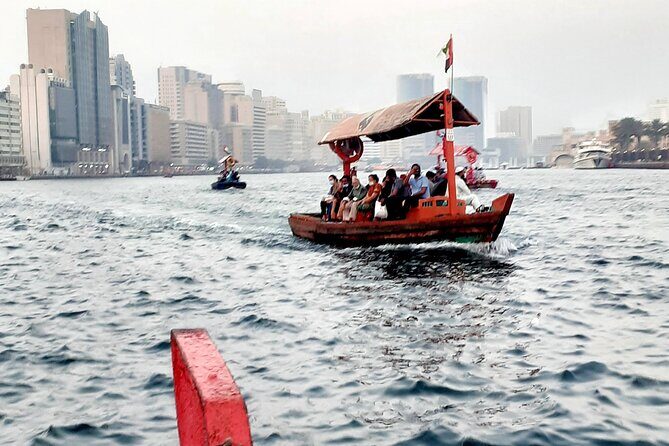
Then comes the most charming, no-frills transition: the Bur Dubai Abra Station and the abra ride. You’ll spend around 5 minutes at the station, and the boat ride itself is included in the tour. An abra is a traditional wooden boat that crosses Dubai Creek, and it’s one of the most affordable ways to move while also seeing the waterfront from eye level.
If you’re wondering what makes an abra ride worth it versus just taking photos from shore, it’s simple: you see how the creek frames the neighborhoods. You also feel the pace. It’s quick, practical, and it connects directly to the market areas you’ve been walking through.
Dubai Spice Souk: Sensory Shopping With a Plan
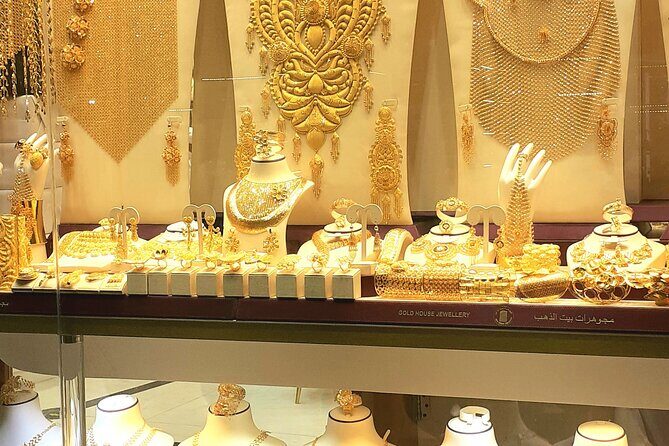
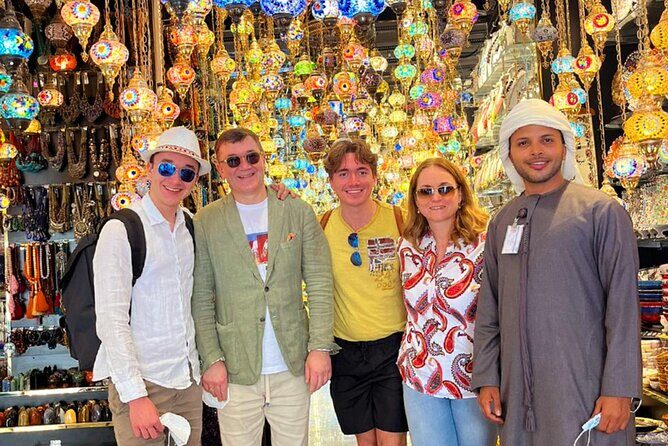
The tour heads to the Dubai Spice Souk in Deira for about 25 minutes. This is a sensory stop, and it’s described as a mix of aromatic spices, herbs, dried fruits, nuts, and traditional perfumes. The souk is said to date back to the late 19th century and remains a key trading hub.
Here’s how to get the most value without getting overwhelmed:
- Decide what you actually want to buy (tea blends, cooking spices, perfume oils, dried fruit).
- Ask about what you’re tasting/smelling, then compare a couple of shops before committing.
The tour includes an explanation, and that helps. Without context, spice shopping can feel like random bags and hard selling. With context, you start understanding what categories do what in cooking and everyday use.
One consideration: markets can feel pushy. If you don’t like that energy, keep moving between stalls, set a budget before you enter, and treat the stop as a browsing window, not a forced shopping mission.
Dubai Gold Souk: Tax-Free Jewelry and the Importance of Cash
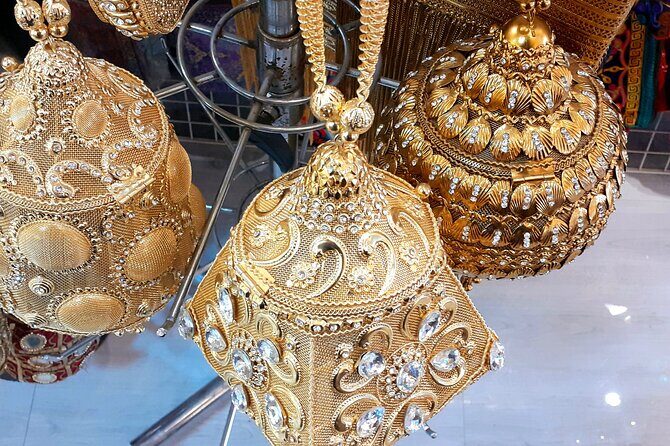
You wrap at Dubai Gold Souk for about 20 minutes, right in the Deira/Al Ras area. The gold souk is described as having over 350 retailers, and it’s known for tax-free gold, diamonds, precious stones, pearls, platinum, and silver.
This is a great end point because it’s easy to keep going after the tour. The tour finishes there, and there’s a taxi stop and metro station nearby.
If you’re planning to haggle, know this: the tour notes that paying in cash can help you bargain for the best deals. Even if you’re not buying, it helps to have an idea of price logic before you start comparing shop windows.
Also, don’t underestimate how fast 20 minutes goes. Gold souks are visual and overwhelming in the best way. If jewelry shopping isn’t your priority, you can still use this time to compare styles, materials, and how sellers present certificates and product categories—just don’t expect a slow stroll.
Price and Value: Is $22.33 a Good Deal?
At $22.33 per person, this tour is trying to do a lot: old neighborhoods, museum time, mosque architecture, two major souks, and an included abra ride, plus bottled water, a personal guide, and a camel milk chocolate tasting. On paper, it’s a strong bundle. You’re not just walking around; you’re getting a guided explanation and entry to key spots like the Dubai Museum and Coins Museum admission.
Where the value gets shakier is also simple: some stops can be shorter or less accessible depending on what’s open. If you get a plan that hits every indoor moment, you’ll feel like you got your money’s worth quickly. If openings change, you might feel like you spent more time on the outside walking and market browsing than on museum content.
My advice: if you want history and shopping, this price can feel like a bargain. If you’re only here for deep museum time, you might prefer a slower museum-focused option.
Who This Old Dubai Tour Suits Best (And Who It Doesn’t)
This tour fits best if you:
- Want a high-coverage Old Dubai walk in just a few hours
- Like history explained in practical terms as you move from place to place
- Want the classic Dubai Creek experience via an included abra ride
- Enjoy browsing spice and gold markets with guidance so you’re not guessing
It may not fit you as well if:
- You need long, unhurried museum time
- You dislike sales pressure in markets (spice and gold are selling places)
- You get stressed when the schedule is tight and you have to keep moving in heat
Should You Book This Old Dubai Tour?
Yes, if your goal is to understand Old Dubai fast. The combo of Al Fahidi heritage streets, the Dubai Museum, and the creek abra ride makes the souks mean something. At this price, it’s a good starter tour when you want to cover a lot without burning your whole day on transit.
Book it with one mindset: this is efficient, not slow and restful. If you’re okay moving briskly, and you’re prepared for shopping energy at the spice and gold souks, you’ll likely feel like $22.33 goes far.
FAQ
How long is the Old Dubai tour?
It runs about 2 to 4 hours.
What does the tour cost?
The price listed is $22.33 per person.
Where does the tour start and end?
It starts at Al Fahidi Marine Transport Station – Information & Ticket Office in the Dubai Creek area (Bur Dubai side) and ends in Dubai Gold Souk in Deira/Al Ras.
Is the abra ride included?
Yes. The tour includes an Abra boat ride across Dubai Creek.
What’s included in the price?
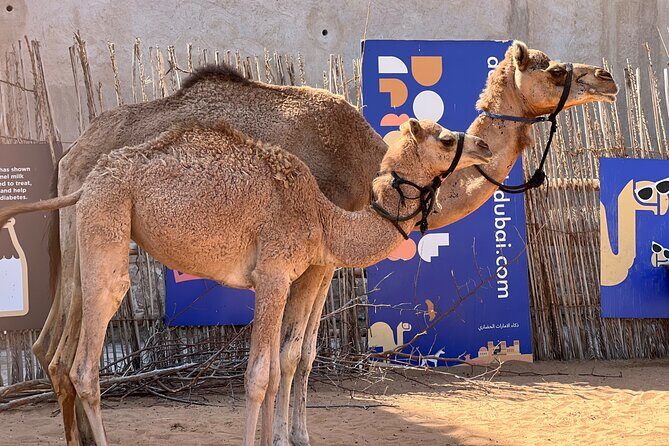
Included items are bottled water, Abra boat ride, personal tour guide, free explanation, a camel milk chocolate tasting, and coin museum free admission (noted as will open soon). It also includes visits linked to the spice market, old market, and gold market.
What is not included?
Snacks are not included unless you select an option that says snacks are included. Drop off is not included.
Do I need cash for the Gold Souk?
The tour notes that bargaining can be helped by paying in cash, so it’s smart to bring some if you plan to negotiate.
Is free cancellation available?
Yes. You can cancel up to 24 hours in advance for a full refund. If you cancel less than 24 hours before the start time, the amount paid is not refunded.