REVIEW · DUBAI
Old Dubai Walking Tour with Local/souks, boat, and local tasting.
Book on Viator →Operated by Tour With Me · Bookable on Viator
Old Dubai has a way of making you slow down. This short walk puts you right into the historical neighborhoods and souks that shaped Dubai long before the skyline took over the conversation—then it caps the experience with a traditional abra boat ride across the creek.
Two things I really like here: you get an actual local guide at your side (the kind who shares stories with energy, like Mohammodo, Adnan, and Ikram have done for past groups) and you don’t just “look” at the old town—you move through it, stop by the markets that still run the rhythm of commerce, and cross the creek by boat. My one caution is that the route is partly a souk tour. If you want museum-heavy sightseeing, the pacing (and the shopping focus) may feel a bit light on formal historical stops.
In This Review
- Key Things You’ll Actually Notice on This Old Dubai Walk
- Old Dubai in 3 Hours: What This Tour Really Does for You
- Meeting Point and Route Flow From Creek to Souks
- Stop 1: Souk Al Seef and the Dubai Creek Story in One Walk
- Stop 2: Al Fahidi Historical Neighbourhood and Its Barajeel Towers
- Stop 3: Dubai Museum and Al Fahidi Fort—Short Stop, Big Timeframe
- Stop 4: Textile Souk for Fabrics, Scales, and What Changed
- Stop 5: Bur Dubai Abra Station and the Creek Crossing
- Stop 6: Dubai Spice Souk and the Smell-and-Trade Connection
- Stop 7: Gold Souk in Deira—Old Trading Logic, Jewelry-Forward Reality
- Local Tasting: A Small Stop That Helps the Whole Story Make Sense
- Price and Value: Why $22.89 Often Feels Like a Fair Trade
- Who Should Book This Tour (and Who Might Be Dissatisfied)
- Tips to Get the Most From This Walk
- Should You Book This Old Dubai Walking Tour?
- FAQ
- How long is the Old Dubai walking tour?
- Where does the tour start?
- Where does the tour end?
- What is the price per person?
- Is there a mobile ticket?
- Is admission charged at the stops?
- How big is the group?
- When will I receive confirmation?
- What is the cancellation policy?
Key Things You’ll Actually Notice on This Old Dubai Walk
- Al Fahidi Neighborhood with barajeel air-tower architecture and traditional building materials
- Souk Al Seef along the Dubai Creek shoreline, mixing heritage and newer structures
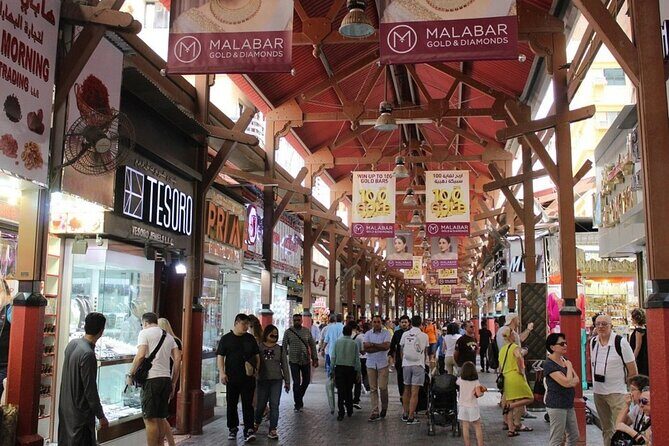
- Textile, spice, and gold souks in a tight loop, so you can compare vibes and prices quickly
- Abra boat crossing between Bur Dubai and Deira for views you can’t get from the street
- A small local tasting that helps you connect the food-and-market side of daily life to the history
Old Dubai in 3 Hours: What This Tour Really Does for You
This is the kind of tour that works because it’s short enough to stay focused. About 3 hours means you’ll cover several areas of Old Dubai without turning the day into a marathon of “next stop, next stop.” It also keeps the group manageable—this experience runs with a maximum of 8 travelers, which usually means you get more back-and-forth with your guide and less waiting around.
You’ll start in the metro zone and end near Deira, which is smart. Old Dubai is spread out, and Dubai’s modern transit makes it much easier than trying to wrestle the route on your own. The walking is part of the point: the narrow lanes, market edges, and creek access tell the story better than a single landmark ever could.
And yes, it includes a traditional boat ride and a local tasting. Even when those portions are brief, they help anchor the whole outing in lived daily culture—not just photos.
You can also read our reviews of more walking tours in Dubai


Meeting Point and Route Flow From Creek to Souks
The meeting point is set near Sharaf DG Metro Station (Exit 4), and the tour ends at Al Ras Metro Station in Deira. This matters because it shapes how the day feels: you’re walking outward from the creek-adjacent heritage zone, then moving through classic market streets before finishing where Deira’s souks concentrate.
Because the tour runs on a tight timeline, I’d plan to arrive a few minutes early and take a steady pace with your guide. If you’re the type who loves wandering off to read every sign, save that for later—this tour is built around momentum and good coverage.
Stop 1: Souk Al Seef and the Dubai Creek Story in One Walk
Souk Al Seef is more than a market stop—it’s a shoreline history lesson. The area hugs about 1.8 kilometers of Dubai Creek’s waterfront, and the project celebrates the creek’s origins, including the era when Dubai Creek served as a well-known coastal pearl diving base.
Here’s what makes this stop useful: it lays out Dubai’s “old meets new” reality without turning it into a lecture. You’ll notice two different sections—one leaning heritage with older-style architecture, and another with more modern development. That contrast is a quick way to understand why Dubai looks the way it does today.
It’s also an easy win for people who don’t want to feel trapped in a pure shopping loop. Even if you don’t buy anything, walking Al Seef gives you context: the creek wasn’t just scenery, it was trade infrastructure.
Stop 2: Al Fahidi Historical Neighbourhood and Its Barajeel Towers
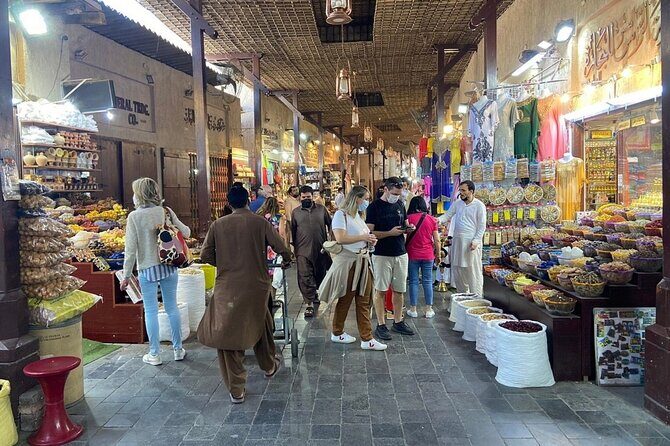
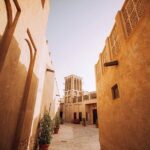
If there’s one place in this tour that people remember, it’s Al Fahidi Historical Neighbourhood. This is where the traditional lifestyle of Dubai from the mid-19th century through the 1970s is still visible in the built form.
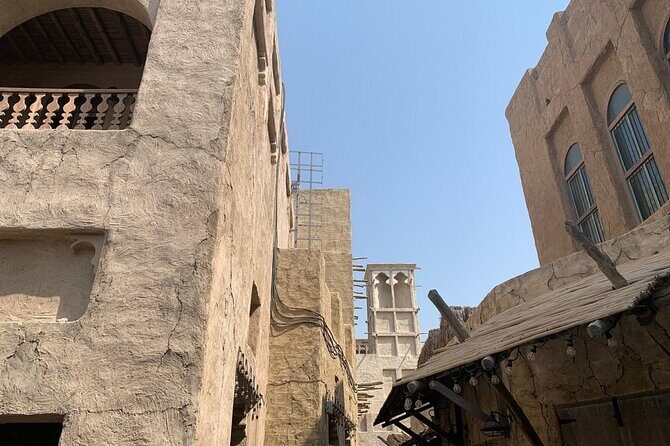
The most striking feature is the architecture—especially the barajeel, those high wind towers designed to move air through buildings. Instead of glass-and-steel cooling, you see the older methods using materials listed for the traditional construction: stone, gypsum, teak, sandalwood, and palm-related elements. Seeing that in person gives the whole area a different kind of credibility. It’s not just “old looking”—it’s old built-for-comfort design.
This neighborhood also does a great job of changing your perspective. Dubai’s modern skyline is loud; Al Fahidi is quiet. Walking those lanes helps you understand that the city’s growth was built on earlier systems—trade, shipping, and community networks around the creek.
Stop 3: Dubai Museum and Al Fahidi Fort—Short Stop, Big Timeframe
Right at the edge of the souk-and-fort zone, you’ll pass by Al Fahidi Fort, built in 1787. That makes it the oldest existed building in Dubai, and that fact alone is enough to put this stop on your mental map even if you only spend about 5 minutes here.
The fort’s location is also important: it sits near the Ruler’s Court area, close to the historical trading zone south of the creek. So you’re not just looking at an old building—you’re seeing how governance and commerce sat close together.
Here’s the practical downside: because the time at this stop is brief, it’s not a “let’s read every exhibit” stop. If you love museums and want longer indoor time, treat this as a quick orientation. You’re getting the monument and the location context, not a full day of museum study.
You can also read our reviews of more food & drink experiences in Dubai



Stop 4: Textile Souk for Fabrics, Scales, and What Changed
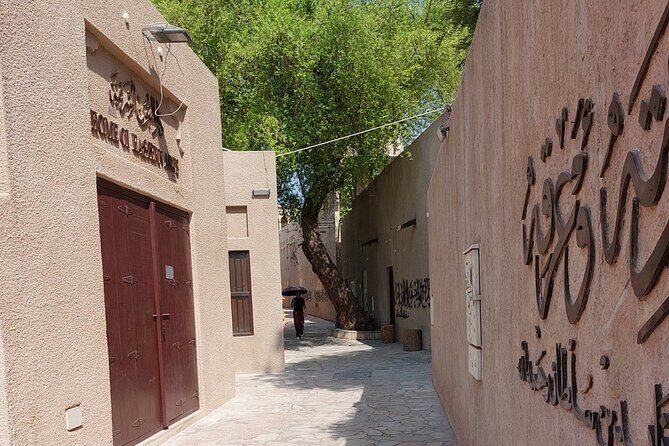
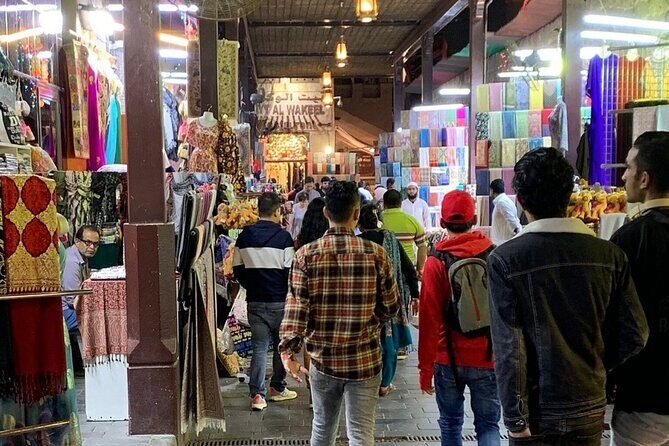
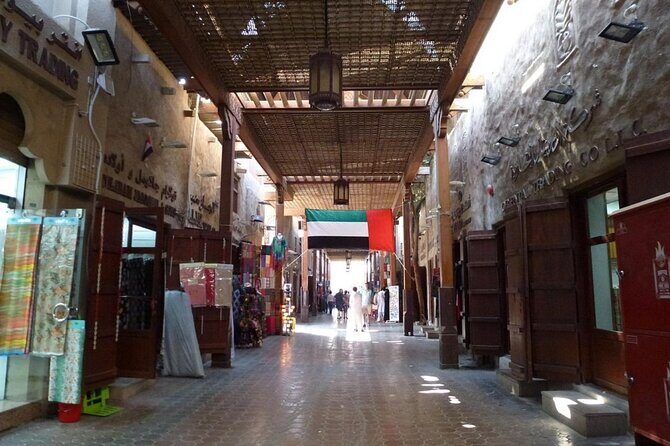
The Textile Souk is a smart pivot point in the itinerary. You’ll learn it was an important exchange hub for textiles—both for everyday clothing and for more special occasions—and that it was established in the early 1900s.
What I like about covering textiles here is the way it shows economic change. Over time, Dubai’s rapid global growth shifted the role of this trading district. The textile business here has faded in importance compared to its earlier days, and the souk has become more tourist-focused.
That doesn’t make it pointless. It’s still useful if you want to understand what kind of goods Dubai historically moved through its trade routes. And it’s helpful if you want practical shopping items like scarves, fabrics, or simple gifts. Just remember you’re walking through a market that’s now both commercial and visitor-friendly.
Stop 5: Bur Dubai Abra Station and the Creek Crossing
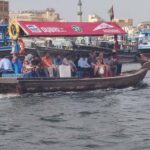
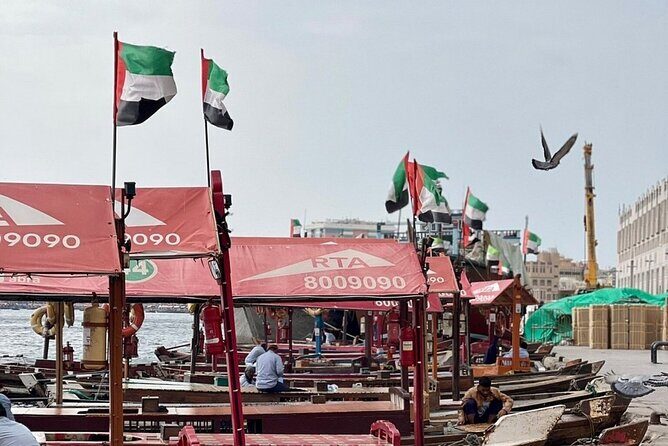
Now for the part that feels like a time machine: the abra. This is Dubai Creek’s traditional boat ferry, and the Bur Dubai Abra Station is where you hop on.
You’ll spend about 10 minutes on the crossing, traveling between Bur Dubai and Deira. That short ride is exactly the right length. Long enough to feel the movement and see the creek edges from water level, short enough that it doesn’t swallow your whole afternoon.
What you’ll notice during the ride is how different the creek looks when it’s not framed by storefronts. The water makes the geography clearer. It’s a quick reset for your brain after walking lanes and market corridors.
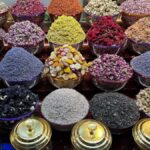
Stop 6: Dubai Spice Souk and the Smell-and-Trade Connection
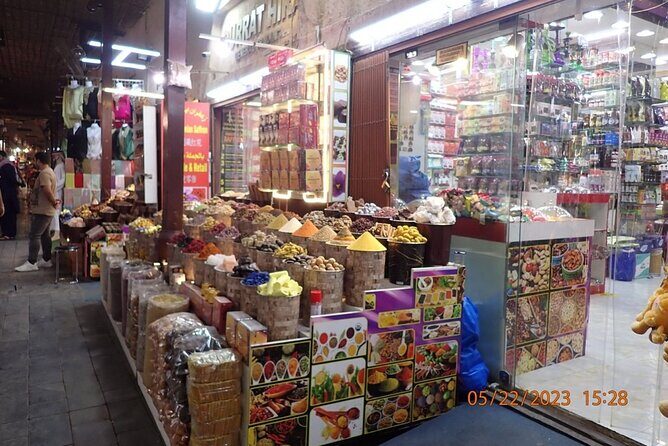
The Spice Souk is where the senses get involved. It started around 1850 near dhow moorings to make trade loading easier, and it’s been a favorite trading point for a very long time—over 160 years inside this larger bazaar setting.
This stop is great because it shows why markets weren’t just places to buy. They were logistics hubs tied directly to shipping. Even if you don’t purchase spices, you’ll get a real sense of scale: stacks, bags, and displays built for people who come expecting to browse with intention.
A practical note: spice shopping can tempt you into buying more than you planned. If you’re budget-minded, decide on a single small item you’ll actually use at home, and keep the rest as window shopping.
Stop 7: Gold Souk in Deira—Old Trading Logic, Jewelry-Forward Reality
The final souk stop is the Gold Souk, located in Deira’s Al Ras area. This market is famous, and for a reason: it’s made up of over 380 retailers, and most of them are jewelry traders.
One of the most useful facts to know is that the gold market existed before the United Arab Emirates was formed—so you’re not just looking at a modern celebrity landmark. You’re seeing a marketplace that started as trade in precious metals and kept its identity as commerce evolved.
Even if you don’t want to buy jewelry, this last segment works because it closes the loop. Earlier stops covered textiles and spices; gold adds a different kind of value chain—higher stakes, higher shine, and a totally different browsing rhythm. It’s also a strong finish because you’re ending in the Deira metro area, where it’s easy to continue exploring.
Local Tasting: A Small Stop That Helps the Whole Story Make Sense
This tour includes a local tasting, though the specific items aren’t detailed here. In practice, that means you’ll get a short, structured taste at some point during the walk.
Why it matters: when you’re moving through souks, food is part of the culture you’re passing. Tasting is the shortcut that connects market products to daily life, so the tour doesn’t feel like you’re only browsing goods. Even a small bite can help you understand what you’re seeing—especially at the spice-related stops.
Price and Value: Why $22.89 Often Feels Like a Fair Trade
At $22.89 per person, this is priced for value. You’re getting a guided route through multiple major Old Dubai areas, plus a traditional abra ride and that tasting component. Most importantly, the tour is built for efficiency: it stacks multiple “systems of Old Dubai” into a 3-hour format.
The small group size (up to 8) helps the value feel even better. You’re not stuck in a huge pack, and you’re more likely to ask follow-up questions when something grabs your attention—like architecture details in Al Fahidi or the creek-era reason behind the souks.
If your goal is to see Old Dubai without spending hours figuring it out alone, this price is reasonable.
Who Should Book This Tour (and Who Might Be Dissatisfied)
This tour fits best if you want a guided, streets-first introduction to Old Dubai:
- You like walking tours with context, not just a list of stops.
- You enjoy markets but still want your guide to explain what you’re looking at.
- You want the creek experience without arranging separate transport.
It might be less ideal if you’re looking for a museum-dominant day with long indoor time. The fort and museum area is quick, and the souk portions take up a big share of the schedule. Also, if you’re shopping-averse, keep your expectations aligned: the route is designed around the Textile, Spice, and Gold souks.
Tips to Get the Most From This Walk
A few practical habits will make the experience smoother:
- Wear comfortable shoes. This is a walking loop through neighborhoods and markets.
- Pace your budget. The gold souk and textile browsing can pull you in fast.
- Bring water and a light layer if you’re sensitive to heat changes. (Dubai weather can swing day to day.)
- If you want deeper history, plan one follow-up stop afterward—because this tour is built for coverage, not lingering.
Should You Book This Old Dubai Walking Tour?
I’d book it if you want a focused, culturally grounded Old Dubai sampler in about half a day. The combination of Al Fahidi’s architecture, the creek-side Al Seef shoreline, the abra ride, and the three classic souks gives you a well-rounded view of how the city traded, traveled, and lived before today’s skyline took over.
Skip it (or pair it with extra time elsewhere) if your priority is long museum time or strictly historical landmarks over market browsing. This tour’s sweet spot is in the street-level mix—architecture plus trade—and that’s exactly where it delivers.
FAQ
How long is the Old Dubai walking tour?
The tour lasts about 3 hours.
Where does the tour start?
It starts near Sharaf DG Metro Station Exit 4 (meeting point is listed around Fahidi Metro).
Where does the tour end?
It ends at Al Ras Metro Station in Deira.
What is the price per person?
The price is $22.89 per person.
Is there a mobile ticket?
Yes, the tour uses a mobile ticket.
Is admission charged at the stops?
The itinerary lists admission tickets as free for the stops described.
How big is the group?
The maximum group size is 8 travelers.
When will I receive confirmation?
Confirmation is received at the time of booking.
What is the cancellation policy?
You can cancel for a full refund if you cancel at least 24 hours in advance of the experience start time.